
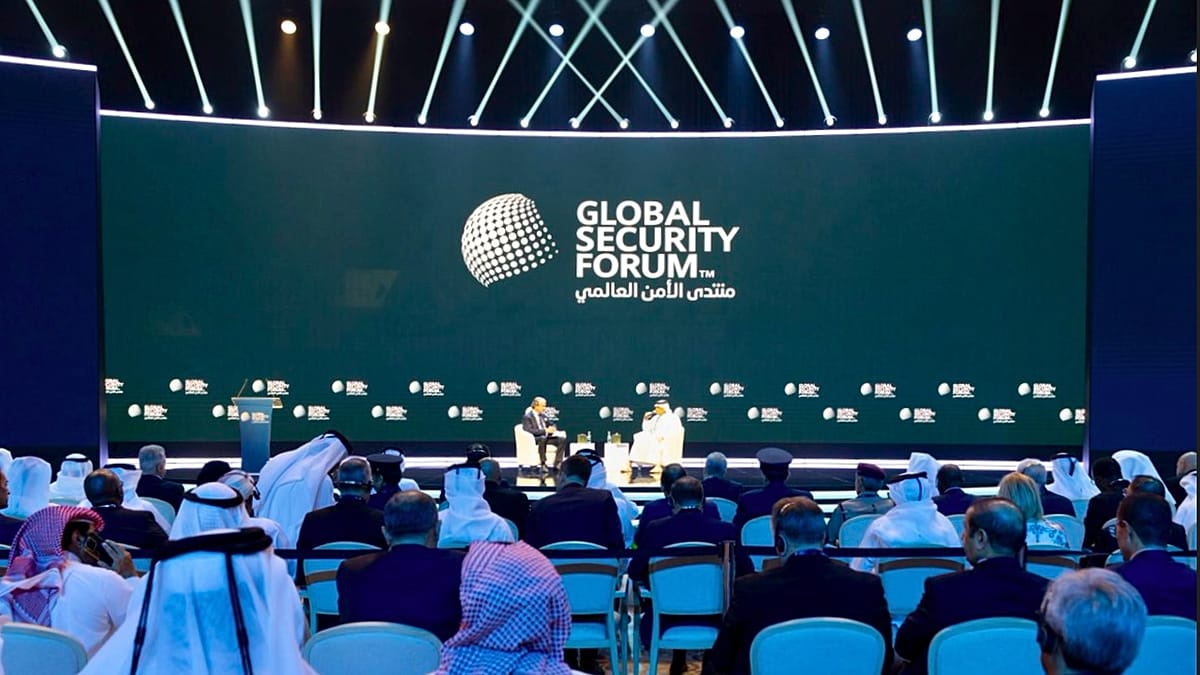
Qatar is on the verge of announcing a significant defense partnership aimed at bolstering its security against potential threats. Deputy Prime Minister Sheikh Saoud bin Abdulrahman Al Thani made this announcement during the Global Security Forum in Doha. In doing so, he emphasized the importance of dialogue and enhanced economic relationships with Iran to avert additional conflicts in the region.
Qatar’s Enhanced Defense Strategy
Sheikh Saoud, who also holds the position of Minister of State for Defence Affairs, indicated that lessons learned from historical conflicts involving Iran are being applied to develop more robust defense strategies. The upcoming partnership will specifically focus on countering threats such as ballistic missile attacks, drone warfare, and cyber threats. Water security will also be a priority in these defense plans, showing Qatar’s commitment to a holistic approach to national security.
Furthermore, the deputy prime minister shared plans to establish a local defense production hub. This initiative aims to foster local manufacturing capabilities or investments in defense companies, collaborating with regional allies and key international partners, including the United States, the United Kingdom, and France. He noted the significance of historical cooperation with the U.S., highlighting that over 90% of Iranian threats to the Gulf region have been effectively neutralized thanks to coordinated military efforts and investments.
Ongoing Communication with Iran
Despite ongoing tensions and threats from Iran, Sheikh Saoud confirmed that Qatar maintains a communication channel with Tehran. He reiterated the importance of dialogue, stating, “We never stop our communication.” The deputy prime minister called for diplomatic discussions among Iran and the Gulf Cooperation Council (GCC) nations, along with Pakistan and Turkey, post any U.S.-Iran agreement. He emphasized that international allies should also play a role in this dialogue, reinforcing the need for a collaborative approach to regional security.
Currently, Qatar is working with Pakistan and Oman on mediation efforts, which Sheikh Saoud likened to a long-distance race that requires endurance and resolve. By promoting talks and fostering ties among neighboring countries, he believes that a more stable and secure environment can be achieved.
The Economic Implications of Regional Stability
Sheikh Saoud discussed how the Gulf nations can emerge stronger from ongoing conflicts, echoing sentiments from past crises. He noted that Iran’s proximity necessitates economic cooperation to avoid escalations. He proposed that building economic trust could be pivotal in preventing future confrontations and mentioned the potential for a non-aggression pact as a cornerstone for this approach.
He highlighted the shared interests between Qatar and Iran concerning a significant offshore gas field, which both nations should prioritize to prevent disruptions. The deputy prime minister cautioned that persistent energy sector disruptions not only impact the region but also resonate globally, disrupting supply chains and raising costs for consumers.
In summary, Sheikh Saoud articulated that the ongoing instability presents a continuous threat to Qatar and its Gulf neighbors. Uncertainty in the region can deter investment opportunities in Europe and elsewhere, further complicating the economic landscape. The call for dialogue, combined with strategic defense advancements, may pave the way for enhanced security and prosperity in the region.
In conclusion, Qatar’s proactive approach, characterized by defense partnerships and diplomatic dialogue, aims to navigate the complexities of Middle Eastern geopolitics while fostering regional collaboration.