
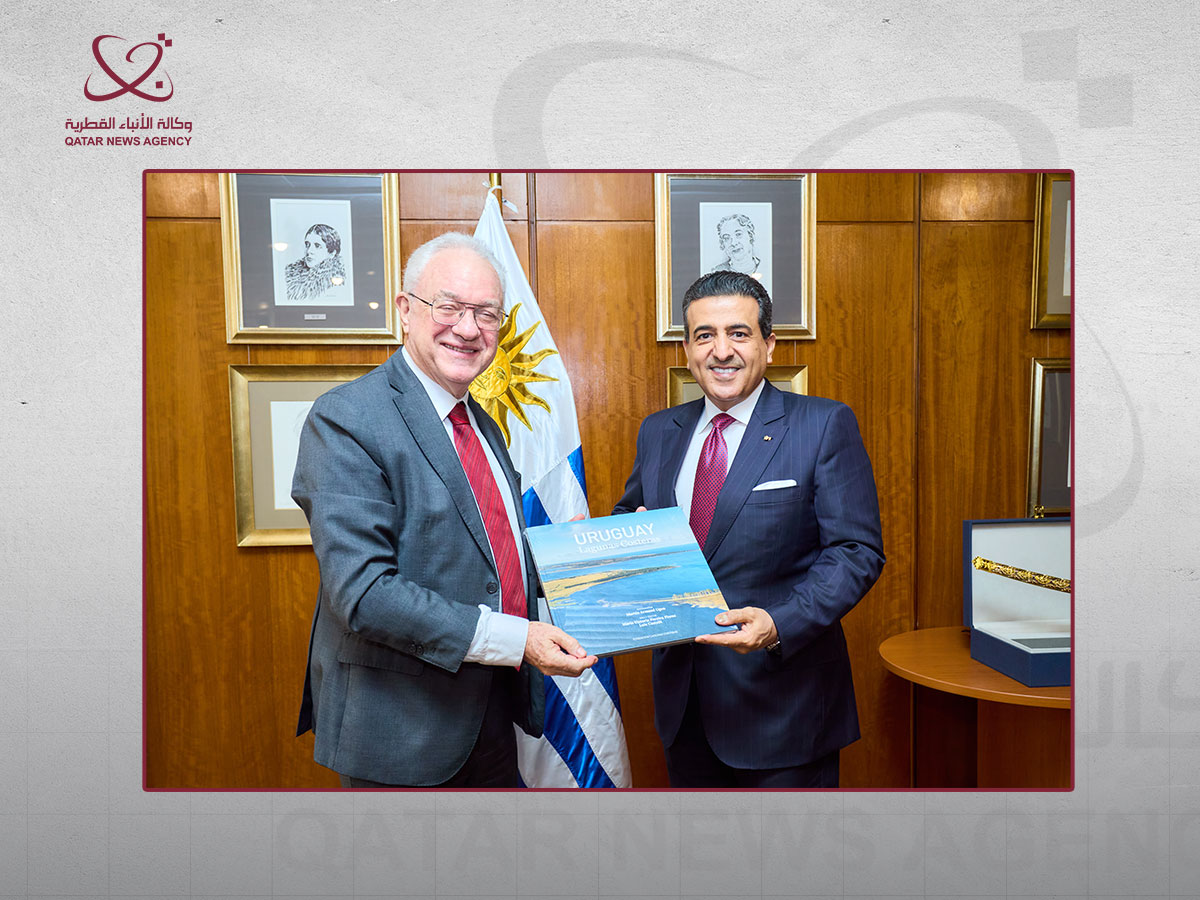
Dr. Ali bin Fetais Al Marri, the Chairman of the Board of Trustees of the Rule of Law and Anti-Corruption Center (ROLACC), recently engaged in significant discussions with key Uruguayan officials in Montevideo. The meetings aimed to enhance cooperation in combating corruption and reinforcing legal frameworks within the region.
Understandings with Uruguay’s Foreign Minister
During a pivotal meeting with Uruguay’s Foreign Minister, Mario Lubetkin, Dr. Al Marri explored collaborative opportunities that could strengthen the ongoing fight against corruption. This dialogue marks a critical step in fostering international relationships aimed at promoting integrity and transparency in governance. Both parties acknowledged the increasing importance of international cooperation in tackling global corruption challenges effectively.
Dialogue with Montevideo’s Leadership
In addition to his meeting with Minister Lubetkin, Dr. Al Marri also met with Montevideo’s Intendant, Mario Bergara, and Punta del Este’s Mayor, Javier Carballal. These discussions dove into the specific mechanisms through which ROLACC can assist Uruguay in reinforcing its anti-corruption strategies. The local leaders expressed their commitment to enhancing legal frameworks that could serve as a model for neighboring countries facing similar challenges.
Uruguay’s Role in Regional Initiatives
Uruguay’s leadership role this year as the chair of several influential groups, including the Group of 77 and China, as well as the Southern Common Market (Mercosur), underscores its commitment to fostering regional collaboration. This partnership includes nations such as Brazil, Argentina, Uruguay, and Paraguay, united in their efforts to create a more corrupt-free zone in Latin America. Additionally, Uruguay chairs the Community of Latin American and Caribbean States (CELAC), covering 33 countries, signaling its influential position in regional and international affairs.
Looking Forward: Strengthening Cooperation
The meetings highlighted the importance of continuing dialogue and collaborative efforts between ROLACC and Uruguay. Both parties reaffirmed their commitment to working together in a shared vision to combat corruption, laying the groundwork for promising future initiatives. By nurturing these alliances, the overarching goal of fostering a climate of legal integrity becomes increasingly attainable, not just in Uruguay, but across the broader Latin American region.
In summary, the recent discussions in Montevideo reflect a significant commitment towards enhancing cooperation in the realm of anti-corruption measures. The establishment of strong partnerships will play a vital role in addressing corruption’s pervasive nature within the region, thus contributing to a more transparent and accountable governance landscape.