
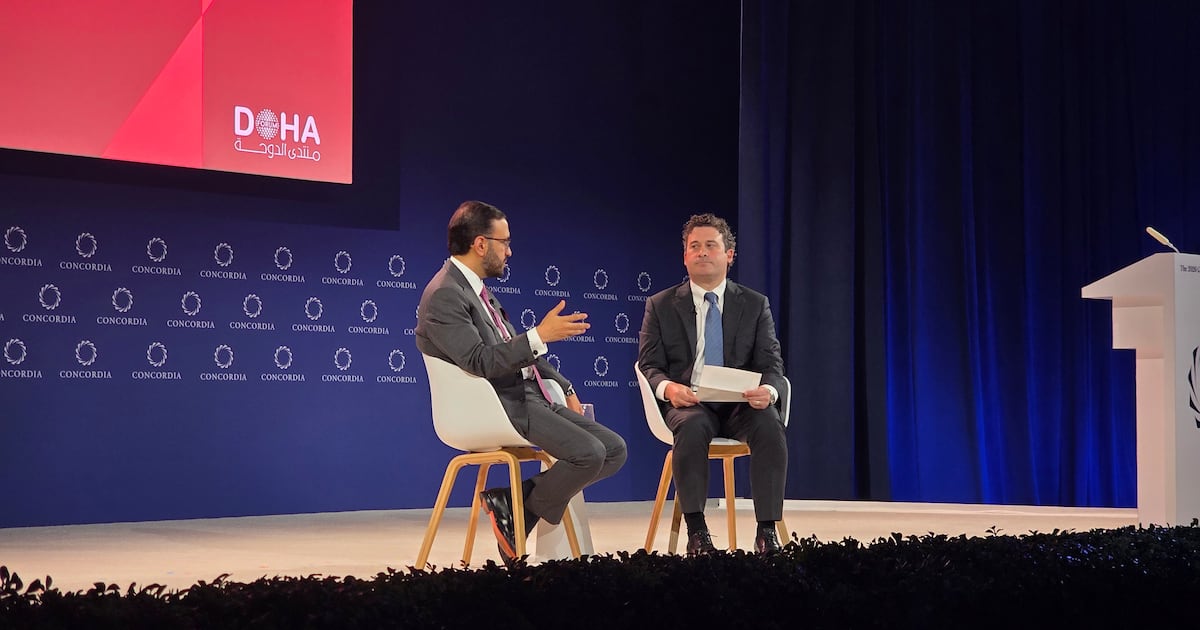
In recent discussions at the Concordia Annual Summit, Majed Al Ansari, an adviser to the Qatari Prime Minister, highlighted the notion that economic cooperation between Iran and its Gulf neighbors could serve as a cornerstone for long-term regional security. With ongoing tensions in the Middle East, the idea of fostering economic interdependence emerges as a potential pathway to peace and stability.
Economic Interdependence as a Path to Stability
During his speech, Al Ansari articulated a vision for a post-conflict Middle East where shared economic interests and security assurances might help diminish the risks of future confrontations. His insights should be considered seriously, particularly as countries in the region confront the complexities of living alongside a populous Iran. He emphasized the importance of creating a sustainable diplomatic approach that acknowledges the inevitability of cohabiting with Iran, regardless of its political landscape.
Al Ansari stated, “Whenever this is done, the people of the Gulf are going to be living next to 90 million Iranians.” He indicated that the region must craft solutions that are beneficial for all parties involved, proposing that meaningful dialogue could lead to not just stability, but also prosperity for both Gulf states and Iran. The acknowledgment of shared economic destinies may allow for a more amicable coexistence, reducing the chance of conflict triggered by economic discontent.
The Need for Security Guarantees
An essential part of Al Ansari’s vision includes the necessity for security guarantees to ensure that Gulf nations are not subjected to attacks during future tensions involving Iran. He posited that a framework of economic interdependence, which he described as an unprecedented opportunity for the region, could provide the stability needed to mitigate conflicts. Al Ansari further explained that currently, the economic isolation among Gulf nations allows threats to one country to occur with minimal cost to others, creating a volatile situation that needs to be addressed.
He remarked, “We need to build for our people economic interdependence that would allow the people of Iran to enjoy prosperity, our people to enjoy their security, and for our dreams to be applied together rather than just being against each other in this way.” Such statements underline a critical shift in thinking about how economic frameworks can reshape the landscape of regional relationships.
Call for Dialogue and New Mindset
Global leaders have converged in New York for the UN General Assembly, where the discourse surrounding Iran and broader Middle East security is anticipated to take center stage. Dr. Anwar Gargash, a diplomatic adviser to United Arab Emirates President Sheikh Mohamed, advocated for a “new mindset” in how Arab states approach discussions with Iran. He emphasized that dialogue concerning the region’s future should be a collective endeavor, involving not just global powers like the U.S. but also direct conversations between Tehran and Arab nations.
Gargash articulated the desire for stability and development, stating that these goals are intrinsically linked. The path to lasting peace will likely necessitate open conversations about shared interests and needs, fostering an environment where mutual growth can flourish.
With events unfolding in New York, including meetings involving prominent Gulf officials and leaders from Iraq and Jordan, the potential for dialogue and constructive relationships hangs in the balance. The outcomes of these discussions could play a pivotal role in establishing a framework that promotes security and economic collaboration in the region.