
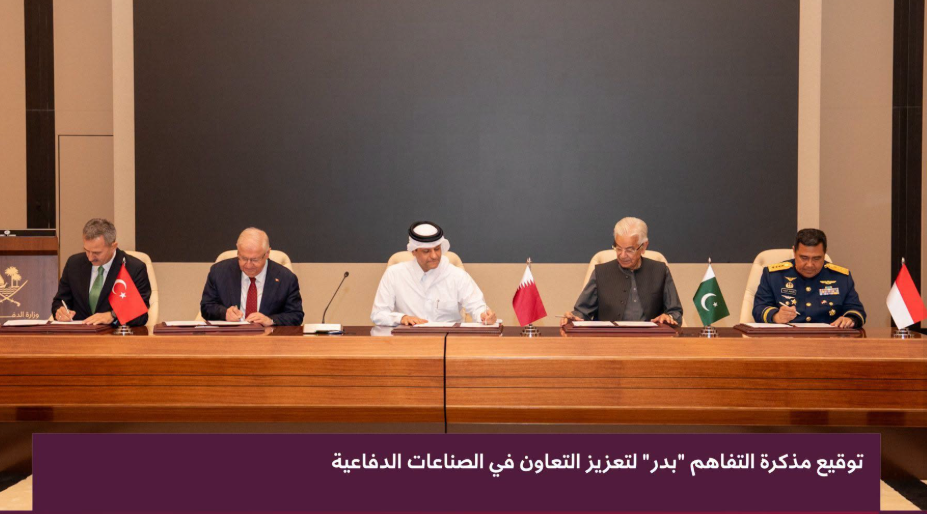
Qatar, Turkiye, Indonesia, and Pakistan have recently entered into a collaborative defense industry agreement to enhance military manufacturing capabilities and develop advanced defense systems. This significant Memorandum of Understanding was formalized in Doha on Wednesday, marking a notable step toward deeper defense cooperation among these nations.
Understanding the Badr Memorandum of Understanding
The Badr Memorandum of Understanding signifies a unified effort among Qatar, Turkiye, Indonesia, and Pakistan to bolster their defense sectors. The Qatari Defence Ministry emphasized that this initiative aims to strengthen cooperation in defense manufacturing and elevate the military capabilities of the involved nations. In a time of shifting geopolitical landscapes and rising security concerns, this partnership is positioned to address various challenges in defense readiness and technological advancement.
This agreement is particularly timely, as ongoing conflicts in the region, including tensions between the United States, Israel, and Iran, have prompted nations in the Gulf to reconsider their security strategies. The conflict has highlighted vulnerabilities related to missile and drone threats, causing countries to reevaluate their dependence on external defense support. Additionally, increased hostilities between Saudi Arabia and Yemen’s Houthi movement add another layer of urgency to developing indigenous defense capabilities.
Goals of the Defense Collaboration
The collaborative defense initiative aims not only to fortify military production but also to facilitate cooperation in technical training and research and development. According to the Qatari Defence Ministry, the ultimate goal is to create innovative solutions that align with the needs of modern defense systems. As each country brings its unique strengths to the table, they will enhance their collective defense industry while promoting greater self-reliance.
Experts observe that each nation involved contributes its own skill sets and resources to this agreement. Turkiye will leverage its burgeoning defense sector, providing technological know-how and established industrial capabilities. Pakistan and Indonesia can offer manufacturing expertise and access to skilled labor, while Qatar aims to inject necessary investments into the collaboration.
Implications for Regional Defense Strategies
The new agreement holds the potential to reshape the defense landscape in the region. By strengthening domestic industries and fostering integrated manufacturing capabilities, these countries hope to reduce their reliance on foreign defense systems. As military technology continues to advance rapidly, the ability to develop indigenous equipment will become increasingly crucial for national security.
Furthermore, the partnership could lead to a more interconnected defense environment in the Middle East, enhancing cooperative security measures and collective readiness to counter emerging threats. The diverse expertise offered by each nation positions them to respond more effectively to evolving challenges.
In conclusion, the Badr Memorandum of Understanding represents a significant milestone in defense cooperation among Qatar, Turkiye, Indonesia, and Pakistan. As the geopolitical climate continues to change, this collaboration aims to create a more robust and self-sufficient defense industry—one that can effectively address the multifaceted security challenges facing the region. By pooling resources and knowledge, these countries are poised to make meaningful advancements in their military capabilities.