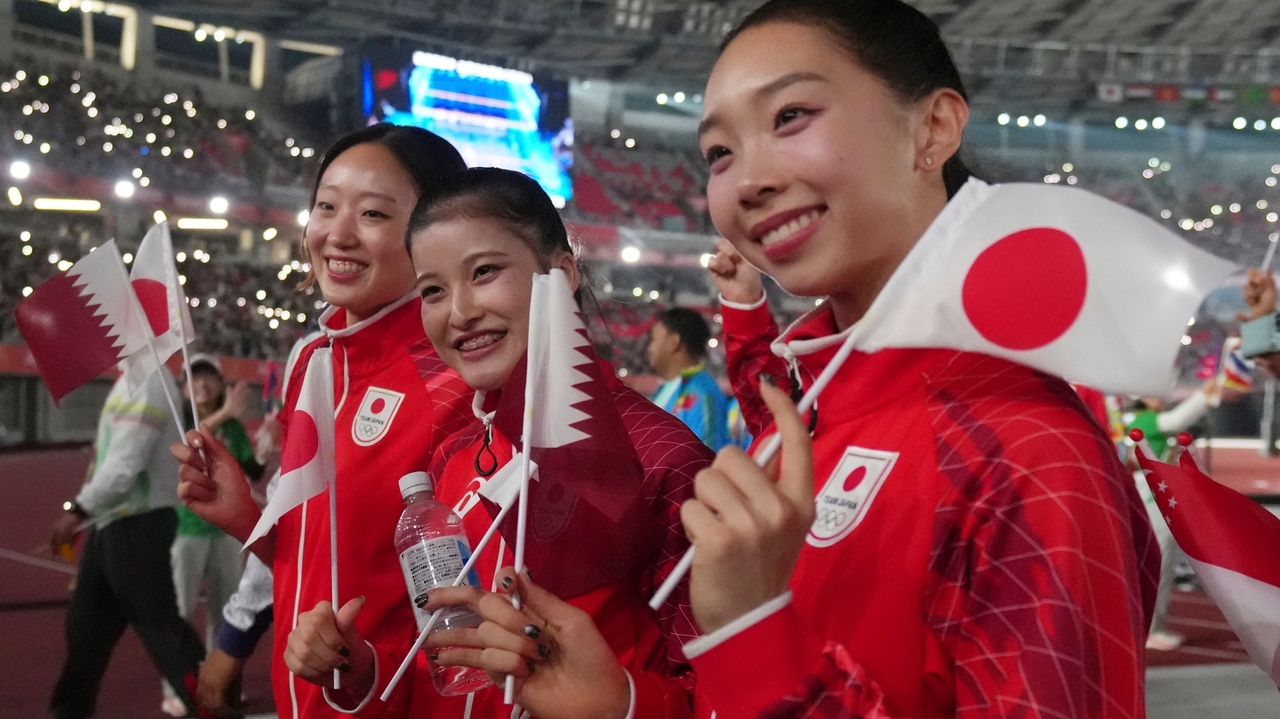
The Asian Games in Nagoya, Japan, concluded on Sunday, bringing together athletes from 45 nations for a dynamic showcase of sports. The closing ceremony was presided over by Sheikh Joaan bin Hamad Al Thani, the President of the Olympic Council of Asia. This year’s event featured over 11,000 competitors, surpassing the number seen at the Summer Olympics in Paris two years prior. The next Asian Games are scheduled to take place in Doha, Qatar, in 2030, marking a significant return for Sheikh Joaan, a Qatari royal.
A Look at Medal Rankings
China once again dominated the medal tally, securing 169 gold medals and a total of 341 medals overall, a pattern they have maintained for decades. Japan followed in second place with 83 golds and 269 total medals. South Korea took third with 39 golds and 150 overall, while India rounded out the top contenders with 21 golds and 85 total medals. Uzbekistan and Iran also performed well, achieving 21 and 19 gold medals, respectively. Notably, 40 out of 45 participating countries won at least one medal; however, the bottom four—Bangladesh, Brunei, Laos, and Syria—only managed to secure a single bronze medal each, highlighting the competitive nature of the games.
Rising Stars to Watch
Among the standout performances was Japan’s 17-year-old swimmer, Shin Ohashi, who set a new world record in the 200-meter breaststroke, completing the race in an impressive time of 2 minutes and 4.83 seconds. Another rising star was 13-year-old Yu Zidi from China, who not only excelled in the 200 butterfly but also contributed to her team’s wins in the 200 and 400 medley relays, earning the title of female MVP for the event. From the track, Thai sprinter Puripol Boonson claimed the male MVP award, clocking remarkable times of 9.90 seconds in the 100 meters and 19.88 seconds in the 200 meters. India also saw success in men’s cricket, defeating their long-time rivals, Pakistan, for the gold medal.
Execution and Organization of the Games
Despite the excitement surrounding the competition, organizers faced multiple challenges during the event. The Asian Games aimed to showcase sustainability, opting against a traditional athletes’ village. Instead, accommodations were provided on a cruise ship, in hotels, and in temporary structures. Stretching venues from Nagoya to Tokyo and Osaka added to the logistical complexities. Officials admitted there were hiccups, including issues with transportation leading to bus delays and mixed-up locations. The Governor of Aichi Prefecture, Hideaki Omura, acknowledged that the games encountered “huge challenges” but remained committed to delivering a successful event.
Challenges and the Impact of Previous Olympic Games
The planning for the Nagoya Games began back in 2016, prior to the pandemic that delayed the Tokyo Olympics to 2021. Initially, the budget was estimated at around $650 million, but it ballooned to nearly $2.5 billion—almost fourfold. The Japanese advertising company Dentsu, which had faced convictions for bid-rigging related to the Tokyo Olympics, was excluded from the bidding process for this event. However, the Director-General of the Olympic Council of Asia, Husain Al Musallam, defended the organizing committee, focusing on their effort to showcase Japan’s capability to host such large-scale events. As the games wrapped up, the sense of competition and athletic spirit began to overshadow the earlier organizational hurdles.