
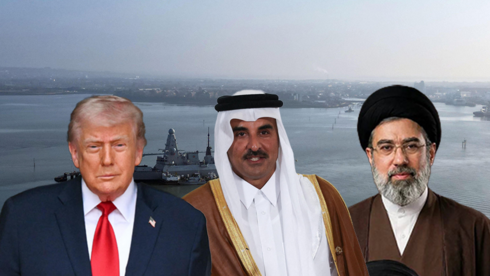
The recent Islamabad memorandum of understanding represents a significant but misleading development in the ongoing tensions between the United States and Iran. It raises questions not just about its contents but also about the neutrality of its signatories. The perception that Pakistan serves as an impartial mediator in this delicate situation is not only flawed but potentially dangerous, as it ignores the geopolitical complexities at play.
The Illusion of Neutrality
On the surface, the memorandum appears to symbolize a coming together of different nations to address rising tensions between America and Iran. However, the reality is far more complicated. Pakistan’s documented stance against Israel—evident in its official travel declarations, which specify they are valid everywhere except Israel—calls into question its role as a neutral party. Additionally, by joining forces with Qatar and other Muslim countries to condemn Israel’s actions, Pakistan positions itself firmly in the pro-Iran camp, undermining any claims to impartiality. This raises concerns about whether the talks facilitated by Pakistan truly aim to resolve conflicts or merely serve to prolong them under the guise of negotiation.
Collusion Over Mediation
The meetings in Bürgenstock, which have been misrepresented as neutral discussions, served a clear agenda aligned with Iran’s strategic goals. The resulting statements from these gatherings seemed designed to buy time for Iran, manipulating international expectations. By repeatedly referring to “technical talks” without detailing, the memorandum effectively stalls diplomatic progress, allowing Iran to exploit the situation. Meanwhile, the concept of a “de-confliction cell” that excludes Israel is indicative of a coordinated effort to weaken American alliances without directly confronting them.
Moreover, the actions of Iranian Foreign Minister Abbas Araghchi point to a deeper collusion among Iran, Pakistan, and Qatar. His declaration of progress in the negotiations can be seen as a tactic to assert Iran’s power while simultaneously showing solidarity with its alleged allies. These alliances have significant implications for the geopolitical landscape, hinting at a broader strategy to isolate Israel while fostering hostility between the United States and its allies.
A Disastrous Diplomatic Landscape
Compounding matters, Qatar’s involvement in the negotiations has been equally detrimental. The country’s government has seized the opportunity to push its own agenda under the pretext of mediation. This was starkly visible when Qatari Prime Minister Mohammad al-Thani echoed sentiments that directly benefit Iran while disregarding previously established norms of international diplomacy. His statements have effectively worked to strengthen Iran’s position in the region, raising alarms about the long-term implications of such partnerships for U.S. foreign policy.
Domestic political pressures in the U.S. have only exacerbated the situation. Public sentiment is shifting rapidly, with increasing disapproval for ongoing military actions. The American electorate, faced with disarray and uncertainty, is skeptical of the potential success of diplomatic initiatives led by questionable intermediaries. Polls indicate that a significant portion of the population doubts the efficacy of the current approach, further complicating the administration’s ability to navigate the crisis effectively.
Confronting the Crisis
In light of these complexities, it has become increasingly clear that relying on overseen diplomatic efforts from Pakistan and Qatar may not yield the desired outcomes. Instead, decisive actions might be necessary to counteract the growing influence of Iran and its allies. The notion that solely diplomatic efforts will resolve these longstanding issues is dangerously naive and could lead to more severe security crises down the line.
In conclusion, the Islamabad memorandum represents a pivotal moment in American-Iranian relations, one marred by questionable neutrality and collusion. The U.S. administration faces critical challenges in recalibrating its approach toward Iran and its partners. A stark reassessment of strategies, moving beyond mere negotiations and toward more assertive actions, may be essential for addressing the looming threats posed by Iran and its network of collaborators.