
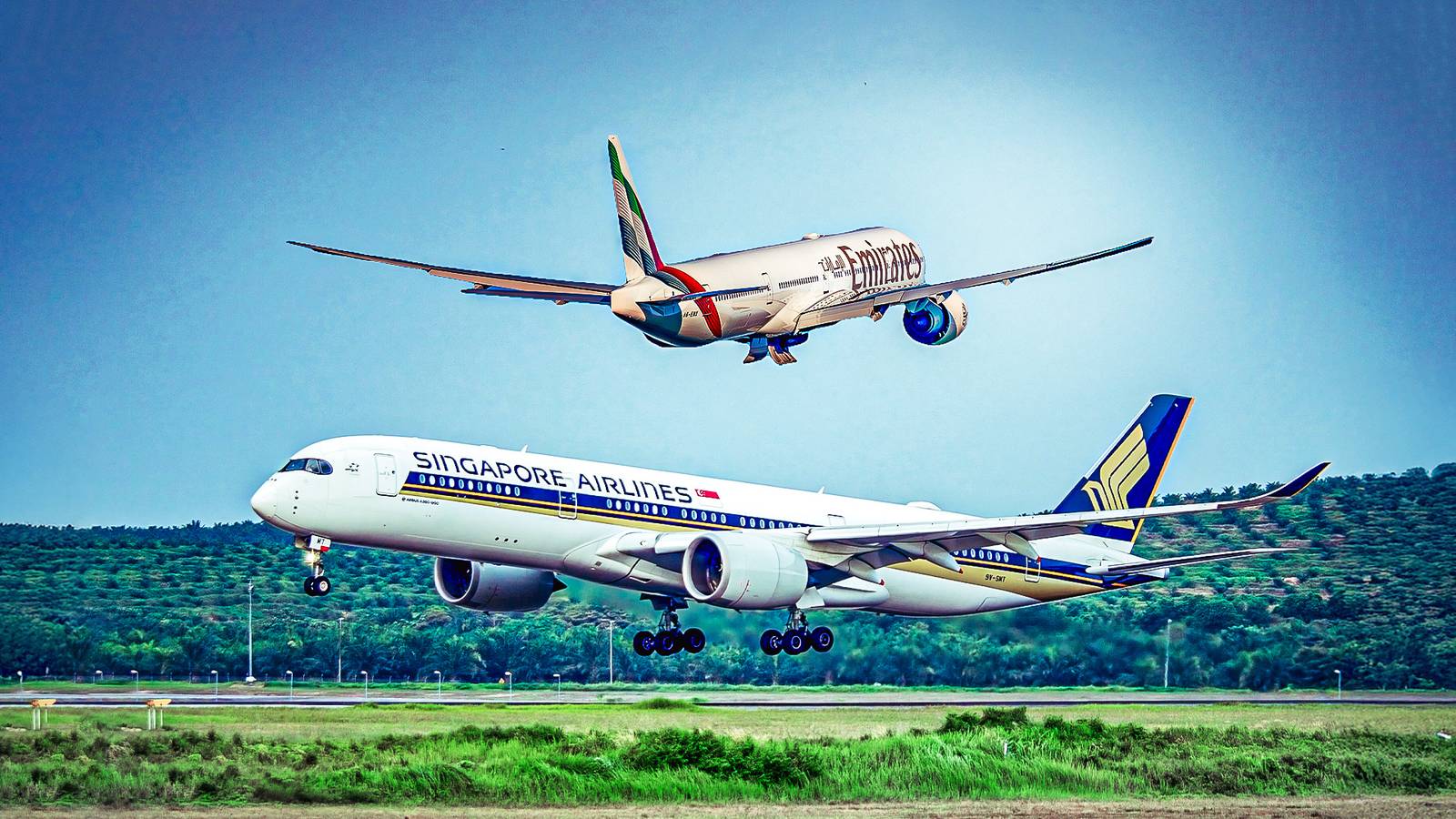
Many airline reviews tend to center around product evaluations, such as seat comfort, meal options, and lounge accessibility. However, a more intriguing aspect is how and why some airlines can charge significantly more than others on identical routes yet still have full flights. One prominent example of this phenomenon is Singapore Airlines.
## Exploring Singapore Airline’s Premium Pricing Strategy
On major long-haul routes, particularly between Asia and Europe, Singapore Airlines often commands significantly higher prices compared to competitors like Emirates and Qatar Airways. A study from Singapore Management University noted that on certain routes, Singapore Airlines’ business-class fares could exceed those of its rivals by as much as 105% and 88%, respectively. These high premiums are not just arbitrary; they reflect a robust business model that leverages brand strength, product differentiation, and effective revenue management strategies.
For instance, the Singapore–Frankfurt route stands out in terms of competition. While passengers have the option to fly directly with Singapore Airlines or connect through Middle Eastern hubs with other airlines, the convenience of a nonstop service plays a crucial role in pricing. Corporate travelers, in particular, tend to prioritize time efficiency over cost, making the higher fare more palatable. Singapore Airlines anticipates that a portion of travelers is willing to pay extra for a better overall experience, including seamless travel and superior service quality.
## The Value of Nonstop Services
One of Singapore Airlines’ strategic advantages comes from its nonstop flight offerings. While competitors like Emirates and Qatar typically require layovers through their respective hubs, Singapore Airlines provides a faster route to key destinations in Europe. For business travelers, the time saved by avoiding connecting flights translates to increased productivity and reduced fatigue. Research suggests that customers are willing to pay significantly more for nonstop services, reinforcing Singapore Airlines’ pricing power.
By serving as a premium option in an area typically dominated by low-cost alternatives, Singapore Airlines captures a larger share of corporate travel. Business-class tickets on the Singapore–Frankfurt route can range from around $1,800 to $5,500, with Singapore Airlines often placed at the higher end of that spectrum. This price optimization reflects a strategic awareness of customer needs and the value they place on convenience.
## A Competitive Edge through Service Excellence
Unlike many airlines that heavily emphasize their hard product—aircraft and seating—Singapore Airlines has cultivated its reputation based on exceptional soft product elements, such as customer service and in-flight experience. A noteworthy initiative allowing premium passengers to pre-select gourmet meals showcases this approach. High crew-to-passenger ratios in premium cabins contribute to a service level that routinely earns the airline top rankings in customer satisfaction surveys.
While competitors can acquire similar aircraft and amenities, the quality of service is much harder to replicate. Recognition for superior cabin crew and consistent service quality fortifies Singapore Airlines’ ability to maintain higher fares, even on highly competitive routes. Frequent travelers often base their loyalty on their experiences, making customer service a crucial differentiator.
## Customer Loyalty Fuels Pricing Power
The evolution of frequent-flyer programs has transformed them into a significant asset for airlines. For many business travelers, the choice to book a flight is often influenced more by the long-term value derived from loyalty programs than by immediate ticket costs. Singapore Airlines’ KrisFlyer program is particularly noted for its competitiveness, offering attractive mileage redemption options. This creates a sense of financial commitment, making it less likely that travelers will switch to airlines with lower fares.
As a result, the stability and loyalty built into their customer base allow Singapore Airlines to maintain prices that resonate with devoted clientele. Frequent travelers are often reluctant to switch airlines even if rival options present cheaper alternatives, leading to higher retention rates and greater pricing flexibility for Singapore Airlines.
In summary, Singapore Airlines effectively combines convenience, premium service, and robust loyalty programs to justify its pricing strategy. By differentiating its product offerings and capitalizing on customer perceptions of value, the airline has crafted a unique market position. Rather than competing solely on price, it focuses on the overall value of the travel experience, enabling it to maintain higher fares while still attracting a loyal customer base.