
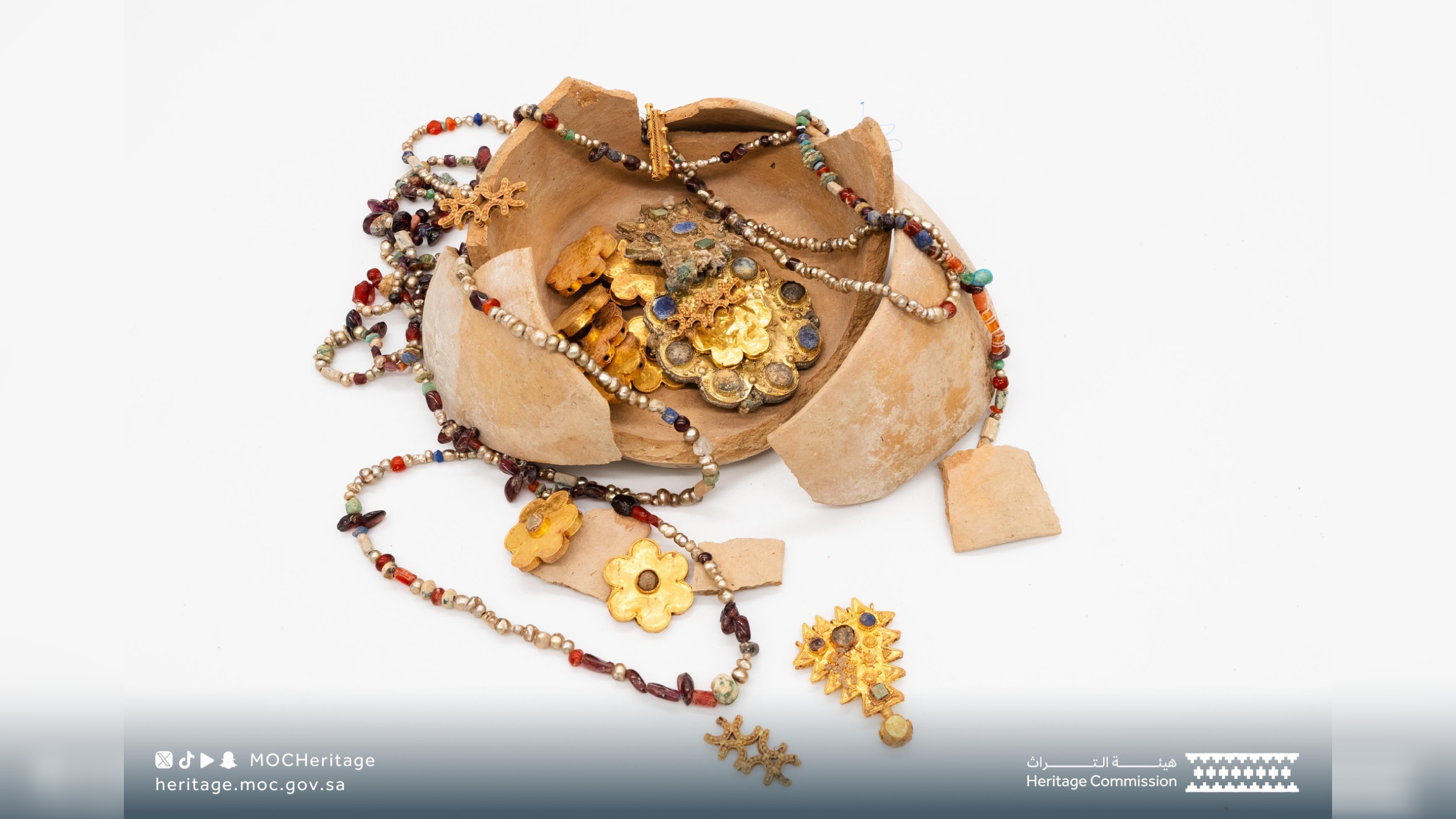
Archaeologists in Saudi Arabia have made an extraordinary find in Diriyah, discovering a clay pot filled with gold, silver, and gemstone jewelry that is believed to have been buried by an Islamic pilgrim over a thousand years ago. This discovery sheds light on the rich history and significant cultural heritage of the region.
Discovery of the Diriyah Treasure
The artifacts, collectively known as the “Diriyah Treasure,” were unearthed during ongoing excavations at a site that served as a critical waypoint for pilgrims traveling to Mecca. Analysis indicates that the primary settlement at Diriyah dates back to between 743 and 753, providing insight into the lives of early Islamic travelers. In addition to the jewelry, archaeologists revealed gypsum water basins and remains of residential buildings, along with fragments of pottery and glass.
The Importance of the Hajj Route
Historically, Diriyah was a significant stop on the pilgrimage route, linking Basra, Iraq, to Mecca, Saudi Arabia. Every Muslim who is physically and financially able is obliged to perform the Hajj pilgrimage at least once in their lifetime. During the Abbasid Caliphate, which began in 750 and marked an era of cultural and scientific advancement, the area gained prominence as an essential resting place for devout pilgrims en route to the sacred city.
Expert Insights into the Discovery
One of the archaeologists involved noted that among the finds, the “Diriyah Treasure” comprises not only gold and gemstones but also oxidized copper fragments. This indicates a level of craftsmanship that showcases the skills of metalworkers from that era, who intricately shaped, embossed, and inlaid the jewelry. However, experts remain uncertain about the exact reasons for burying these precious items—whether as an offering, a loss, or another purpose.
The Future of Excavation at Diriyah
Archaeological efforts at Diriyah are set to continue, promising more discoveries that could further illuminate the historical context of this crucial location. As excavations progress, researchers hope to piece together the narrative surrounding the lives of pilgrims and the significance of their journey to Mecca. The rich combination of artifacts found in the area not only enhances our understanding of the past but also underscores the importance of Diriyah in Islamic history.
This remarkable find at Diriyah serves as a testament to the region’s vibrant past, encapsulating moments from a time when religious devotion prompted journeys of great significance across long distances. The ongoing excavations not only reveal lost treasures but also enrich our collective understanding of cultural and historical narratives within the Islamic world.