
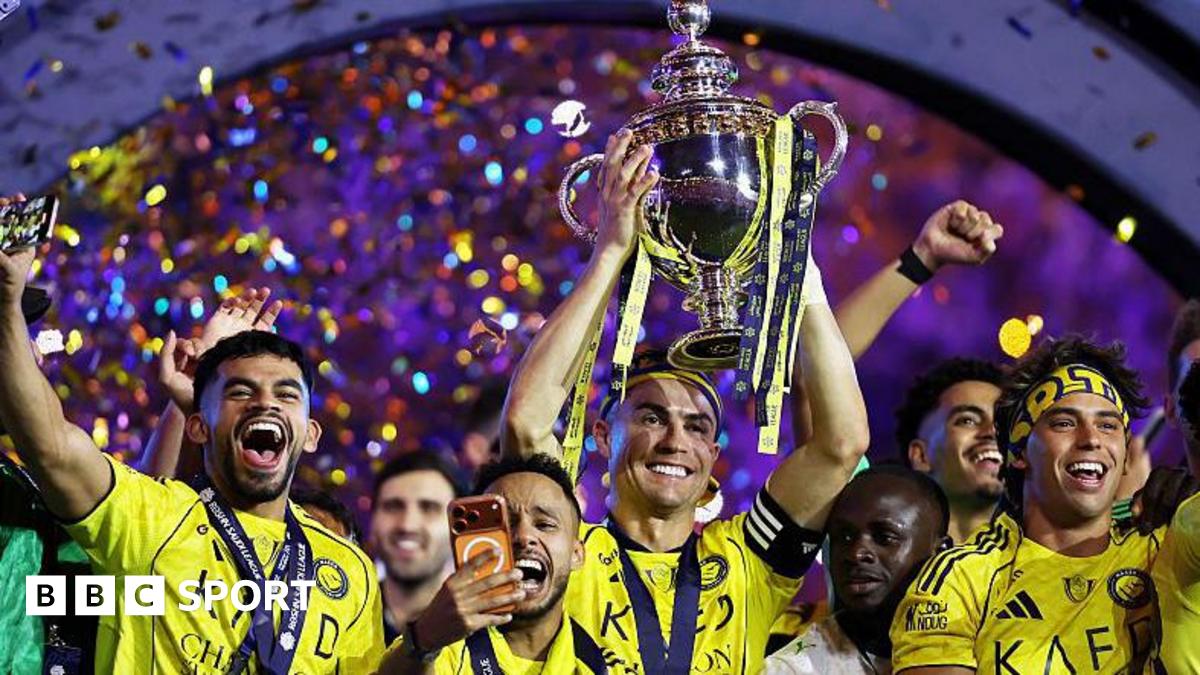
The current season has stirred significant debate in Saudi Arabian football, particularly surrounding the influence of superstar Cristiano Ronaldo. As controversies unfold, they’re impacting not just the game’s aesthetics but also the broader sports landscape in the country.
Controversies in the League
In February, Ronaldo’s absence from two league matches raised eyebrows, as reports suggested he was displeased with how the Public Investment Fund (PIF) managed Al-Nassr in contrast to rival Al-Hilal. This raises questions among fans and analysts alike—does the league favor Ronaldo, or are complaints purely driven by rivalry? Players like Al-Ahli’s Toney and Brazilian winger Galeno have publicly expressed their concerns, alleging that the league shows bias towards Ronaldo and his club.
In response to the mounting complaints, Ronaldo stated, “I think this is not good for the league. Everyone complains. This is football, this is not a war… but not everything is allowed.” He further emphasized that incidents affecting the integrity of the league should be addressed, suggesting he would elaborate on these issues at the end of the season. The overall sentiment among players points to an unsettling atmosphere fueled by discontent with officiating and the league’s management.
The Future of Saudi Sports Investments
Beyond just football, the credibility of Saudi Arabia’s broader sports initiatives is under scrutiny. In April, PIF announced its intention to halt funding for LIV Golf by season’s end. Similarly, the Asian Games initially slated for 2029 in the Kingdom have been indefinitely postponed. Adding to the concerns, the Women’s Tennis Association’s high-stakes finals will also conclude their three-year run in Saudi Arabia this year.
The buzz surrounding the Saudi Pro League has quieted considerably compared to the past, where high-profile transfers dominated headlines. Financial investments have certainly continued, with significant moves like Al-Qadsiah acquiring Italian striker Mateo Retegui for approximately £57 million and Al-Hilal paying £46 million for Darwin Nunez. However, the focus now seems to be shifting toward acquiring younger talents with potential resale value.
Ronaldo’s Impact on the League
Despite these challenges, Ronaldo’s achievements with Al-Nassr may provide crucial momentum to reinvigorate Saudi Arabian football. As noted by analysts, the league is at a turning point—how it capitalizes on Ronaldo’s legacy could influence its future trajectory. Presently, the possibility of signing veterans like Mohamed Salah remains open, contingent on meeting the right price.
Ronaldo’s triumphs might be regarded as a capstone to an extravagant era in Saudi football, where clubs splurged an eye-watering £700 million in a single transfer window. The implications of his success—or the lack thereof—on future strategies are wide-ranging, leaving the football community pondering the road ahead.
The ongoing excitement among fans, particularly those rallying behind Al-Nassr and Ronaldo, suggests the league still has a vibrant following. As Chadwick remarked, it’s now crucial for clubs, the league itself, and policymakers to strategically leverage Ronaldo’s contributions to the sport. For now, the anticipation and enthusiasm surrounding the yellow half of Riyadh continue to shine brightly, but what lies ahead remains uncertain.