
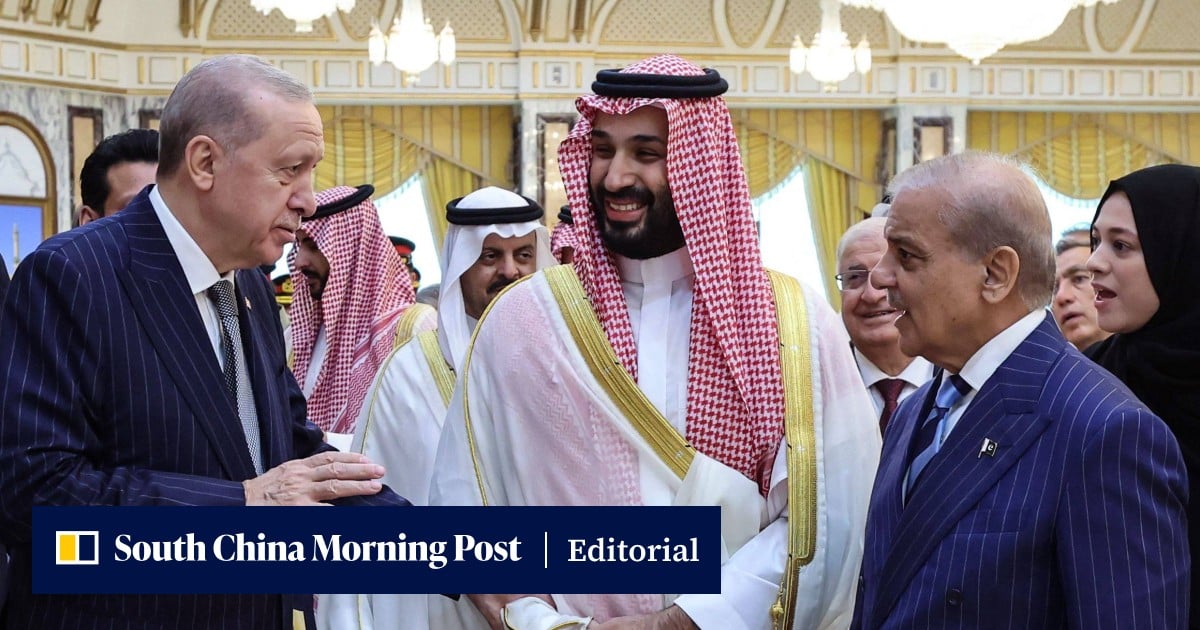
The shifting dynamics of global security alliances among middle powers indicate a growing disillusionment with the United States’ role as the definitive provider of international stability. Countries such as Saudi Arabia, Turkey, and Pakistan are no longer content to rely solely on Washington’s security framework. In fact, they have begun to form what some analysts refer to as an “Islamic NATO.” This transformation underscores a pivotal change in global power relations, prompting major players to explore alternatives to American influence.
Emerging Alliances and Their Implications
Saudi Arabia, Pakistan, and Turkey represent a unique coalition in the evolving geopolitical landscape. While one nation has historically been a close ally of the U.S., another is a member of NATO, and the third serves as a vital intermediary between Iran and the U.S. amid ongoing tensions. The extent to which these countries will intensify military collaboration and integration remains uncertain. Nonetheless, this tripartite relationship raises essential questions about future security arrangements and regional stability.
The Influence of China on Middle Eastern Dynamics
China appears to view the newly formed Mecca Joint Defence Agreement as a gateway to expanding its diplomatic and economic reach within the Middle East and South Asia. Advocating for a multipolar world order, Beijing sees this pact as a potential model for other middle powers seeking to lessen their dependence on U.S.-led security systems. This move could reshape traditional alliances, prompting a reevaluation of power distribution and influence in the region.
Political Signalling vs. Military Commitment
Some analysts caution that the new alliance may primarily serve as a political statement rather than a robust military counterbalance. The potential nuclear capabilities of Pakistan amplify concerns; if an attack on one member is deemed an attack on all, the global ramifications could be catastrophic. As nations navigate these diplomatic waters, it remains to be seen how this coalition will evolve into a tangible military partnership.
The Decline of U.S. Influence and Its Consequences
This budding alliance represents a pragmatic response to what many perceive as a diminishing commitment from the U.S. to uphold its traditional role as a global enforcer of stability. The recent military actions undertaken by the U.S. and Israel against Iran have not only shaken global energy markets but have also eroded trust among allies in the Middle East. This sentiment is prompting these nations to rethink their security strategies and explore alternative frameworks.
As the geopolitical landscape shifts from a unipolar to a more decentralized paradigm, various nations are increasingly inclined to establish their own regional security arrangements. This trend extends beyond just Islamic states; many middle powers are also considering ways to enhance their defenses independently. The implications of these changes could significantly alter global security dynamics, warranting close observation as alliances continue to develop and transform.