
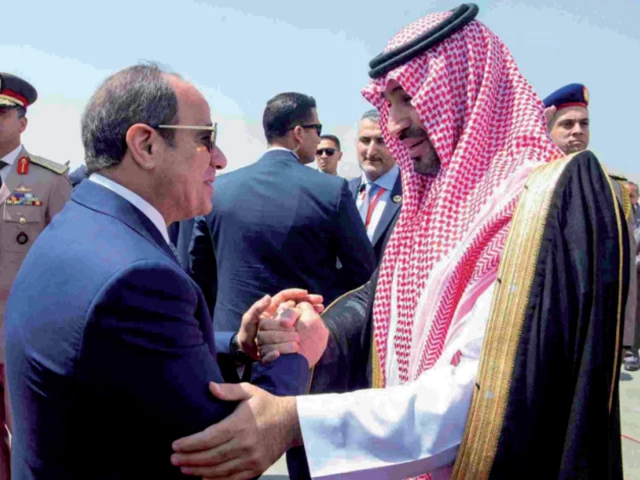
Egyptian President Abdel Fattah al-Sisi is advocating for an urgent parliamentary session to permit military support for Saudi Arabia, contingent upon a formal request from the kingdom. This strategic move comes amid escalating tensions in the Middle East, particularly as Iran-aligned Houthi forces intensify their assaults on Saudi soil, raising concerns about regional stability.
Egypt Steps Up Support for Saudi Arabia
The Egyptian presidency has articulated its readiness to bolster the security and stability of Saudi Arabia in light of recent aggressive maneuvers by the Houthis, who are engaged in a prolonged conflict in Yemen. As regional military influence grows, al-Sisi’s push for parliamentary approval reflects Egypt’s commitment to act decisively in defense of its Gulf ally should the need arise. Various media outlets and lawmakers expect discussions to extend into Monday, highlighting the urgency of the situation.
The conflict in Yemen has escalated sharply, pitting a Saudi-led coalition against the Houthis, who control significant territories in Yemen, including the capital, Sanaa. This turmoil is further complicated by the backdrop of ongoing hostilities between the United States and Iran, positioning Egypt’s potential military involvement as a significant factor in the broader geopolitical landscape.
Escalating Houthi Attacks and Regional Security Implications
In recent days, the Houthis have intensified their operations against strategic Saudi targets, including the international airport in Riyadh and essential infrastructure like Saudi Aramco, further threatening critical oil shipping routes. The collapse of a long-standing ceasefire has heightened these risks, prompting Egyptian officials to express a commitment to support Saudi Arabia in safeguarding its territorial integrity and resources.
Egypt’s National Defence Council convened recently under al-Sisi’s leadership, resulting in a strong declaration of intent to assist Saudi Arabia. The presidency emphasized that all necessary measures would be taken to defend the kingdom’s critical interests, particularly its Islamic holy sites, in light of increased Houthi aggressiveness. Similarly, conversations between Egypt’s Foreign Minister and his Saudi counterpart have focused on the need for regional de-escalation in light of these developments.
Strategic Partnerships and Historical Context
The historical and strategic alliance between Egypt and Saudi Arabia has seen the two nations supporting each other economically and militarily over the years. Following Egypt’s military upheaval in 2013, Saudi Arabia and other Gulf nations provided significant financial assistance, reinforcing their close ties. While Egypt had previously engaged in the Saudi-led intervention in Yemen starting in 2015, its military involvement has remained relatively limited; however, the current crisis could herald a more active role.
Washington’s stance during this ongoing conflict has also influenced dynamics, as the U.S. has primarily offered intelligence rather than direct military support in contrast to earlier expectations. The growing threat of Iranian influence through proxy forces across the region adds complexity to Saudi Arabia’s strategic calculations, necessitating a robust response from regional partners like Egypt.
Geopolitical Ramifications and Future Considerations
The potential for Egypt’s military intervention poses significant geopolitical ramifications, especially as Iranian-aligned forces—like the Houthis—continue to exert pressure on Gulf states. As tensions rise, Egyptian military support could invite reciprocal aggression from the Houthis, underscoring the delicate balance regional powers must maintain amid the escalating conflict.
Moreover, the ramifications extend beyond the battlefield, affecting global energy markets and international relations as major oil supplies are at risk. The developments in this unfolding situation will be crucial for the stability of the Middle East and emphasize the need for diplomatic solutions amidst escalating military engagements. Ultimately, Egypt’s role could be pivotal in shaping the future landscape of the region, dependent on both internal parliamentary developments and external diplomatic engagements.