
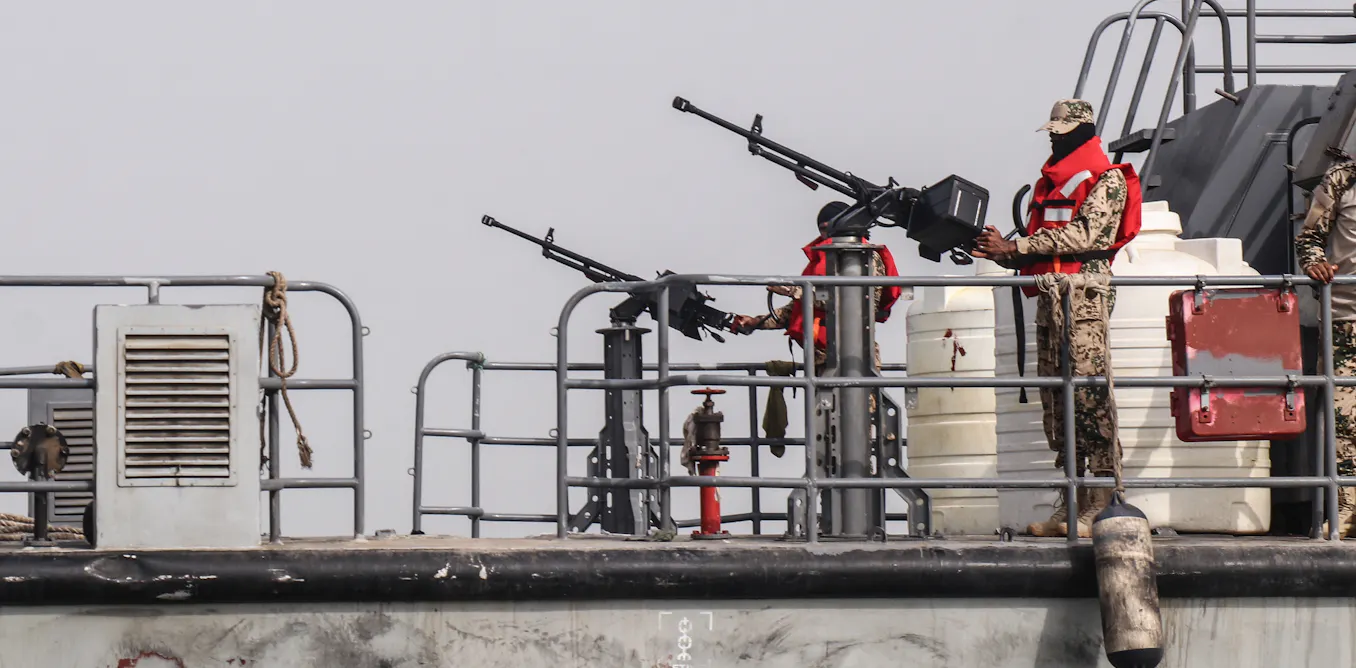
In recent weeks, military tensions in the Red Sea have escalated sharply as Houthi militants, backed by Iran, resumed their attacks on maritime targets. This came after a nine-month lull, with assaults beginning anew on July 22, 2026, particularly targeting Saudi interests. Notably, a floating liquefied natural gas storage facility in Egypt was struck by suspected Iranian drones just a week later, further indicating the volatile climate in the region.
Growing Maritime Risks
The recent attacks signal a significant shift in the security landscape of the Middle East, particularly concerning vital shipping routes. The Houthi assaults have now cast a shadow over not only the Strait of Hormuz but also the Bab al-Mandab Strait and the Suez Canal. Such developments complicate Saudi Arabia’s attempts to redirect oil exports away from Hormuz by utilizing its western ports. The targeting of vessels raises serious concerns about the safety and reliability of maritime transport through this critical waterway, which is pivotal for global energy supplies.
Analysts indicate that this uptick in aggression correlates with the Houthis refocusing their military strategy. Historically, they have posed a persistent challenge to both Gulf nations and U.S. interests. However, during the early phase of the ongoing war with Iran, which commenced in February 2026, there had been a noticeable lull in Houthi operations. This hiatus can be attributed to a series of brutal U.S. airstrikes and Israeli attacks that decimated Houthi leadership and capabilities, temporarily capping their military ambitions.
Negotiating Tensions through Terror
Tensions reared their head again when a Houthi delegation flew to Iran to attend the funeral of former Supreme Leader Ali Khamenei on July 8, 2026. The Iranian airline that facilitated the trip, Mahan Air, has been sanctioned by the U.S. for its links to Iran’s military structure. On their return to Yemen, the flight was diverted due to strikes on the runway in Sanaa, igniting further hostilities.
In light of this rekindled conflict, the Houthis announced a naval blockade against Saudi Arabia—a stark escalation in hostilities reminiscent of the attacks witnessed during the civil war in Yemen. This announcement not only underscores the growing threat to Saudi oil exports but also mirrors past aggressions that severely impacted the country’s urban centers and energy infrastructure.
Saudi Arabia’s Strained Countermeasures
Saudi Arabia had previously developed plans to mitigate risks from Hormuz, pivoting oil exports to western ports when the Strait was compromised. The East-West pipeline from Abqaiq to Yanbu became crucial, allowing for significant oil exports despite ongoing threats. However, recent strikes on oil tankers in the Red Sea reveal that Saudi Arabia’s fallback strategies are now under severe jeopardy. With the Houthis launching multiple assaults, the Saudis have retaliated with airstrikes, marking a return to aggressive military engagement since the 2022 truce.
These escalating tensions highlight the potential for wider conflicts drawing in neighboring nations and realize the inextricable link between regional stability and global energy markets. If shipping routes continue to be targeted, the economic repercussions could span far beyond the immediate theatre of conflict, aggravating an already strained global supply chain.
A Complex Web of Conflict
The intersection of these various geopolitical interests creates a precarious environment where existing conflicts overlap, complicating efforts for resolution. In expanding their operational scope, the Houthis aim to gain leverage over Saudi Arabia, potentially seeking political and economic concessions. However, this intensified military posture might provoke Saudi Arabia to adopt a more aggressive stance in its airstrikes, further inflaming the situation.
This environment of uncertainty can lead to significant repercussions on energy markets, risking disruptions that may have diverse economic impacts worldwide. Both the Houthis and Saudi Arabia seem unable to curtail their offensive actions, creating a cycle of escalation that could affect not only regional stability but the broader global economy as well.