
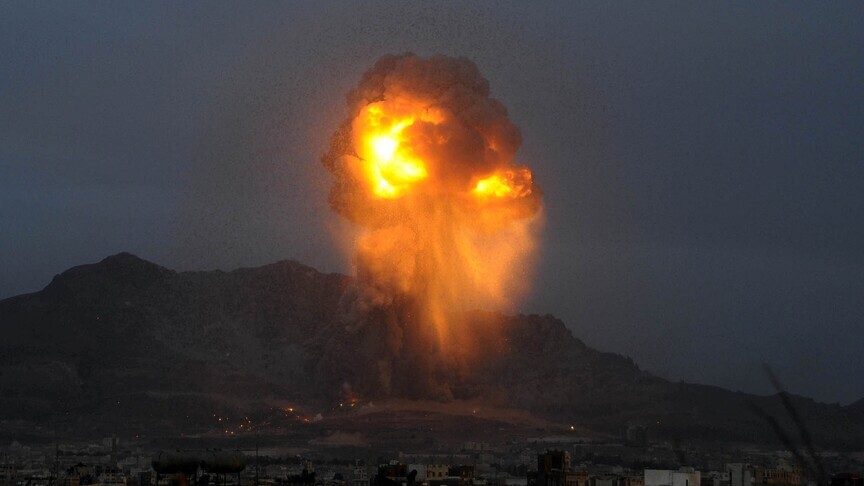
The recent escalation of violence in Yemen has drawn significant international concern, particularly following a series of Houthi attacks on Saudi Arabia that targeted civilian infrastructure. The European Union has issued a stern condemnation of these actions, which have resulted in numerous civilian casualties.
EU Condemns Houthi Attacks
On September 8, 2026, the European Union expressed its disapproval of the Houthi assaults that have impacted southern Saudi Arabia, causing injuries to at least 73 civilians, among them women and children. Anouar El Anouni, a spokesperson for the European Commission, articulated that these actions represent a troubling escalation in hostilities. He emphasized that such attacks violate international law, undermine regional stability, and put ongoing efforts for a peaceful resolution to the Yemeni conflict at risk.
The EU also condemned the deliberate targeting of civilians and civilian infrastructure, asserting that these practices are intolerable. El Anouni’s statement urged the Houthi forces to immediately cease all forms of aggression within and beyond Yemen, including threats to commercial shipping lanes in the Red Sea. The bloc called for compliance with UN Security Council resolutions 2722 and 2826, adopted in 2024 and 2026, respectively.
Impact on Regional Security
The European Union’s stance reinforces the notion that peace and stability in Yemen are vital for the overall security of the Gulf region and the Red Sea. The ongoing conflict has far-reaching implications not only for Yemen but for surrounding nations as well. The intensification of violence can easily escalate tensions, which might impact vital trade routes and lead to broader geopolitical consequences.
On the same day of the EU’s statement, Yemen’s Houthi group confirmed that they had executed extensive missile and drone attacks against Saudi Arabian targets, notably Aramco facilities located in Abha, Najran, and Jizan, along with Khamis Mushait Air Base. The Houthis justified these actions as retaliation for what they claim were 121 Saudi airstrikes conducted in just three days against various Yemeni provinces, including Marib and Al-Bayda.
The Ongoing Conflict in Yemen
Yemen has been embroiled in conflict since the Houthis took control of the capital, Sanaa, in 2014. This move prompted a Saudi-led coalition to launch military intervention in March 2015 to support the Yemeni government recognized by the international community. Since then, the humanitarian situation in Yemen has deteriorated drastically, leading to one of the world’s most pressing crises.
The recent confrontations mark a critical juncture in this protracted conflict, with both sides seemingly stuck in a cycle of retaliation. As calls for a ceasefire grow louder, the international community remains watchful, hoping for a resolution that will bring stability to the region and alleviate the suffering of the Yemeni populace. Continued pressure on the Houthis, coupled with a commitment to dialogue, may pave the way for discussions aimed at ending the violence and achieving lasting peace.