
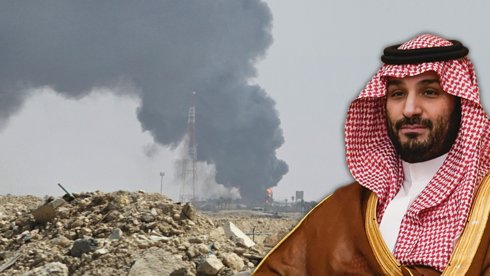
Saudi Arabia is striving to maintain an image of strength and stability amidst escalating Houthi attacks that jeopardize its economy and threaten Crown Prince Mohammed bin Salman’s ambitious Vision 2030 initiative. Recent incidents, such as the closure of Riyadh’s primary international airport and the absence of key global energy figures at major conferences, highlight the disparity between the kingdom’s public portrayal of stability and the unsettling realities on the ground.
Houthi Attacks and Their Economic Impact
Saudi officials seldom reveal the full extent of the damage inflicted by the recent Houthi strikes. Access to official footage is stringently controlled, and local residents are discouraged from documenting the aftermath. Statements from the Saudi-led coalition primarily focus on successful interception of threats rather than the actual destruction wrought by the attacks. The recent assault on King Khalid International Airport underscores the growing difficulties faced by the kingdom as it attempts to conceal the risks posed to its critical infrastructure.
Despite the chaos, Saudi Arabia is determined to project resilience. A recent Cabinet meeting led by Crown Prince Mohammed bin Salman praised the swift restoration of oil flows through the East-West pipeline, which had come under drone attack in September. Officials claim that this rapid recovery demonstrates the operational flexibility of the nation’s energy sector. However, beneath these optimistic assertions lies a complex array of immediate and long-term economic challenges that threaten to undermine the goals of Vision 2030. The government’s ability to contain the fallout from sustained Houthi attacks is rapidly diminishing.
Impending Economic Consequences
The ramifications of the Houthi assaults are being acutely felt across multiple economic sectors. The aviation industry, heavily affected by the shutdown of King Khalid International Airport, faces disruptions that impact international visitors, investors, and business leaders. Future engagements, including the flagship Future Investment Initiative summit in late October, are now jeopardized by security concerns, leading to uncertainty regarding attendance.
This unsettling trend extends beyond aviation. The ongoing World Petroleum Council’s Energy Congress has witnessed notable absences among high-profile executives from major oil companies, including ExxonMobil and BP, raising alarm regarding the kingdom’s security situation. Numerous other global events, including the Misk Global Forum—a key conference associated with the crown prince—were also abruptly canceled. These cancellations expose the growing perception of Saudi Arabia as a risky locale for international business engagement, contradictory to its planned image as an emerging global economic power.
Challenges to Vision 2030
Analysts are increasingly assessing the long-term consequences of the Houthis’ persistent operations against Saudi Arabia’s economy and international standing. Some see these attacks as a calculated effort to exploit the kingdom’s vulnerabilities, particularly its economic infrastructure and image. As various Saudi industries, including energy, aviation, and tourism face threats, the question of the nation’s economic resilience looms large.
The stakes seem particularly pronounced for the Vision 2030 initiative, which aimed to transition Saudi Arabia into a thriving global economic hub. However, events have complicated these ambitions, with analysts noting that economic expectations have begun to falter since the onset of the current conflict. The negative trajectory could deplete potential foreign capital and investments required for the kingdom’s ambitious reforms, a fact not lost on Saudi leadership.
Despite the high-profile narrative of resilience articulated by officials, some experts caution that the reality could be quite different. The continued escalation of conflict has damaged Saudi Arabia’s reputation as a haven for investment, raising pressing questions about its stability in an increasingly volatile regional landscape. As the situation continues to unfold, the effects on both the economy and the crown prince’s vision may become even more pronounced.