
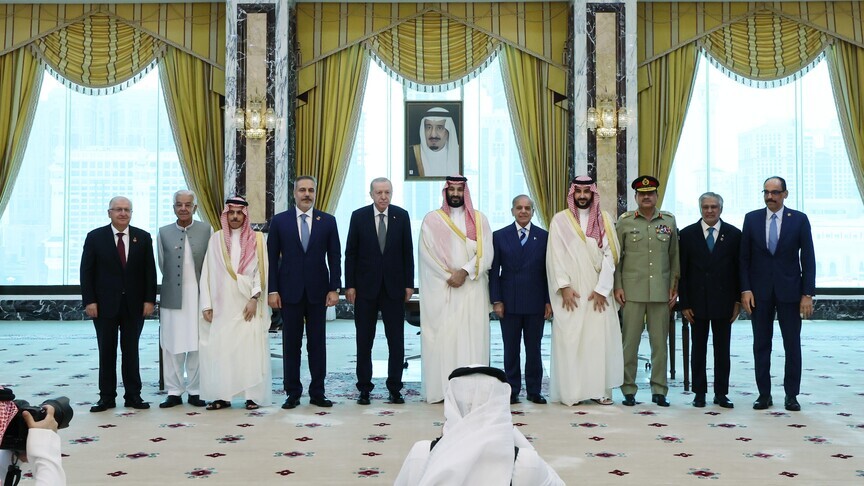
The recent joint defense agreement among Saudi Arabia, Türkiye, and Pakistan, signed on August 7 in Mecca, is poised to redefine their diplomatic ties. This pact signifies not just an alignment of military interests, but an extensive framework for collaborative defense, suggesting that an aggression against one will be treated as aggression against all. It marks a transformative step in regional security, encouraging these nations to rely on their capabilities rather than solely on external support.
Significance of Mecca in Military Cooperation
Selecting Mecca as the venue for this agreement adds profound significance. As a spiritual epicenter for Muslims, it offers a cultural layer that elevates the pact beyond mere military implications. However, it is essential to approach the agreement with cautious optimism; dubbing it an “Islamic NATO” too soon could lead to misunderstandings. The efficacy of this alliance will largely depend on the clarity of obligations and commitments, well-defined operational capabilities, and the speed and efficiency of decision-making processes during crises.
The partnership among these three nations offers a strong foundation that acknowledges their various strengths. Saudi Arabia serves as an influential nexus with its energy resources, investment prowess, and geographical positioning. Türkiye complements this by providing extensive military asset capabilities and access to vital sea routes. Pakistan fortifies the alliance with its substantial human resources and nuclear capabilities. This synergy creates a balanced defense posture that can amplify collective security.
Strategic Forces and Nuclear Considerations
It is crucial to clarify that Pakistan’s nuclear arsenal does not automatically enhance the defense agreement’s nuclear umbrella. The terms stipulated in the released text offer no explicit commitment toward a shared nuclear defense. True deterrence and security arise not just from capabilities but also from a clear political will to act collectively. To truly bolster military strength, these nations must focus on integrating their economic and technological capabilities, moving beyond simple joint exercises. Collaborative ventures in research, production, and technology transfer will elevate their status from consumers to active contributors in the defense sector.
By linking security imperatives with economic strategies, the Mecca Agreement can serve as the backbone for a broader economic corridor. Trade routes are enhanced by a strong military presence; likewise, robust trade fosters the wealth required to maintain such security. This interconnected vision positions Türkiye at the heart of the initiative, fortifying its role as a key logistical and strategic hub between Asia and Europe.
Fostering Regional Connectivity
The historical context of the Hejaz Railway can inspire a modern equivalent—a high-capacity transit network that facilitates not only the movement of goods but also invigorates regional manufacturing and tourism. Reassessing the existing TAPLINE infrastructure could provide a framework for contemporary energy and data distribution routes, benefiting all involved countries. Such developments would not necessitate competition against established corridors like the China-Pakistan Economic Corridor; instead, they would create a multifaceted network that promotes economic independence and cohesion among partners.
Furthermore, enhancing connections through Jordan and Syria can solidify this initiative. These nations serve as crucial links in regional integration, and fostering stability in Syria will be vital. By strengthening its sovereign institutions, Syria can unlock economic opportunities that resonate throughout the entire region. A stable Jordan, more deeply integrated into these transit and investment networks, can also provide a framework for long-term stability.
Building a Long-lasting Regional Framework
For the Mecca Agreement to endure, it is crucial that it is supported by robust institutional frameworks and operational mechanisms. Establishing a supreme defense council, risk assessment centers, and comprehensive military exercises across various domains will strengthen this alliance. Beyond military considerations, fostering economic cooperation through streamlined trade, investment mechanisms, and skilled labor mobility will further enhance the partnership.
On a broader scale, the Mecca Agreement carries the potential for a new regional order. By focusing on collaborative architecture that combines military strength with economic viability, Saudi Arabia, Türkiye, and Pakistan can transition from reactive posturing to proactive governance. This framework could serve as a model of resilience, anchored in shared interests and stability, offering both protection and prospects for sustained peace in the region.