
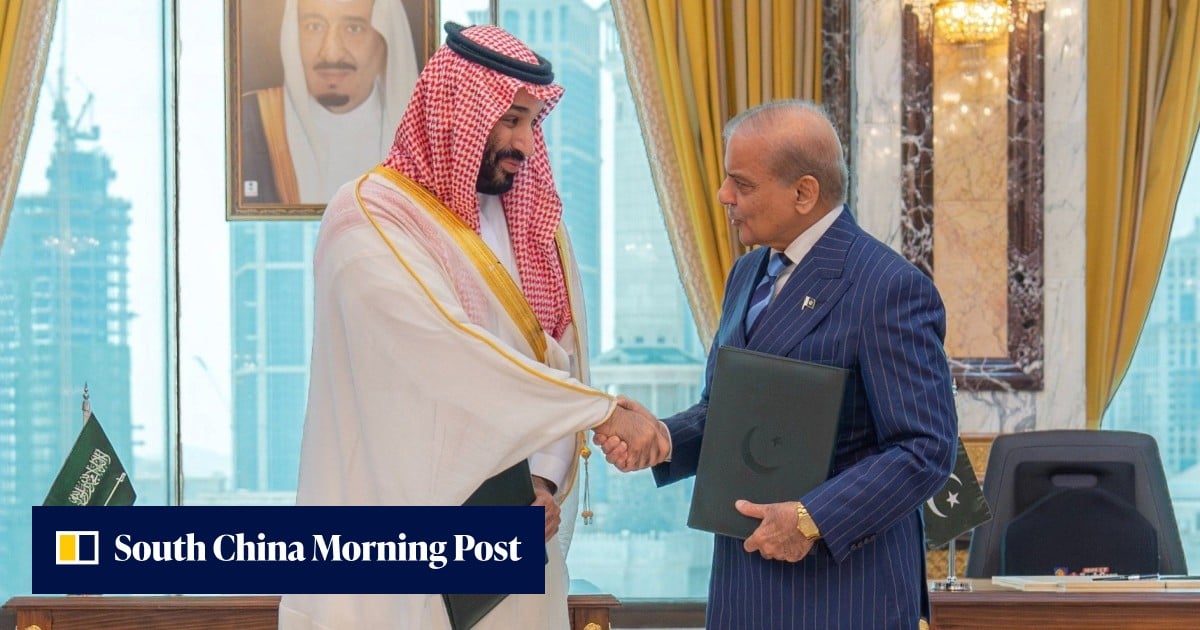
Pakistan has recently formalized a defense pact with Saudi Arabia and Turkey, which aims to enhance regional security without targeting any specific nation. On Sunday, Foreign Minister Ishaq Dar emphasized that the agreement, dubbed the Makkah Accord, is fundamentally defensive. He stated this initiative is open for any country that supports its principles and is committed to resolving disputes through dialogue and peaceful methods. This collaboration highlights a collective ambition to strengthen strategic cooperation among the three nations and promote stability in the region.
The Nature of the Makkah Accord
The Makkah Accord is geared toward establishing a robust defense framework between Pakistan, Saudi Arabia, and Turkey. Dar clarified that the agreement is primarily focused on defense, enabling the countries to present a united front against potential threats. The pact includes a significant clause stating that any armed attack on one of the partners would be considered an assault on all three, fostering a sense of collective security. This provision aligns with the right to self-defense outlined in Article 51 of the United Nations Charter, reinforcing the legal foundation of the agreement.
Furthermore, both Turkish Foreign Minister Hakan Fidan and Dar emphasized that the pact is designed specifically to enhance security and does not target any neighboring countries, including Iran. This assurance may help alleviate regional tensions and allow for a greater focus on peace and cooperation, signaling a tentative shift towards more collaborative diplomatic relations.
Openness to Inclusion and Cooperation
Ishaq Dar conveyed that the Makkah Accord is not exclusive and welcomes involvement from other nations that share its vision. He stated the agreement is intended to complement existing treaties rather than replace them, thus allowing for multiple layers of diplomatic and military cooperation. This openness could serve as a platform for fostering a more collaborative approach to security in an often tumultuous region.
Dar’s comments reflect a commitment to fostering relationships with a diverse array of countries, intending to build a more stable environment. The emphasis here is on collaborative dialogue and peaceful resolutions, which are imperative in a region marked by longstanding conflicts and rivalries.
Broader Implications for Regional Stability
The development of the Makkah Accord could have wider implications for geopolitical dynamics in the Middle East and South Asia. By forming a tripartite defense agreement, Pakistan, Saudi Arabia, and Turkey could potentially shift the balance of power and influence, encouraging other nations to reassess their strategies and partnerships. The emphasis on a defensive nature may help lessen fears of aggressive military posturing and instead promote a climate of negotiation and peace.
Moreover, the accord acts as a tangible sign of unity among these three nations, marking a new chapter in their interactions. As they navigate complex challenges, the Makkah Accord stands as a promising step towards collaborative security, countering extremism, and promoting mutual development in the region.
In conclusion, the Makkah Accord represents an important stride towards fostering a secure and peaceful environment among Pakistan, Saudi Arabia, and Turkey. Through this agreement, the countries aim not just to safeguard their own sovereignty but also to provide a model of cooperation that could inspire other nations to join in the quest for regional stability.