
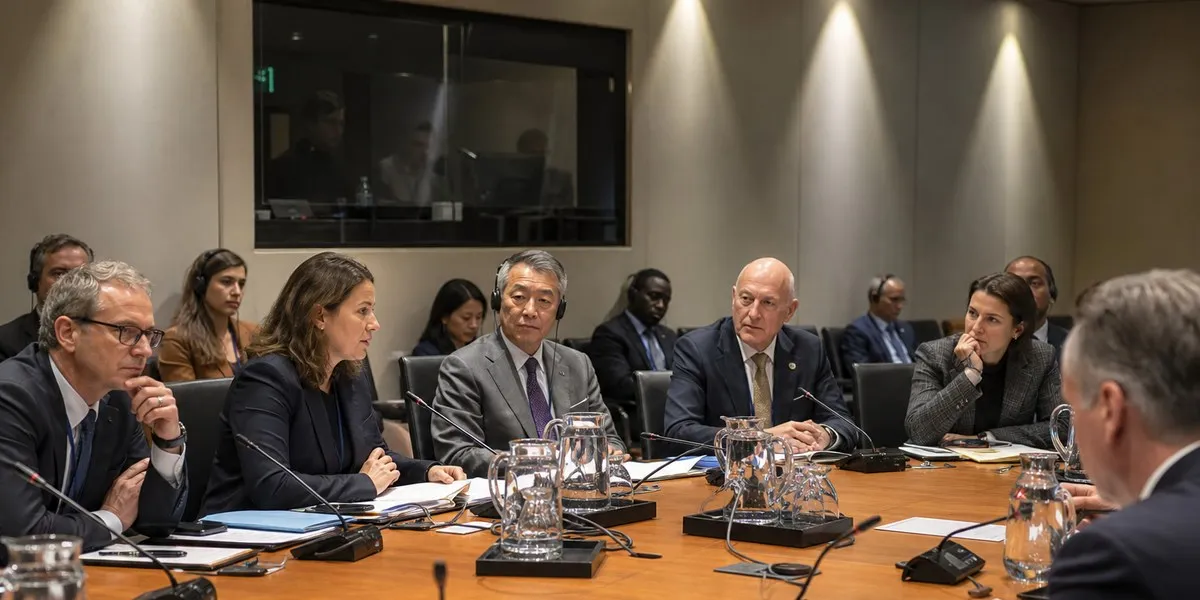
In New York, a significant meeting recently occurred concerning the global response to the Ebola outbreak, with Saudi Arabia’s Deputy Minister of Health for International Cooperation, Nouf Alnumair, standing in for Foreign Minister Prince Faisal bin Farhan bin Abdullah. This gathering was part of the 81st session of the United Nations General Assembly and specifically focused on enhancing collaborative efforts to tackle the ongoing Ebola crisis.
Enhancing Global Collaboration
As detailed by various news outlets, including Asharq Al-Awsat, the G20 meeting attracted representatives from member nations, invited countries, and key global organizations, as well as officials from regions currently impacted by Ebola. The aim was to initiate comprehensive discussions aimed at improving international coordination to effectively manage and reduce the outbreak. Participants engaged in deliberations on how to better support affected nations through swift response measures and to solidify health systems that can withstand future outbreaks.
The primary objectives of the meeting emphasized reducing the rate of virus transmission and preventing its spread across national borders. The global community recognized the necessity for united action against such health crises, stressing the urgency of cooperative endeavors in the face of growing health threats.
Support for Affected Regions
During the discussions, a consensus emerged on the critical need to unify global efforts to address the myriad health threats that cross national borders. Support initiatives for the countries grappling with the Ebola crisis highlighted areas such as epidemiological studies, diagnostic capabilities, immediate on-the-ground interventions, and overall health infrastructure development.
Moreover, the dialogue emphasized the importance of strengthening collaboration between various levels of government, international organizations, and health agencies. Participants elaborated on the necessity for enhanced coordination to systematically manage health emergencies both regionally and globally. This approach could better equip countries to respond to not only current crises but also to potential future outbreaks.
Conclusively, this pivotal meeting marks a significant step in enhancing international dialogues aimed at combating infectious diseases such as Ebola. By fostering collective action and bridging gaps in health preparedness, the global community can work toward a more robust response to health emergencies, ultimately aiming to protect public health and promote safety across borders. As challenges arise, the commitment to enhanced international cooperation remains vital for securing health on a global scale.