
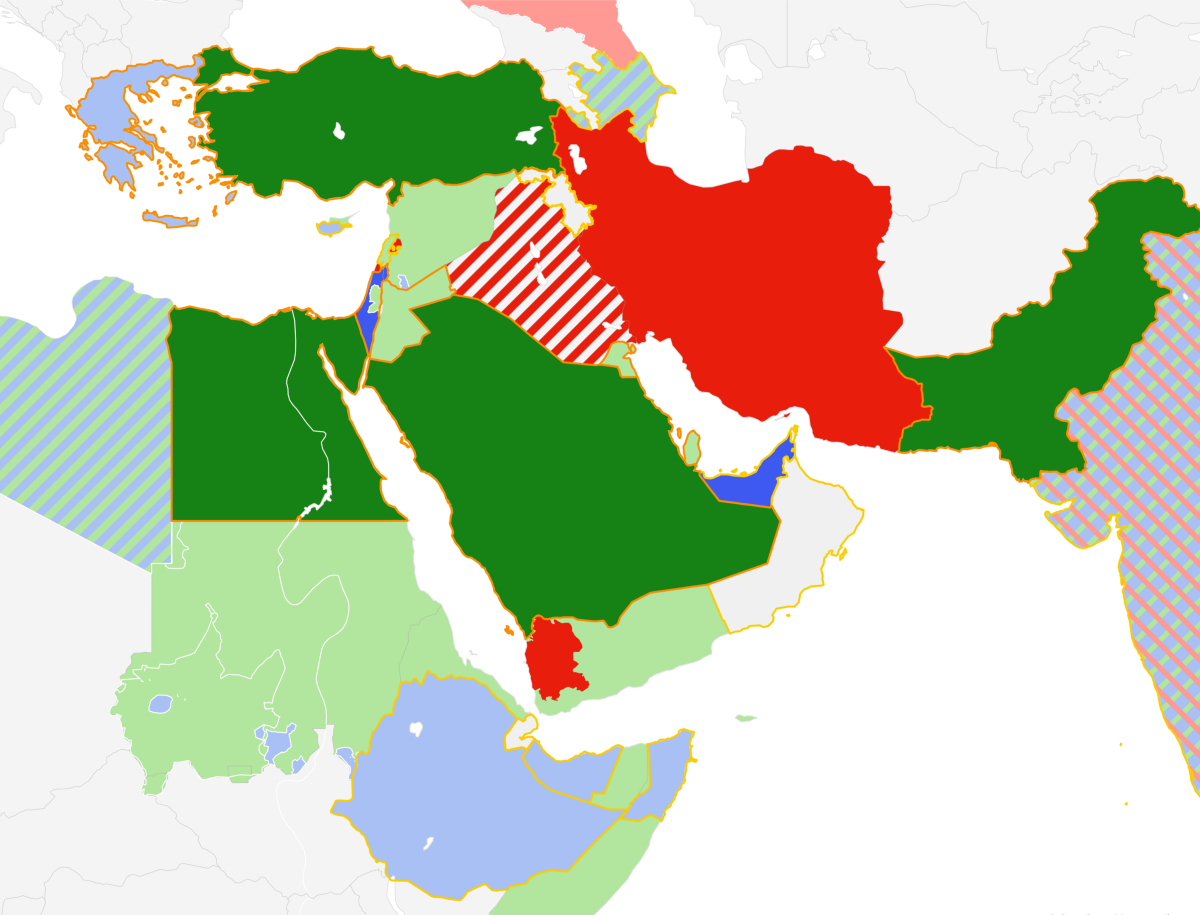
As the geopolitical landscape of the Middle East continues to evolve amid ongoing conflicts and shifting alliances, the dynamics among key nations have never been more complex. The war in Gaza and escalating tensions between the United States and Iran have fueled the emergence of three distinct yet interconnected blocs: those aligned with Iran, Israel, and Saudi Arabia. Each of these coalitions is vying for influence and control over the region’s future, leading to an unprecedented transformation within the Middle East.
The Formation of Three Distinct Blocs
The changes currently unfolding in the region are not entirely new; they are intensifications of pre-existing trends. These evolving partnerships do not formally constitute multilateral security agreements but rely on an increasing array of informal collaborations and joint decisions. A notable consequence of the turmoil, particularly the conflict instigated by the U.S. and Israel against Iran, is a growing skepticism regarding American leadership among Middle Eastern nations. This has driven regional players to reassess their positions, leading to intensified rivalries as they seek to fill the perceived power vacuum.
Analysts are observing a significant shift in confidence as the U.S. appears less reliable in providing security for its allies. This growing sense of insecurity is prompting nations such as Israel and Iran to vie for regional supremacy, while a coalition of middle-ranked powers—most prominently Saudi Arabia, Pakistan, Turkey, and Egypt—engages in a balancing act against both competing forces. The events of the past few years have been pivotal in reshaping perceptions of loyalty and influence in the Middle East.
The Axis of Resistance
Among the newly defined blocs, the so-called Axis of Resistance stands out for its coherence, tracing its origins back to Iran’s Islamic Revolution of 1979. This coalition primarily comprises Shiite Muslim non-state allies aiming to counteract their Sunni counterparts. Hezbollah, armed and supported by Iran, has been a cornerstone of this group since the 1980s, becoming a formidable player not only in Lebanon but also in Syria. Their involvement in the ongoing conflict with Israel following Hamas’s unexpected assault in October 2023 illustrates their proactive military engagement.
Alongside Hezbollah, various Shiite militias in Iraq have emerged, formed in response to the U.S.-led invasion that toppled Saddam Hussein. These groups, united under the banner of the Islamic Resistance in Iraq, have targeted U.S. forces and Israeli interests, shaping a narrative of resistance against Western presence in the region. Additionally, the Houthi movement in Yemen, bolstered by Iranian support, has become another significant player, threatening critical shipping lanes and challenging Saudi influence.
The Sunni Coalition: The ‘Sunni Diamond’
Conversely, Saudi Arabia leads a group sometimes referred to as the “Sunni Diamond,” comprising countries like Egypt, Pakistan, and Turkey. This alliance is driven by not just historical ties but also Saudi Arabia’s vision for modernization under Crown Prince Mohammed bin Salman’s ambitious Vision 2030 plan. Riyadh’s strategies are increasingly focused on regional stability as it confronts a multi-front threat exacerbated by the ongoing war with Iran.
Saudi Arabia is fostering deeper ties with Egypt, nurturing a defense pact with Pakistan, and recalibrating its relationship with Turkey, highlighting a strategic shift toward collective security. The “Quartet” formed by these nations reflects a concerted effort to enhance mutual cooperation and devise a unified crisis response. However, the region remains riddled with uncertainty, as traditional alliances are tested by evolving diplomatic dynamics.
A New Era of Geopolitical Disorder
While these shifting alliances may indicate a new alignment in the Middle East, the overall situation is best characterized as a fragmented and competitive multipolar environment. With U.S. influence waning, states are increasingly relying on informal networks and tactical cooperation rather than formalized alliances. Iran, Israel, and the UAE have each developed regional partnerships involving militias and political movements, capable of shaping local political landscapes despite an inability to dominate through conventional military means.
This period of instability raises questions about the effectiveness of traditional security guarantees and invites a transition toward a form of “volatile deterrence.” As regional powers navigate a landscape marked by competing interests and allegiances, they face the daunting task of balancing military deterrence with diplomatic negotiations. The Middle East is evolving into a complex tapestry of overlapping coalitions and rival networks, marking a significant departure from the symmetrical alliances of the past. This transformation presents challenges and opportunities alike, necessitating a keen understanding of the region’s intricate dynamics and ever-shifting power structures.