
The U.S. State Department has recently approved several significant arms deals with key Middle Eastern partners, including Saudi Arabia, Oman, and Iraq, amounting to approximately $6.1 billion. These sales underscore the ongoing U.S. military support for ally nations in a strategically vital region.
Major Arms Sales to Saudi Arabia
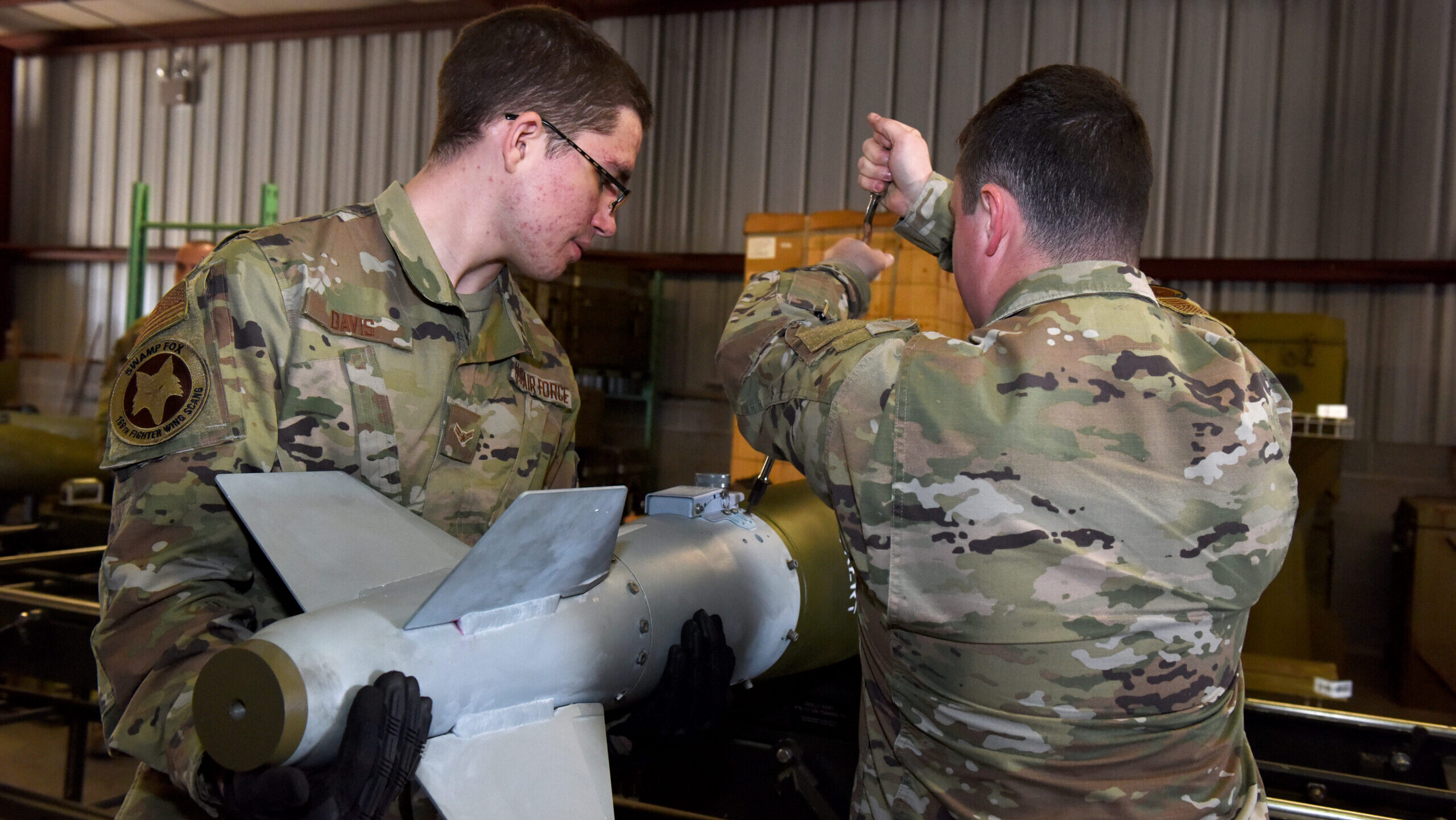
Among the approved transactions, the largest is a $5 billion deal for Riyadh to acquire over 10,000 kits of the extended range Joint Direct Attack Munition (JDAM) along with associated equipment. This transaction also includes around 10,000 conventional bombs, which when modified with JDAM technology, transform into precision weapons. Boeing, a leading aerospace company, is responsible for supplying these munitions to Saudi Arabia. This deal comes at a critical time, as the Saudi military has been heavily engaged in aerial operations against Iran, resulting in a depletion of their precision munitions inventory.
The JDAM is frequently seen as a cost-effective alternative to more sophisticated weaponry. However, it’s important to note that its extended range variant is reportedly limited to a striking distance of over 45 miles, necessitating that aircraft equipped with these munitions fly relatively close to their targets. This capability is essential for maintaining strategic air operations in ongoing regional conflicts.
Additional Sales to Oman and Iraq
The State Department also authorized a secondary arms deal, involving 60 AGT-1500 tank engines valued at $750 million. These engines are integral to the operation of the M1 Abrams tanks, with Honeywell designated as the primary contractor. This sale further deepens military cooperation between the U.S. and Saudi Arabia.
Meanwhile, Oman has been cleared to purchase $188 million worth of sustainment services for its F-16 fighter jets. Although Lockheed Martin manufactures the F-16 and primarily oversees its maintenance, the State Department mentioned that support for this sale will come from the U.S. government or contracted vendors, indicating a flexible approach to meeting Oman’s military needs.
Considering Iraq’s Military Needs
In a separate development, Iraq has received approval for the potential purchase of Bell 412EPX helicopters, estimated to cost around $150 million. Bell-Textron is identified as the primary contractor for this transaction. This announcement follows an earlier decision by the State Department, which authorized an $800 million deal for various helicopter models, including the Bell 412EPX and 407M. Such acquisitions are crucial for enhancing Iraq’s air mobility and bolstering its defense capabilities.
Each of these arms transactions has been communicated via congressionally mandated notifications, indicating that while the deals are significant, they are not yet finalized. The quantities and monetary values of the sales may shift based on ongoing negotiations. Lawmakers also have a 30-day window to intervene and potentially block these deals, although such actions are unlikely given the strategic importance of these partnerships.
In summary, these arms deals reflect the U.S. commitment to supporting its allies in the Middle East, focusing on enhancing their military capabilities amidst ongoing regional tensions. The emphasis on advanced technology and precision weaponry illustrates the U.S. intent to maintain a balance of power in a complex geopolitical landscape.