
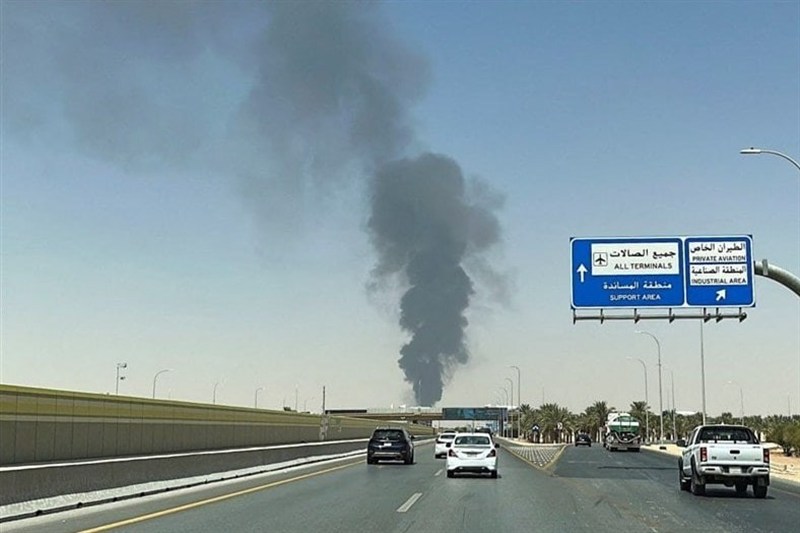
Yemen’s military forces have intensified their operations against Saudi Arabia, adopting an “airport for airport” strategy aimed at retaliating for ongoing airstrikes on Yemeni cities. Recent missile and drone assaults have disrupted operations at several major Saudi airports and targeted crucial energy sites, showcasing the escalating conflict and signaling deeper tensions in the region.
Impact on Saudi Airports
On Saturday, multiple reports indicated that air traffic temporarily halted at King Khalid International Airport in Riyadh following a Yemeni missile strike on the capital. This disruption extended to King Abdulaziz International Airport in Jeddah, along with other airports in Al-Ahsa and Dammam. The barrage of attacks has put significant pressure on Saudi airport operations, emphasizing the effectiveness of Yemen’s strategy.
According to Yemeni sources, flights at King Khalid and airports in Dammam and Abha ceased altogether. Reports also revealed renewed explosions in Riyadh. In eastern Saudi Arabia, a significant column of black smoke was seen rising from the Shedgum gas facility in Al-Ahsa following an attack, though details regarding the extent of the damage remain unclear.
Escalating Military Actions
Yemen’s armed forces aim to reinforce an air blockade against Saudi Arabia as a retaliatory measure for ongoing military aggressions. Brigadier General Yahya Saree, spokesperson for Yemen’s military, indicated that humanitarian flights could continue from Riyadh, provided they were coordinated with Yemeni authorities. This suggestion aims to mitigate the impact on civilians while continuing to assert military presence.
The conflict escalation comes after a surge of Saudi airstrikes targeting various Yemeni cities, with reports citing 77 assaults in just 24 hours. These military actions have often targeted civilian areas, resulting in loss of life and injuries, particularly noted in Sana’a. Eyewitness accounts claimed that attacks occurred near areas set to host demonstrations, aiming to deter civilian participation.
Public Support and Civil Unrest
Despite the rising tensions and violence, large-scale demonstrations erupted across Yemen, signaling strong public support for the Ansarullah movement and its military actions against the Saudi-led coalition. Hundreds of thousands gathered, particularly in Sana’a, following a call from Ansarullah leader Abdul-Malik al-Houthi to commemorate the third anniversary of Operation Al-Aqsa Flood.
The demonstrations served as a powerful statement against Saudi military initiatives and questioned the sincerity of alliances purportedly supporting Gaza. Protesters voiced robust backing for their leadership and condemned the involvement of Saudi Arabia alongside Pakistan and Turkey in what they termed the “Mecca alliance.”
In conclusion, the conflict between Yemen and Saudi Arabia has reached a critical juncture, affecting international air travel and impacting civilians on both sides. The unfolding situation points to deepening hostilities that could have broader implications for regional stability, highlighting the urgent need for diplomatic dialogue amidst escalating military actions.