
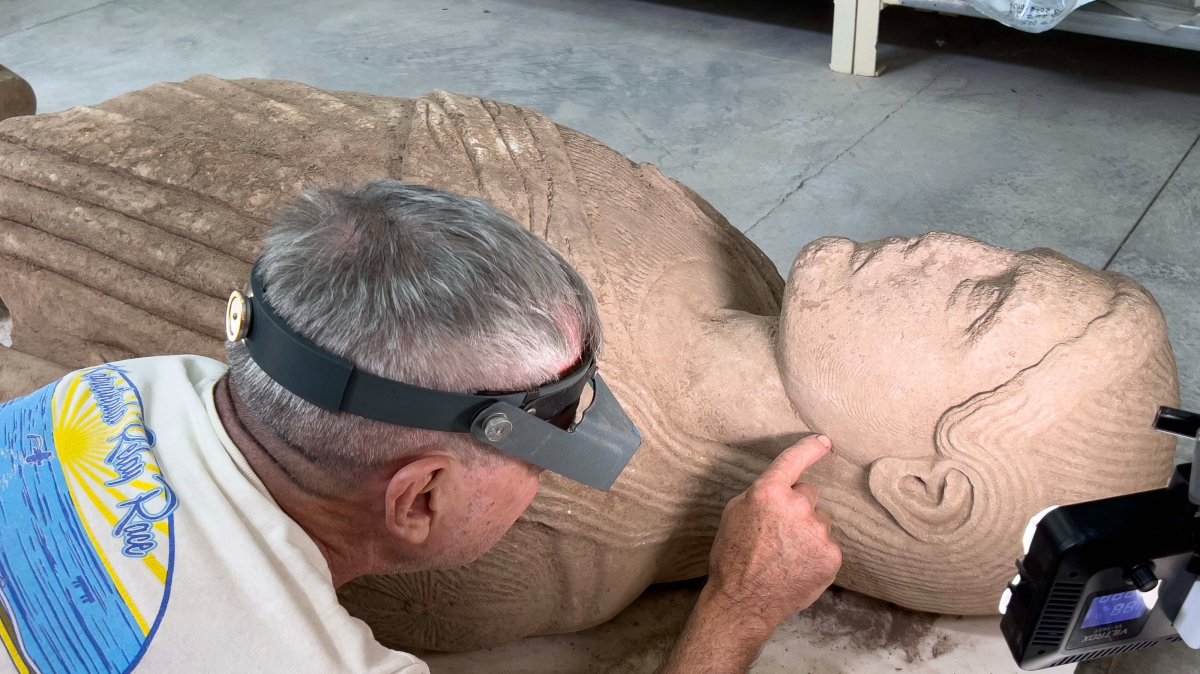
Archaeologists in western Türkiye have made a remarkable discovery in the ancient city of Sardis, unearthing a monumental marble statue of a young man that dates back roughly 2,500 years. This find stands out as one of the most significant archaeological revelations in Anatolia in recent years, underscoring the region’s rich history.
A Glimpse into Ancient Sardis
The 2.2-meter (7.2-foot) statue, located in the UNESCO World Heritage Site of Sardis in Manisa’s Salihli district, was revealed during ongoing excavations overseen by Türkiye’s General Directorate of Cultural Heritage and Museums. Culture and Tourism Minister Mehmet Nuri Ersoy announced the discovery on social media, noting that the statue originates from the early fifth century B.C. and represents one of the rare examples of monumental sculpture from that era, owing to its excellent preservation and intricate craftsmanship.
Notably, the statue was uncovered in two large pieces, with its feet and some smaller fragments missing. Researchers theorize that this impressive sculpture was originally intended for public display before being incorporated into the Roman period’s infrastructure, where it served as paving material on the city’s colonnaded street. Its unique face-down placement ensured that its intricate features were protected for centuries.
Distinctive Features Reflecting Cultural Influences
The Ministry of Culture and Tourism has conducted a stylistic analysis that dates the statue between 470 and 450 B.C. Its design reflects a blend of artistic traditions, merging the emerging Classical style of the Aegean with the unique characteristics of Lydian culture. While the statue bears the hallmarks of earlier sixth-century sculptures, such as its upright posture and flowing hair, its facial attributes and detailed anatomy align more with the early fifth century B.C.
The young figure is adorned in a thick himation over a delicate chiton, complemented by another garment featuring horizontal bands. Researchers have noted that this rare combination has not been observed in similar statues from Greece or Anatolia, emphasizing its regional significance. The figure also holds what is believed to be a fruit, possibly a quince, symbolizing a votive offering to a deity—a reflection of the religious customs of that time.
The Importance of the Find
This statue is particularly vital because it dates back to a time when Sardis was the capital of the western province of the Achaemenid Empire. The piece exemplifies the fusion of Aegean artistic influences with distinctive local elements, providing insight into the identity of the city’s elite around the early fifth century B.C. The discovery of such exceptional and well-preserved monumental sculpture is rare in this region, enhancing its significance within the field of Anatolian archaeology.
As researchers delve deeper into this find, they anticipate that it will shed new light on the cultural interactions, daily life, and spiritual beliefs of Sardis’ upper classes during the Persian era.
Ongoing Conservation Efforts
Interestingly, while most ancient marble sculptures were originally painted, remnants of this pigment are often elusive due to their fragile nature. The newly discovered statue is covered with a thick layer of mineral deposits accumulated over centuries underground. Conservation specialists will implement a meticulous scientific cleaning process to preserve any remaining traces of original paint. Experts in ancient polychrome sculpture will investigate the statue’s surface and surrounding soil to locate evidence of the colorful history that it might hold.
Upon completion of its conservation and scientific analysis, the statue will ultimately be made available for public viewing at the Manisa Museum, allowing visitors to appreciate its historical and artistic significance.