
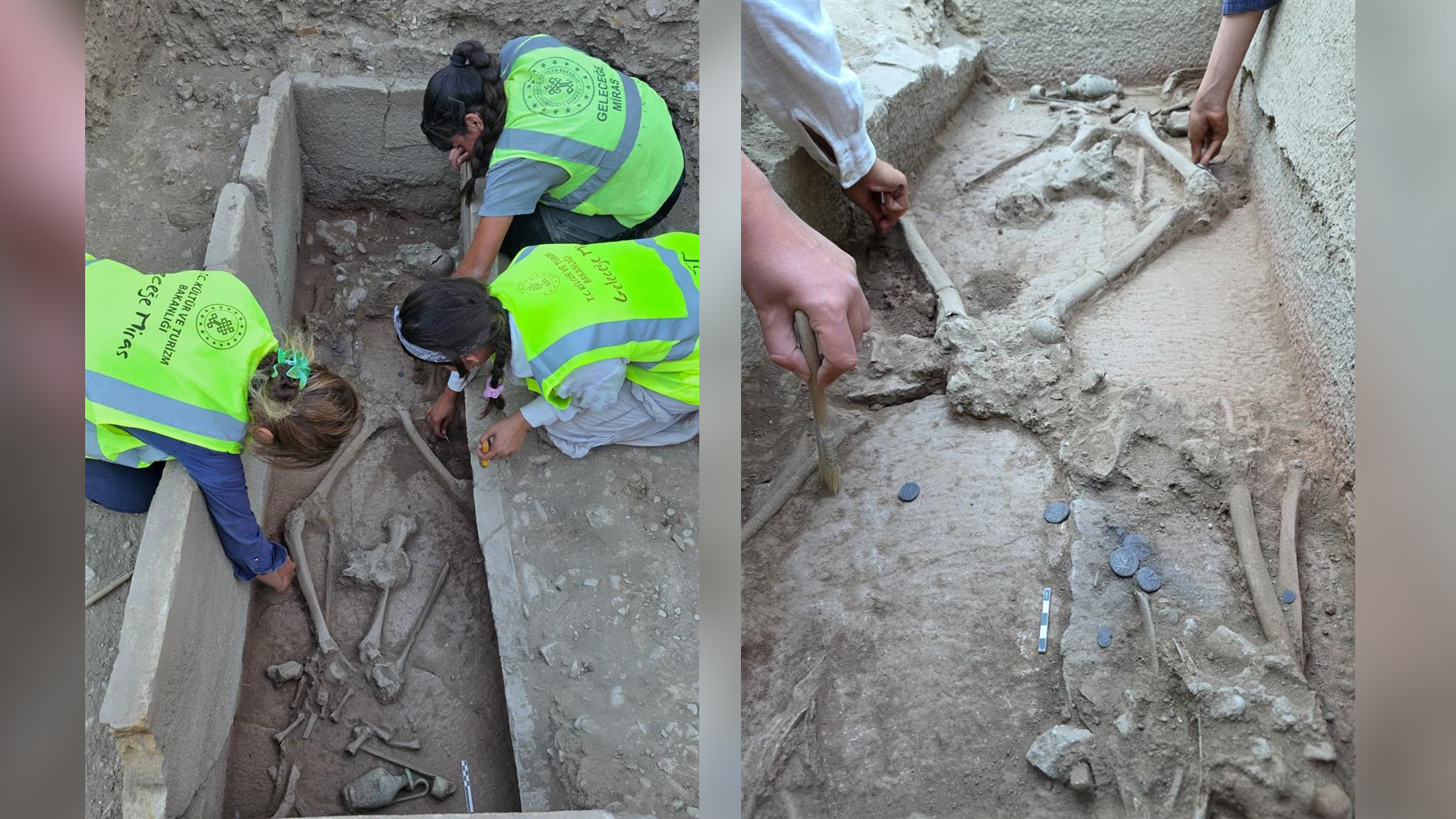
Archaeologists working near the historic city of Aspendos in Turkey have unearthed a grave that might belong to a professional athlete from over 2,000 years ago. This remarkable discovery offers a glimpse into the sporting culture of the ancient world, particularly wrestling, a popular activity during that era.
Significance of the Discovery
The excavation revealed a stone sarcophagus containing a skeleton and various artifacts, including coins that depict wrestlers. Turkish Culture and Tourism Minister Mehmet Nuri Ersoy noted that these findings suggest the buried individual may have been involved in athletics, hinting at a possible wrestling career. The tomb has been dated to somewhere between 475 and 300 B.C., corresponding with Aspendos’s Classical period when the city flourished.
Aspendos: A Hub of Greco-Roman Culture
Aspendos, located approximately 16 kilometers inland from the Mediterranean coast, was founded by Greek colonists in the 5th century B.C. It grew rapidly, establishing itself as a vital trading hub for goods such as salt, olive oil, and horses. The city featured a large gymnasium and a substantial stadium built during the 2nd century A.D., accommodating up to 8,000 spectators for events like foot races, javelin competitions, and, most notably, wrestling matches. This connection to athletic events further underscores the importance of sports in the daily lives of Aspendos’s citizens.
Wrestling in Ancient Aspendos
Wrestling is particularly linked to Aspendos, with evidence found mainly in the form of coins, known as staters. These coins, minted over an extended period, typically feature icons of naked wrestlers, indicating that the sport held civic significance. Oğuz Tekin, an archaeologist from Koç University, emphasized that such artifacts suggest a deeply rooted cultural appreciation for athletics within the city. Nonetheless, the newly excavated grave has not definitively confirmed that the individual buried was a wrestler.
Further Investigations Required
While the presence of wrestling-themed coins in the grave is intriguing, scholars caution against jumping to conclusions. Sarah E. Bond, a historian from the University of Iowa, stressed the need for comprehensive analysis before definitively labeling the deceased as a wrestler. Indicators such as potential signs of injury—like a broken or healed nose—could provide further context in confirming the individual’s athletic background. As observed, coins did not serve solely as tokens for athletes; they were commonly used by the broader population.
The ongoing exploration of the Aspendos cemetery promises to unveil more chapters of the city’s history. Minister Ersoy expressed optimism, asserting that each discovery contributes to a richer understanding of cultural heritage, allowing us to safeguard and share that legacy with future generations. As research continues, archaeologists expect more exciting finds that will further illuminate life in this ancient Greco-Roman city.