
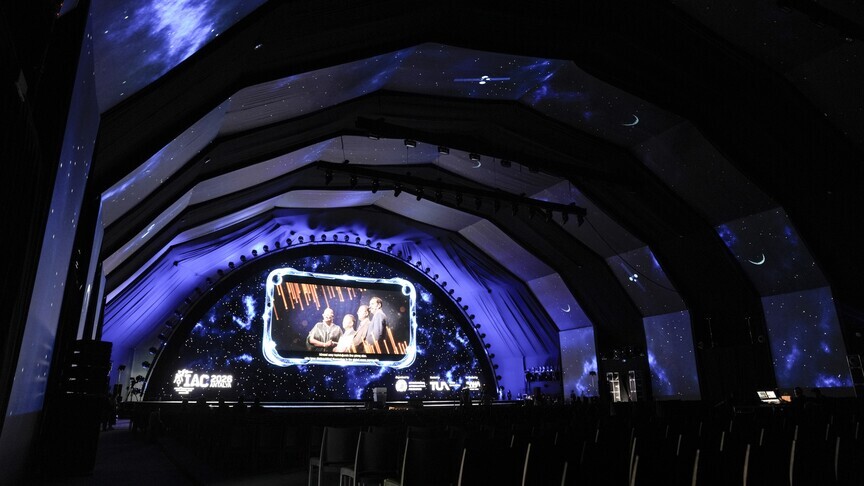
The 77th International Astronautical Congress (IAC) is underway in Antalya, Türkiye, drawing attention to key issues such as the implications of NASA’s Artemis II mission, the future of satellite constellations, and the intersection of commercial space ventures with geopolitical dynamics. This significant event, running from October 5 to 9, offers a platform for industry leaders and experts to explore the evolving landscape of space exploration.
NASA’s Artemis II: A Milestone in Lunar Exploration
On the second day of the conference, NASA Artemis program manager Jeremy Parsons is set to participate in a panel discussion to unravel the insights gained from the Artemis II mission. Launched in April, this mission marked a historic moment as it successfully sent four astronauts on a crewed flyby around the Moon—the first in over half a century. This journey not only showcased the astronauts’ capabilities but also served to validate the systems indispensable for future lunar landings.
In a related statement, NASA Deputy Administrator Matt Anderson revealed the urgency of the “civilian space race” between the United States and China, noting that its current status is more precarious than many may realize. Anderson hinted at forthcoming announcements that could reshape perceptions in this competitive arena, although he refrained from sharing specifics.
Sustaining Large Satellite Constellations
Addressing another critical topic, Michael Nicolls, the Senior Vice President of Starlink Engineering at SpaceX, will present a compelling lecture later in the day centered on the sustainability and safety of expansive satellite constellations. He will delve into the complexities associated with managing vast networks of satellites within low-Earth orbit, an area increasingly crowded with communication and observational technology.
This session is particularly timely as satellite networks are proliferating. The discussion will explore not only the operational challenges posed by this growth but also the environmental and regulatory considerations that impact how these missions are conducted.
The Intersection of Space and Geopolitics
A burgeoning topic of interest at this year’s congress is the tightrope walk that commercial space companies must perform between innovation and geopolitical interests. An afternoon plenary titled “Geopolitics vs. Innovation” will provide industry leaders with a forum to examine how they navigate their responsibilities while addressing demands from national governments and security agencies.
This examination is essential as Earth-observation fleets and in-space infrastructures gain prominence. Companies find themselves at the frontlines, managing both global market needs and regulatory pressures, making collaboration and adaptability crucial as they grow.
Bridging Eras in Space Exploration
The conference kick-starts with an engaging plenary entitled “Bridging Eras: From Silk Road Astronomy to Lunar Exploration.” This session aims to showcase the transition from solely national space initiatives to a more interconnected global space ecosystem. With speakers including Axiom Space Chief Astronaut Michael Lopez-Alegria and representatives from various organizations such as ASELSAN and TUBITAK, the discussion is expected to provide diverse insights into lunar exploration and the commercial space landscape.
Meanwhile, the third IAF Global Space Leaders Summit will bring together heads of space agencies from both established and emerging nations. This summit underscores the essential collaboration in addressing the frontier of space exploration, reinforcing the importance of global partnerships in navigating future challenges.
As IAC 2026 progresses, the insights gathered will undoubtedly influence policy, innovation, and cooperation on a global scale, shaping the future of space exploration for years to come.