
Introduction
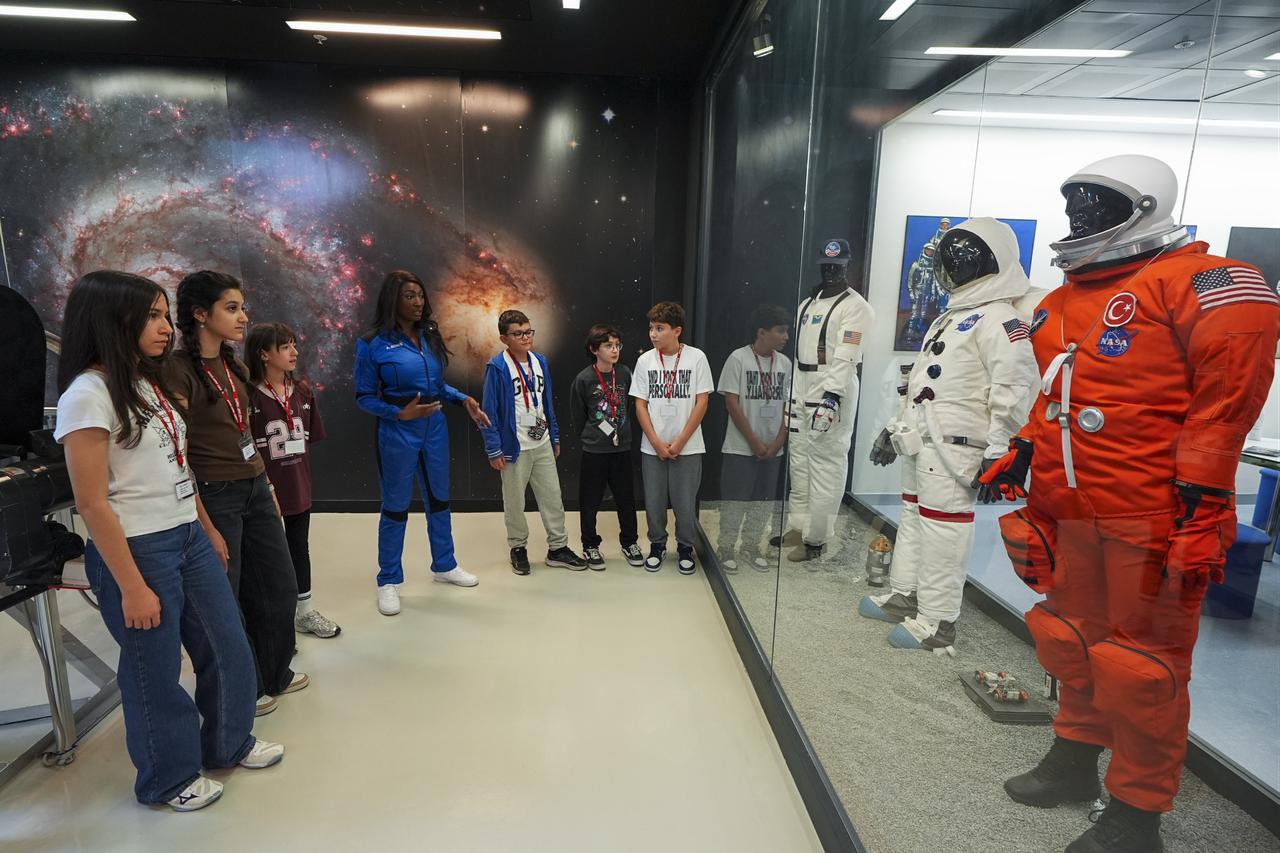
In a significant statement about Türkiye’s potential in the aerospace sector, Aisha Bowe, a former NASA rocket scientist and Blue Origin astronaut, emphasized the country’s abundant human talent. During her recent visit to Space Camp Türkiye, Bowe interacted with students and shared insights on how this potential could shape the future of aviation and space exploration.
Türkiye’s Promising Future in Aerospace
Aisha Bowe expressed confidence in Türkiye’s capabilities, noting that her travels to various Turkish cities revealed a wealth of talent and enthusiasm for space. She stated, “In each one [city], there are very talented and capable people who I believe will be part of Türkiye’s aviation and space future.” Bowe’s remarks shed light on the country’s expanding interest in aerospace, with various regions showcasing a growing commitment to scientific innovation and education.
During her time in Türkiye, Bowe engaged with young space enthusiasts, sharing her experiences in space research and scientific experiments. She reviewed the simulators and training programs at the Space Camp in Izmir, reinforcing the idea that the next generation is well-prepared to contribute to the field. Her observations underscore the notion that Türkiye is on the brink of significant advancements in aviation and space science.
The Role of Microgravity Research
Bowe highlighted the importance of microgravity research, particularly in relation to agricultural advancements. She discussed her experience on Blue Origin’s NS-31 suborbital flight, where she served as a scientific payload operator focusing on plant biology experiments. “By understanding how plants behave in microgravity, we can apply this knowledge to solve problems on Earth,” she explained.
With specific emphasis on Türkiye’s potential, Bowe mentioned the benefits of microgravity experiments for agricultural practices. These insights could revolutionize how food is grown, especially in environments where traditional farming methods are restricted. Bowe’s observations not only advocate for scientific exploration but also imply a broader impact on sustainable practices.
Inspiration from Turkish Space Missions
Bowe also referenced Turkish astronaut Alper Gezeravci’s scientific mission, which serves as a source of inspiration for young talents in the country. She pointed to Türkiye’s involvement in the Artemis Accords, establishing foundational principles for future space missions, as another area of opportunity. “Countries without established human spaceflight programs can still contribute to the space sector,” she asserted, motivating young aspirants from developing backgrounds.
Her encouragement extends beyond technical fields, stating, “We need doctors, lawyers, psychologists, and everyone else to join us in our space missions.” Bowe’s vision for an inclusive approach showcases the multidimensional nature of space exploration, emphasizing that diverse expertise is crucial for success.
Conclusion
Aisha Bowe’s visit to Türkiye, marked by engagements with aspiring young scientists and engineers, serves as a beacon of hope for the future of the country’s space endeavors. Her insights into microgravity research, coupled with the importance of interdisciplinary contributions, reveal a promising horizon for Türkiye in the fields of aviation and space. As the nation embraces its burgeoning talent pool, the collective efforts could potentially redefine its role in the global space ecosystem.