
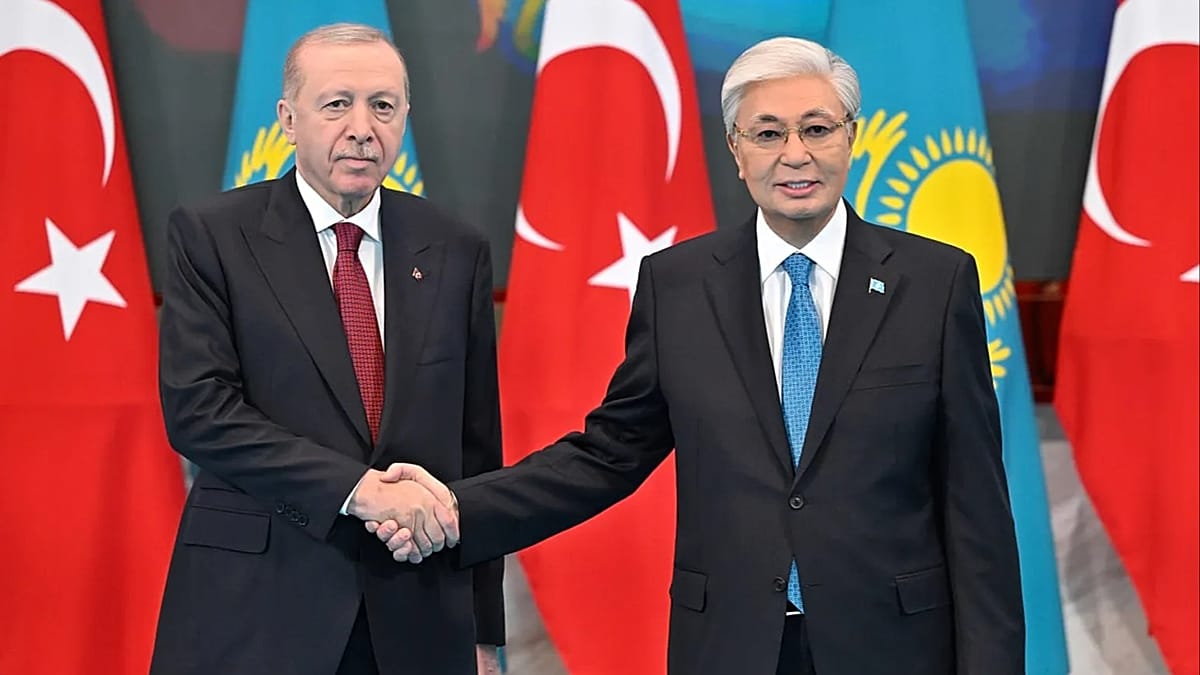
Kazakhstan and Turkey have solidified their partnership by signing a Declaration on Eternal Friendship and Expanded Strategic Partnership during President Recep Tayyip Erdoğan’s recent visit to Astana. This agreement not only highlights their commitment to enhancing bilateral relations but also sets a target for trade between the two nations, aiming for an impressive €13 billion. Both countries are now focusing on cooperation across multiple areas such as defense, energy, transport, and digital sectors.
Strengthening Economic Ties
The meeting between the two presidents established a strategic framework for increased economic collaboration. Erdoğan emphasized the goal of nearly tripling current trade levels. In this context, bilateral trade has already shown encouraging growth, rising almost 9% recently to surpass €4.5 billion. With around 4,000 Turkish companies already active in Kazakhstan, Turkey ranks among the top five trading partners in the country. Turkish investment in Kazakhstan has exceeded €5 billion, while Kazakh investments in Turkey have crossed €2 billion, indicating a robust economic relationship.
Kazakhstan’s Deputy Prime Minister, Serik Zhumangarin, announced the completion of 100 investment projects worth about €3.5 billion, with an additional 50 projects valued similarly underway. The Kazakh leadership is optimistic about boosting exports to Turkey, targeting nearly €573 million in the near future. Such growth is seen as essential for elevating economic relations and fostering new opportunities for both nations.
Focus on Infrastructure and Transport
Transport routes are another critical area of focus, particularly the expansion of the Trans-Caspian International Transport Route. This route connects China to Europe via Kazakhstan, the Caspian Sea, Azerbaijan, Georgia, and Turkey. Recent data indicate a 35% increase in rail cargo between the two nations, along with a 5% rise in road transport. Tokayev has called for Turkish investors to engage more actively in transport-related projects, especially through the Aktau and Kuryk ports. These developments aim to optimize the capacity of the transport route and enhance trade efficiency.
Kazakhstan is also keen to see the establishment of a new international airport in Almaty, with TAV Airports Holding expressing interest in the project. Such infrastructure improvements will significantly facilitate trade and travel, thereby strengthening ties between the two countries.
Expanding Cooperation in Energy and Digital Sectors
The energy sector is another promising area for collaboration, with Kazakhstan welcoming Turkey’s efforts to enter its energy markets. President Tokayev has invited Turkish firms to explore mining projects, especially with their expertise in metals and processing. Moreover, bilateral agreements now cover various domains, from oil and gas cooperation to education and cultural exchange, reflecting a multidimensional partnership.
On the digital front, initiatives have emerged for collaboration between platforms such as Kaspi.kz and Turkey’s Hepsiburada. These efforts aim to integrate Kazakhstan’s growing digital economy with Turkish e-commerce capabilities, further enriching their economic partnership.
The ongoing political climate, particularly the impacts of the war in Ukraine on traditional trade routes, has propelled Central Asian countries, including Kazakhstan, to diversify their economic partnerships. Strengthening ties with Turkey is part of this broader strategy aimed at reducing reliance on more traditional partners like Russia and China.
In summary, the recent declaration between Kazakhstan and Turkey sets a solid foundation for a multifaceted partnership, enhancing trade, infrastructure, and various sectors critical to both nations’ growth. As they work towards their ambitious goals, the collaboration exemplifies a significant step in Central Asia’s evolving geopolitical landscape.