
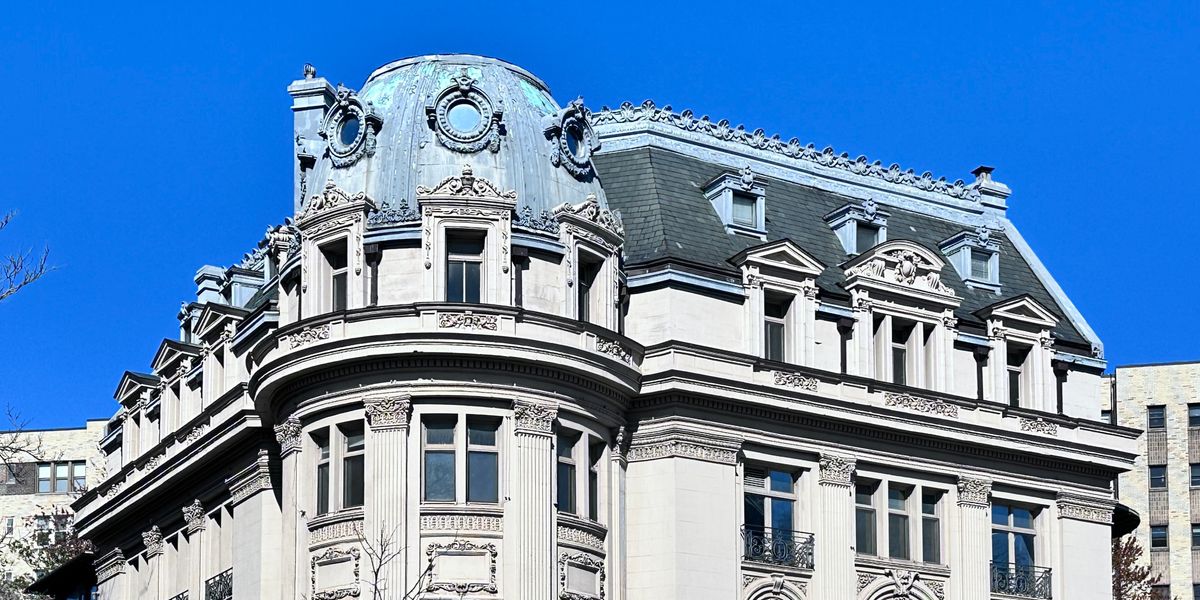
On Washington’s 16th Street, adjacent to Meridian Hill Park, Turkey’s Justice and Development Party (AKP) is establishing a significant presence by transforming the former French Embassy into its permanent base in the U.S. Acquired for approximately $4.9 million in 2024, this Beaux-Arts mansion is undergoing extensive renovations, having already received an additional $1.3 million from the party’s headquarters, as indicated in a recent Foreign Agents Registration Act filing.
AKP’s Influence in Washington
Halil Mutlu, a cousin of President Recep Tayyip Erdogan and the AKP’s designated U.S. representative, oversees the newly formed office. The aforementioned filing details the party’s engagement in 85 political activities over a six-month period, which includes interactions with U.S. State Department officials, congressional staff, and leading experts from think tanks focusing on Turkey and Syria.
Since the Hamas attack on Israel on October 7, 2023, tensions between Turkey and Israel have escalated from diplomatic hostility to a more profound strategic rivalry. With Syria emerging as a focal point of this rivalry, the shifting dynamics are increasingly manifesting within the political landscape of Washington.
Bipartisan Discussions and Perspectives
A significant March discussion at the Brookings Institution highlighted this shift, featuring insights from former U.S. Ambassador to Turkey John Bass and Brookings fellow Aslı Aydıntaşbaş. The session revealed how Israeli political narratives have begun framing Turkey as a “future Iran,” underscoring a shift in perceptions regarding Turkey’s potential threat level. As tensions rise, the AKP’s outreach to Washington’s policy circles continues to grow, providing a glimpse into their strategic planning.
Mutlu’s meetings with prominent figures like Rich Outzen of the Atlantic Council and Anna Borshchevskaya from the Washington Institute illustrate the AKP’s proactive approach. Notably, in February, a private discussion between Mutlu and Michael Doran, a senior fellow at Hudson Institute, further delved into Turkey’s role in stabilizing Syria and balancing Israeli security concerns.
The Shifting Landscape of Middle East Politics
The implications of these interactions are becoming increasingly significant as they suggest a potential rebalancing of U.S.-Turkey relations. Experts such as Doran and Outzen see an opportunity for Turkey to play a stabilizing role in the region, arguing for a larger Turkish presence in Syria. Concurrently, Erdogan voiced concerns over Israeli airstrikes in Syria, indicating that escalating conflicts may threaten Turkey’s own security.
Shifts in public opinion within the U.S. further complicate matters for Israel. A recent Pew survey revealed a growing number of Americans hold unfavorable views of Israel, particularly among younger Republicans. This decline in support could create political space for Turkey and other regional powers to advance their interests in Washington more effectively.
As Erdogan strengthens diplomatic ties with regional partners, including a recent mutual defense agreement with Saudi Arabia and Pakistan, Turkey’s strategic positioning is evolving. The new AKP headquarters on Meridian Hill offers a more permanent foothold in the intricate dynamics of Middle Eastern geopolitics, where regional powers are increasingly evaluating their roles and alliances.
In summary, the establishment of the AKP’s office in Washington represents not just an infrastructural investment but a broader intent to engage strategically within U.S. foreign policy discussions concerning Middle Eastern dynamics, particularly vis-à-vis Israel. The evolving geopolitical landscape indicates a potential reconfiguration of alliances and rivalries that may redefine the existing order in the region.