
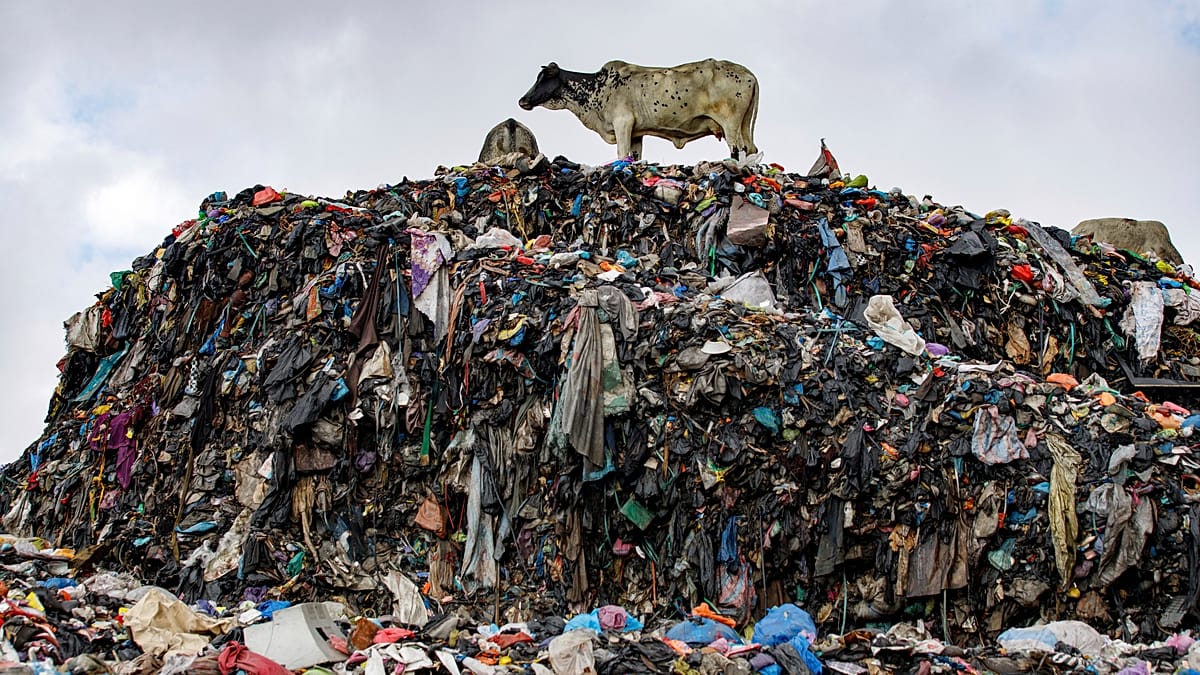
European anti-fraud investigators have unveiled a significant illicit operation involving the illegal export of 4,200 tonnes of textile waste from Italy to Turkey. This alarming situation highlights a well-organized effort to bypass environmental regulations and circumvent recycling costs, according to authorities.
Details of the Investigation
The inquiry, spearheaded by the European Anti-Fraud Office (OLAF), in collaboration with Italy’s Carabinieri and Turkish customs officials, zeroed in on textile waste containing high levels of acrylic fibers. These synthetic materials pose a considerable environmental threat, remaining in landfills for up to 200 years and necessitating advanced recycling techniques. Consequently, the disposal of such materials is governed by stringent regulations, which the exporters attempted to evade by mislabeling shipments.
OLAF’s director general, Petr Klement, emphasized the dangers of schemes that facilitate illegal financial gains at the expense of environmental health. Klement underscored the critical nature of international cooperation in combating environmental crime, aiming to protect both economic interests and the planet.
Using an analysis of trade flows, customs documentation, and evaluations of recycling capabilities, OLAF identified questionable shipments and alerted Turkish authorities. Inspections upon arrival confirmed the inhumane scale of operations, revealing the export of roughly 4,200 tonnes of textile waste from Italy.
Joint Inspections and Findings
The investigation escalated during a joint inspection in Turkey, which included OLAF officials, Italian environmental experts, and Turkish authorities. In the process, inspectors uncovered an additional 2,100 tonnes of textile waste stored in a warehouse associated with a non-compliant recycling facility. Notably, they also discovered a separate stockpile that had arrived independently.
Further alarming findings included an additional 768 tonnes of textile waste from Italy, all linked to the same fraudulent operation. This waste was incorrectly labeled and prepared for illegal disposal in the Turkish port of Mersin. The investigation has already yielded significant enforcement actions in Italy, with recent raids by the Carabinieri on a business complex in Brescia tied to these suspect exports. Authorities seized several company assets, a fleet of trucks allegedly utilized in the illegal operation, and approximately €12 million in financial resources.
Challenges in Textile Waste Management in the EU
Despite a thriving EU textile and clothing sector, which generated €170 billion in 2023 and employs around 1.3 million individuals, the issue of textile waste remains daunting and expensive to navigate. In 2019, Europe produced about 12.6 million tonnes of textile waste, but only 20% of it was collected separately for reuse or recycling.
In response to this critical issue, the European Commission implemented new textile waste management regulations in 2025. These rules aim to prevent the mislabeling of waste as reusable goods and to clamp down on fraudulent exports. By bolstering oversight of textile shipments and enhancing OLAF’s role in waste trafficking investigations, the legislation seeks to address these growing concerns.
Recently, a coalition of five EU countries, led by France, has intensified efforts to regulate ultra-fast fashion, which significantly contributes to the textile waste crisis. This group highlighted that the exponential growth of this business model threatens environmental sustainability, clogs waste disposal systems, and encourages unsustainable consumer habits.
As a part of this initiative, these countries urged the European Commission to improve oversight of online platforms and enact stricter market surveillance. They are advocating for better enforcement mechanisms under existing regulations, as well as the implementation of extended producer responsibility schemes to mitigate the overwhelming waste from overconsumption. Advocates believe that Europe has the potential to lead the way in vanquishing these textile waste challenges and promote a more sustainable future.