
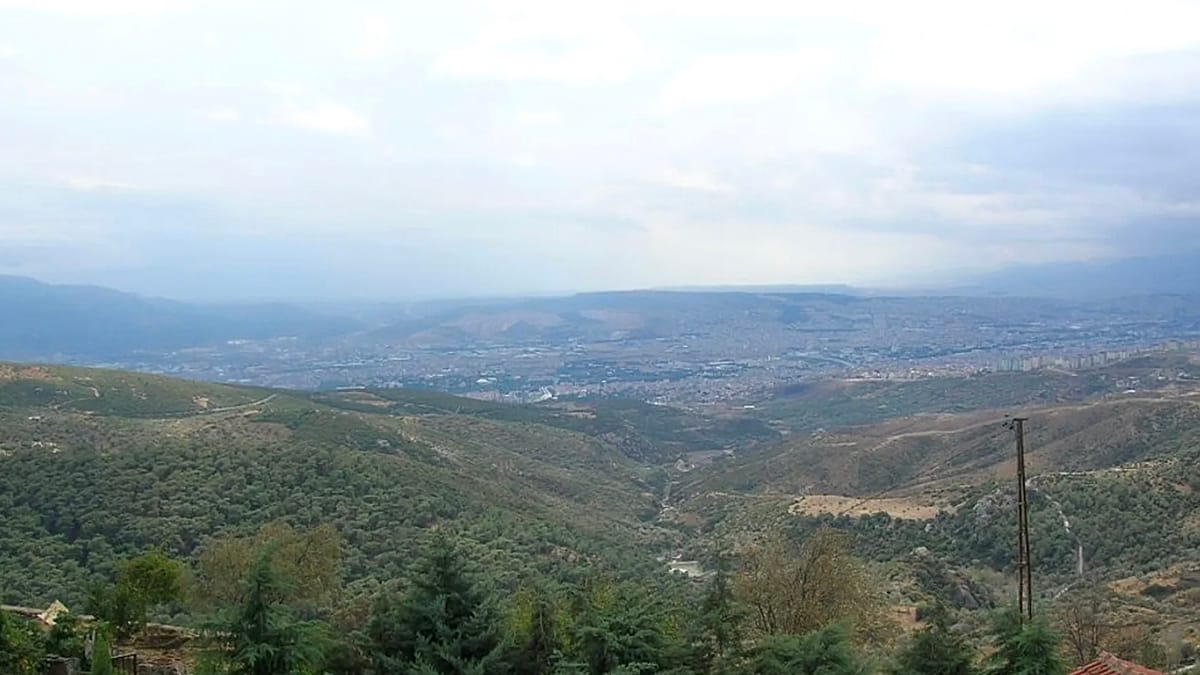
Nestled in the olive-draped hills near Izmir, a moisture-rich cave in the Bornova Valley carries a revered status in local tales. This site is historically tied to the ancient poet Homer, with generations of locals believing that it served as the creative sanctuary for “The Odyssey.” As interest surges following Christopher Nolan’s recent film adaptation, questions surrounding the true origins of this legendary work have resurfaced.
Unraveling the Ancient Mystery
The cinematic success of Nolan’s adaptation has reignited debates and intrigue about the geographical and historical context of Homer’s writings. Turkish archaeologist Prof. Aylin Ümit Erdem, a specialist at Ege University, sees this renewed attention as an essential opportunity to analyze various factors connecting Homer to ancient Smyrna, present-day İzmir. “When we study Homer, we recognize him as the esteemed author of the *Iliad* and the *Odyssey*,” she stated in an interview. Scholars have debated how a poet from the 8th century BC could describe the Trojan War—a significant event from 400 years earlier—with such vivid accuracy. Some attribute this to centuries of oral tradition, while others argue it reflects the work of multiple storytellers.
Despite ongoing discussions about authorship, Prof. Erdem underscores that ancient historical sources consistently link Homer to Izmir. From the 5th-century BC historian Herodotus to Strabo, a geographer from the 1st century BC, these ancient accounts affirm that Homer hailed from Smyrna. While alternative origins from places like Chios or Cyme have been suggested, Smyrna remains a predominant candidate in discussions about Homer’s birthplace.
The Linguistic and Geographical Roots
Prof. Erdem presents compelling linguistic arguments connecting Homer to Izmir, emphasizing the significance of the language used in his epics. “While the tales are primarily written in the Ionic dialect, they also showcase significant Aeolic vocabulary and archaic Greek phrases,” she explained. The urban landscape of 8th-century BC Smyrna, located at Bayraklı Höyük, existed at the intersection of the Aeolian and Ionian regions. This unique geographical position would naturally lead a bard in this area to blend these dialects in their work.
Additionally, she asserts that Bayraklı Höyük was the only fortified urban center in the İzmir basin during this time, making it a plausible setting for Homer’s life. However, Prof. Erdem calls for caution regarding direct claims of physical evidence tied to Homer’s existence. “To date, there’s no definitive archaeological proof directly linking him to Smyrna,” she clarified. While historic artifacts hint at a reverence for Homer in later years, the absence of contemporary evidence from the 8th century AD remains a critical gap.
Local Culture and Homer’s Legacy
As the academic community continues to seek definitive proof, local enthusiasm in Izmir has surged, driven by centuries of tradition and folklore. The damp cave in the Bornova Valley is celebrated among residents as the birthplace of Homer’s masterpieces. Historical texts have frequently referred to the poet as Melesigenes, or “born of the Meles,” acknowledging the river flowing nearby.
According to Bornova Mayor Ömer Eşki, preserving Homer’s legacy is a responsibility shared by the local community. Plans to restore the cave and promote its significance to cultural tourists reflect this commitment. Local research even points to ancient reliefs that may echo the characteristics of the Bornova cave, reinforcing its longstanding association with Homer. “This land has always been known as Homer’s Valley. I firmly believe he is from here,” said Turkish researcher Altan Altın, emphasizing that Homer’s influence transcends modern borders.
While researchers like Mehmet Akif Erdem argue that ancient coins and statues indicate a communal identity tied to Homer, Prof. Erdem aptly highlights the ongoing quest for concrete evidence. As excavations continue, the ultimate confirmation of Homer’s connection to ancient Smyrna remains buried beneath layers of history, awaiting discovery.