
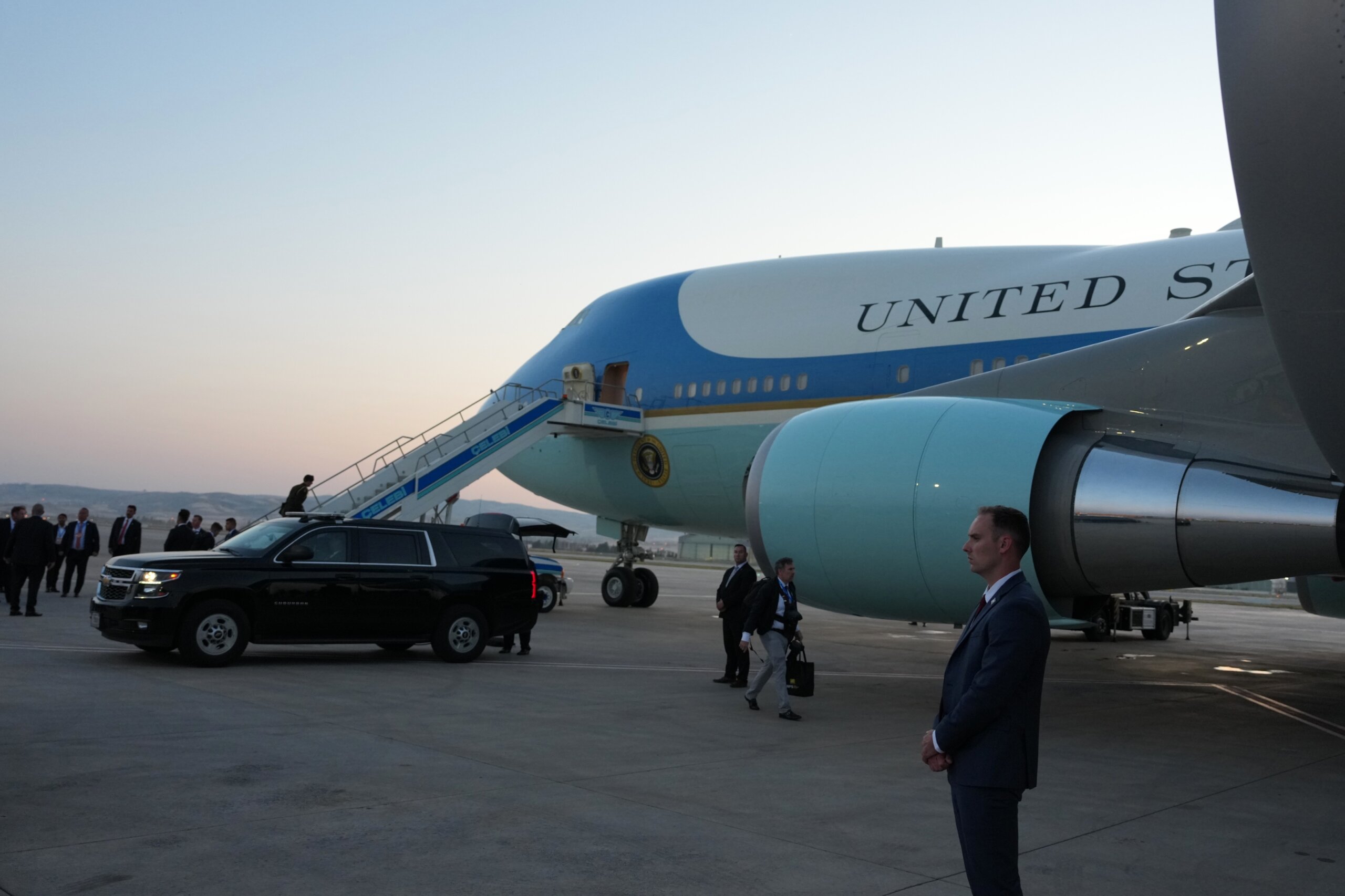
President Donald Trump’s recent trip back from a NATO summit in Turkey was marked by a notable flight change that has raised security concerns and drawn attention from various quarters.
Unexpected Aircraft Change Raises Eyebrows
Upon his departure, Trump chose to fly on an older model of Air Force One, a baby blue aircraft, rather than the newly retrofitted jet gifted by Qatar, which features a more modern red, white, and navy blue design. The switch was made without much elaboration from Trump, who simply stated he preferred the older aircraft “for old time’s sake.” This unexpected decision coincided with increased tensions between the U.S. and Iran, amplifying worries over the aircraft’s security features.
The trade-off has highlighted important concerns regarding the retrofitted Qatari jet, which the U.S. government invested around $400 million to modify. Reports indicate that the newer aircraft lacks some essential missile detection and countermeasure systems found in older models. Such discrepancies raise questions about the plane’s preparedness, especially given its proximity to potential threats from adversaries like Iran.
Military Context Plays a Role
The timing of this aircraft switch becomes even more pertinent considering it followed significant military operations in Iran. The U.S. military executed a series of strikes in response to Iranian attacks on merchant vessels, an action that underscores the rising hostilities in the region. Iran, though generally reachable by various types of missiles, does not possess the long-range capabilities necessary to threaten U.S. territories directly. Still, the logistics of flying through a territory where tensions are high add layers of complexity to the security considerations for any presidential aircraft.
Following the flight change announcement, Trump implied that military personnel would get to explore the Qatari jet during its unscheduled stop in the U.K. This shift in travel plans has not only sparked conversation around security protocols but has also led to questions about the operational readiness of new aircraft amidst evolving defense needs.
Security Protocols Under Scrutiny
During subsequent interactions with the press, Trump avoided directly addressing whether security concerns were a factor in the aircraft choice. Instead, he alluded to personal security as he placed emphasis on being a target for assassination. Such comments indicate a broader narrative around the personal risks associated with being the President, particularly amid geopolitical tensions involving nations like Iran.
Critics have scrutinized the actions taken on this trip, noting that while other world leaders departed with fully trackable transponders, Trump’s older aircraft was not easily monitored. This suggests a higher level of security protocol, even in an environment less hostile than a traditional warzone. The lack of visibility into the aircraft’s movements amid heightened security concerns only adds to the discussion surrounding the adequacy of the aircraft for presidential travel.
Future of Air Force One: An Ongoing Evolution
Looking ahead, the situation prompts reflections on the future of the Air Force One fleet. The Boeing jets currently being modified are expected to be completed by 2028, as previous timelines have faced delays. Historically, Air Force One is equipped with advanced defensive measures, making it vital for a president’s safety. Unlike the older models, the new Qatari aircraft lacks some of these crucial systems and calls for a robust conversation about their necessity in modern military aviation.
In summary, Trump’s return trip from the NATO summit has raised significant security questions and highlighted ongoing issues in U.S. military readiness. While the choice of aircraft may have been a personal preference, it opens a broader dialogue about the balance between legacy, security, and operational capability in presidential aviation.