
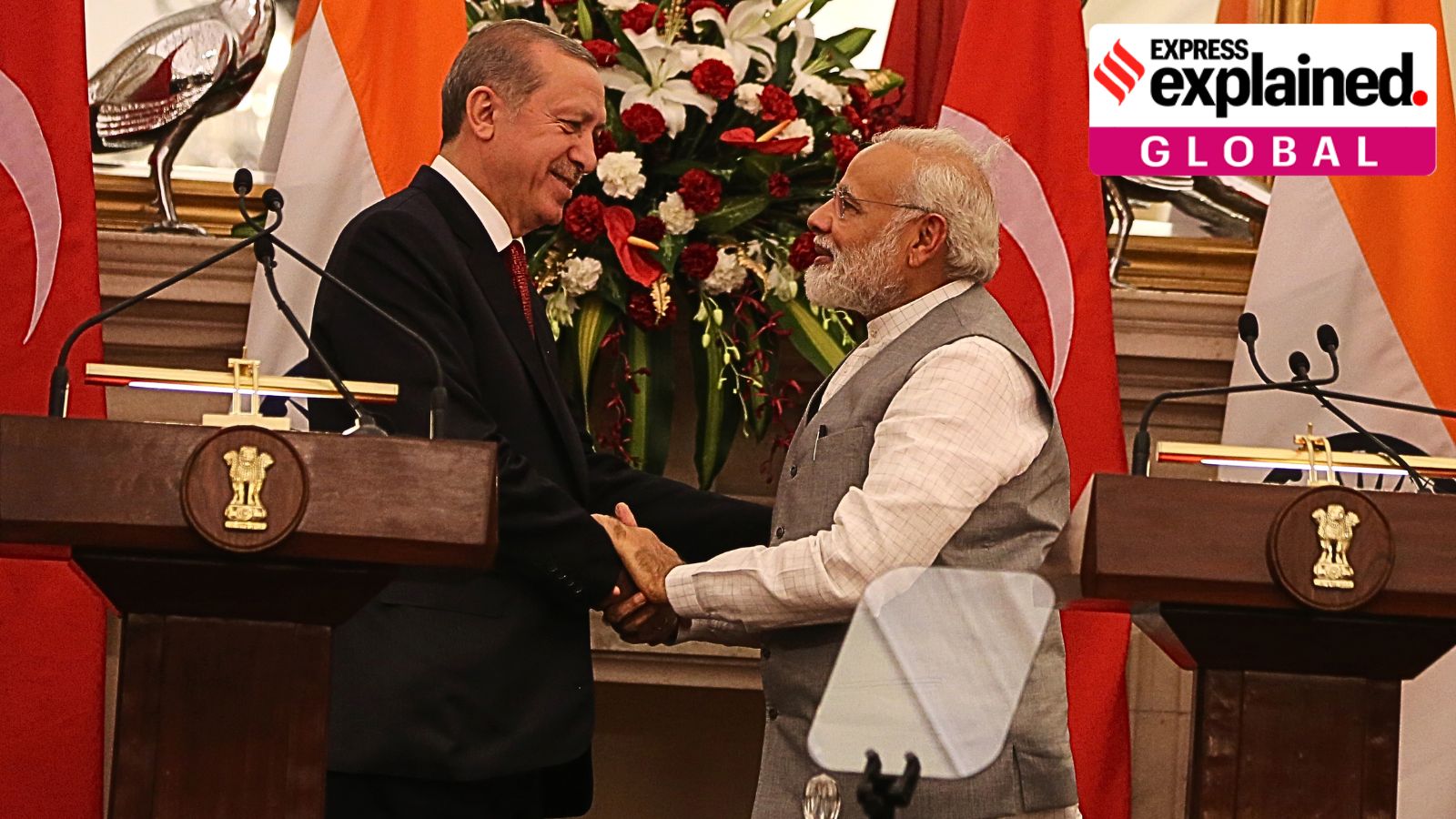
India and Turkey have had a complex relationship marked by both collaboration and tension. Recent developments, including Turkey’s President Recep Tayyip Erdogan bringing up the Kashmir issue at the United Nations, have further complicated this dynamic. Shortly after those remarks, however, India achieved a notable diplomatic victory by securing the extradition of drug kingpin Navpreet Singh from Turkey. Union Minister Amit Shah hailed this as a significant milestone, emphasizing that it reflects a functional aspect of the bilateral relationship despite prevailing tensions.
Kashmir: A Persistent Point of Tension
Kashmir continues to be the most contentious issue between India and Turkey, straining diplomatic ties over the years. Turkey’s repeated calls for international intervention and its support for Pakistan on this matter have irked New Delhi. The Indian government firmly asserts that Jammu & Kashmir and Ladakh are integral parts of India, dismissing any suggestions for third-party mediation as unwarranted. Erdogan’s recent remarks, suggesting that all South Asian disputes, including Kashmir, should be solved through dialogue, were promptly rebutted by India’s Ministry of External Affairs, which reiterated the region’s status as part of India’s sovereignty.
Erdogan’s history of comments regarding Kashmir dates back to 2019, following India’s decision to revoke Article 370. He has continuously brought up the issue at international forums, including the UN General Assembly in both 2020 and 2021, further entrenching Turkey’s position on the matter. These ongoing public statements illustrate the deep-seated discord that remains within the bilateral framework, challenging the possibility of rapprochement.
Turkey’s Alliances and Their Impact
Another layer of complexity in India-Turkey relations is Turkey’s robust association with Pakistan, especially evidenced by the recent signing of the Makkah pact, which includes military cooperation related to advanced technology. Analysts have raised concerns about this partnership’s implications, particularly regarding the potential transfer of military technologies, such as drones, to Pakistan. India is closely monitoring this trilateral arrangement, as it could pose risks to its national security if Turkey and Pakistan collaborate on defense matters.
The Makkah pact alters the geopolitical landscape of West Asia, nudging existing alignments into play. In contrast, the India-UAE-Israel partnership serves as a counterbalance. This evolution indicates a potentially dynamic shift in regional alliances, although still not formalized as a military coalition. The strategic implications of such alignments underscore the fragile nature of India-Turkey ties amid shifting allegiances in the region.
Common Ground: Crime and Security Cooperation
Despite the underlying points of contention, there is an avenue of cooperation when it comes to crime and security. Recent high-profile extraditions, such as that of fugitive drug trafficker Salim Dola, highlight this facet of their relationship. Turkey’s willingness to assist in extraditing criminals wanted by Indian authorities demonstrates a shared interest in tackling organized crime and narcotics trafficking. The 2001 extradition treaty between the two countries has provided a framework for legal cooperation, allowing both nations to better combat serious criminal offenses.
Turkey’s own challenges with narco-terrorism, attributed to its geographic position as a bridge between the East and West, mean that curtailing drug-related crimes fundamentally aligns with its national interests. This shared concern may strengthen the ties between the two nations, fostering a collaborative approach to crime and security.
Resumed Dialogues and Future Prospects
After a hiatus in official dialogues lasting four years, India and Turkey resumed foreign office consultations earlier this year. Significant discussions focused on trade, investment, and security, signaling an eagerness to move beyond past grievances. Former Indian Ambassador Muktesh Pardesi emphasized the importance of dialogue in preventing misunderstandings between the two nations.
Turkey’s interest in fostering a stable relationship with India is evident, given the economic and geopolitical benefits that can be reaped. For India, maintaining a functional relationship with Turkey can provide strategic leverage within the Islamic world and access to crucial Central Asian markets. As both countries navigate their intricate relationship, the prospect of collaboration on mutual interests offers a pathway to mitigate disputes, marking a potential shift toward a more pragmatic dialogue.