
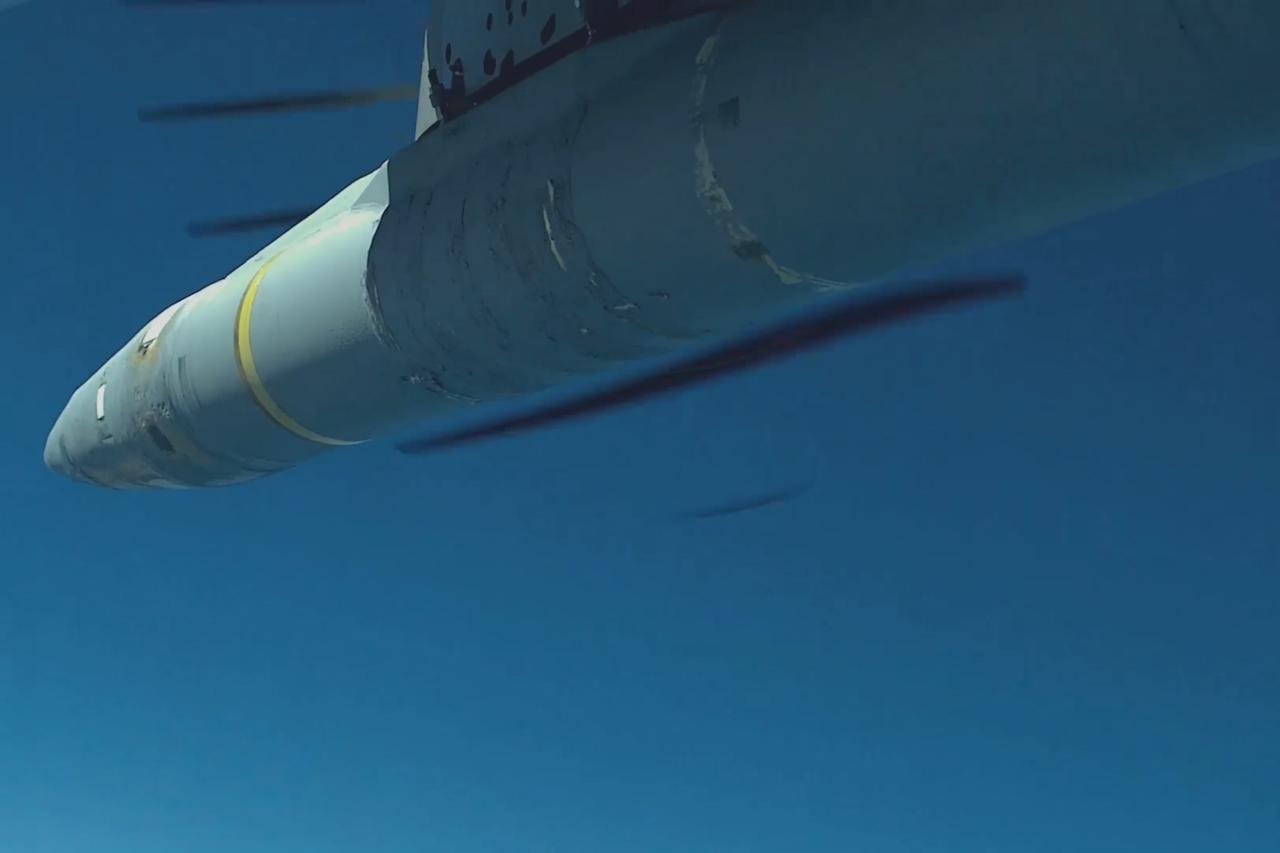
Türkiye’s Roketsan is set to broaden its range of supersonic missiles following the successful testing of its UAV-300 missile. This follows a significant achievement where the missile was successfully launched from the Bayraktar Akinci unmanned combat aerial vehicle (UCAV). As the defense sector rapidly evolves, Roketsan aims to enhance its capabilities in the air-to-surface missile category, ensuring their military assets remain at the forefront of modern technology.
UAV-300: A Milestone for Roketsan
Roketsan’s General Manager, Murat Ikinci, confirmed the importance of the UAV-300, stating it allows UCAVs and fighter jets to strike targets from astonishing distances. During a recent event in Aksaray, he noted that the UAV-300 successfully hit a maritime target over 250 kilometers away, marking a new chapter in Türkiye’s defense strategies. Ikinci emphasized the missile’s capability to engage in combat at extended ranges, which could give the country a strategic advantage on the battlefield.
With the UAV-300’s added capability, Roketsan plans to further develop its missile arsenal, which already includes the UAV-122 and UAV-230 models. Ikinci detailed that these advancements would enable UAVs to engage targets extending beyond 300 kilometers, while fighter jets would have a reach of over 500 kilometers. This ambitious target reflects Roketsan’s commitment to evolving and modernizing Türkiye’s military capabilities.
Tayfun Block-4 and Its Impact on Defense
In addition to the UAV-300, Ikinci spoke about the Tayfun Block-4 hypersonic missile, which is currently undergoing testing. This missile aims to augment Türkiye’s defensive posture, both regionally and globally. Ikinci provided assurance that the project is on track, with expectations for serial production to commence soon after successful test results. The introduction of the Tayfun Block-4 is anticipated to significantly enhance Türkiye’s military effectiveness in addressing potential threats.
Gezgin Cruise Missile Approaching Production
At the same Teknofest event, Ikinci also discussed the Gezgin cruise missile, which is nearing its production phase. Developed in collaboration with Türkiye’s Scientific and Technological Research Council (TUBITAK SAGE), the Gezgin is set to be a versatile missile for land-attack missions. Preparations have been completed at Roketsan’s facilities, indicating readiness for mass production.
The Gezgin missile is designed to be integrated across a variety of platforms, including naval ships, submarines, and fighter jets, which would greatly enhance operational flexibility. While specific details about the Gezgin remain limited for strategic reasons, it is projected to be on par with several Western cruise missiles, such as the US Tomahawk and the French-British MdCN. This development underscores Türkiye’s effort to create an advanced missile inventory that ensures national security and regional stability.
In summary, Roketsan’s proactive expansion of its missile portfolio—through initiatives like the UAV-300, Tayfun Block-4, and Gezgin—highlights Türkiye’s growing capabilities in defense technology. As these programs progress, they promise to not only enhance the operational preparedness of Turkish forces but also position the country as a significant player on the global defense stage.