
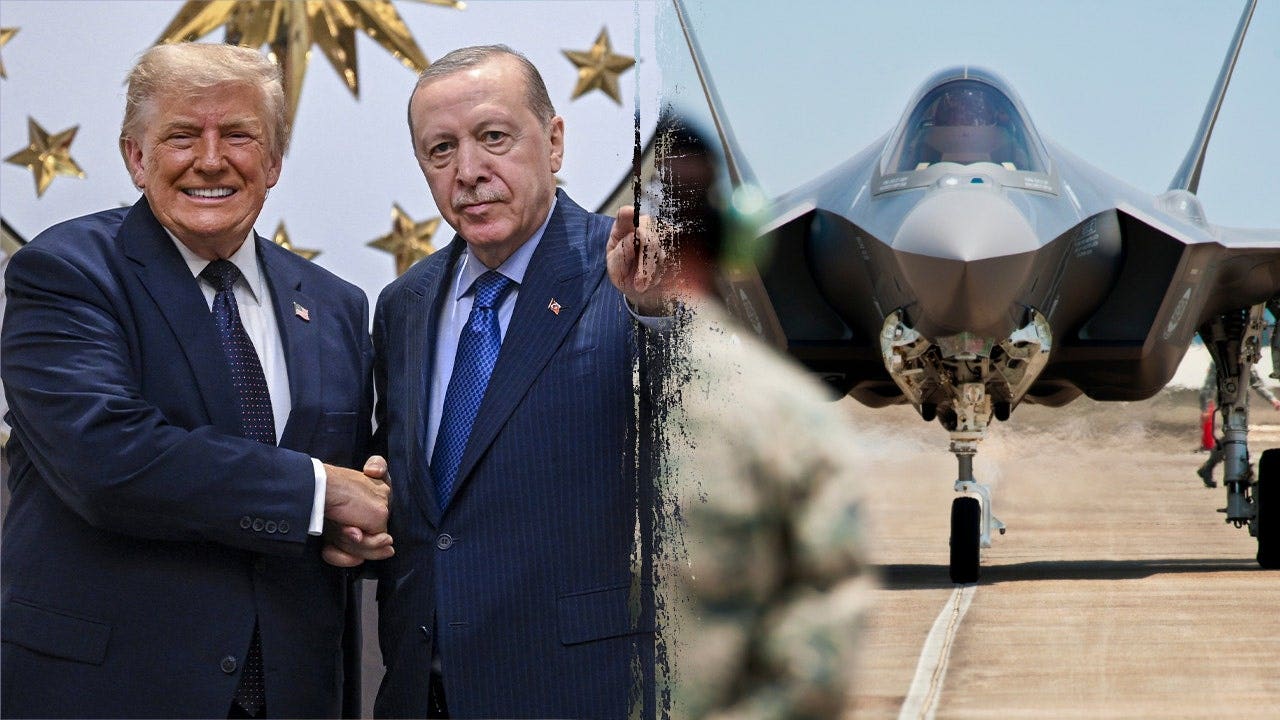
President Donald Trump’s recent approach to U.S.-Turkey relations during the NATO summit has drawn significant attention and concern. His remarks about the potential sale of the F-35 fighter jets to Turkey highlight a complex dynamic within NATO and raise questions about Turkey’s alignment with U.S. strategic interests, particularly regarding its previous military purchases from Russia.
Trump’s Stance on Turkey and the F-35
During a NATO summit, President Trump claimed that U.S. relations with Turkey are at an all-time high, casting aside security concerns related to Turkey’s acquisition of a Russian missile defense system. Trump noted that he would consider lifting sanctions and facilitating the sale of advanced F-35 jets to Turkey, a member of NATO, who has historically been seen as a problem within the alliance. Such a potential sale raises eyebrows, especially given that U.S. law explicitly prohibits providing America’s most sophisticated military technology to countries that have purchased the Russian S-400 system.
A letter from the State Department to Congress clarified that Turkey must meet specific legal conditions before receiving the fighter jets. These conditions include not only relinquishing its possession of the S-400 but also satisfying other certification requirements mandated by Congress. The current state of U.S. law presents a significant legal hurdle that both the Trump administration and Turkish officials must navigate.
Turkey’s NATO Role and Regional Implications
Turkey is a critical NATO ally, controlling vital strategic access between Europe and the Middle East. However, its increasing ties with Russia, as well as its support for groups like Hamas, pose risks that concern many U.S. lawmakers and military officials. A successful sale of the F-35s could arguably enhance Turkey’s military strength, but it also raises fears about the implications for Israel and overall regional security dynamics.
Trump’s favorable view of Erdoğan appears to stem from their personal rapport and partnership on regional issues, including conflicts in the Middle East. Former U.S. Ambassador James Jeffrey noted that Trump sees the strategic value in maintaining a cooperative relationship with Ankara. Still, such a relationship is fraught with challenges, and any movement towards a deal with Turkey must consider a wide array of national security concerns, both domestically and internationally.
Congressional and Opposition Concerns
Despite Trump’s support for Turkey, significant opposition exists in Congress. A bipartisan group of lawmakers has expressed concerns about Turkey’s continuing ties with Russia, its military dealings, and its regional actions that may conflict with U.S. interests. Most importantly, Congress has previously imposed restrictions that prohibit the transfer of advanced military technology to Turkey as long as an S-400 system is in its possession. Recent warnings from Israel further complicate this landscape, with Israeli leaders urging the U.S. to avoid enabling Turkey militarily.
The ongoing dispute presents a significant challenge for Trump as he seeks to balance strategic military interests and diplomatic relations with Turkey while addressing Congress’s apprehensions. Ultimately, the outcome of these negotiations will not only affect U.S.-Turkey relations but also have lasting impacts on the overall geopolitical stability in the region.
In summary, while President Trump has expressed interest in advancing ties with Turkey, particularly through a potential F-35 sale, numerous obstacles remain. The interplay of U.S. laws, congressional opposition, and regional dynamics all converge to create a complicated scenario that both the administration and lawmakers must address in the months ahead.