
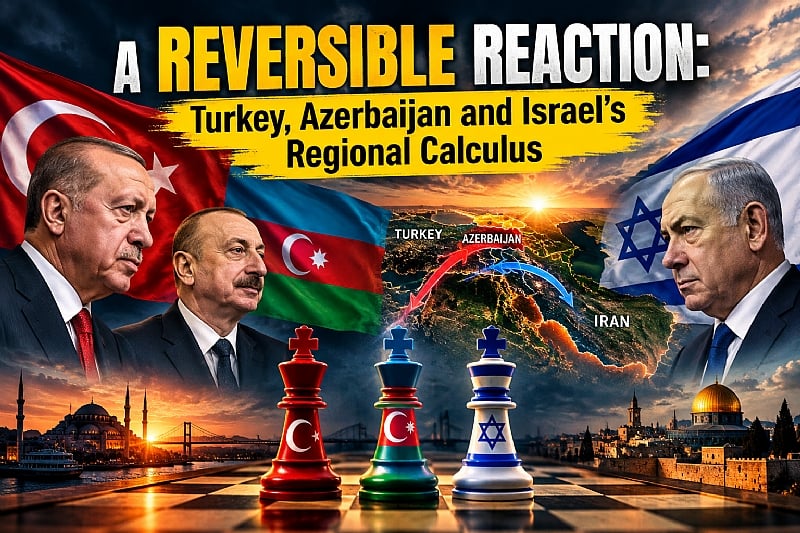
The intricate dynamics of geopolitical relationships bear striking similarities to chemical reactions, where certain reactants can alter outcomes without necessarily becoming part of the final product. In international relations, a single player can dramatically shift strategic equations, influencing alliances, diplomatic negotiations, and previously-set trajectories. Much like in chemistry, where the right conditions are essential for reaching equilibrium, the world of diplomacy is characterized by fluidity. Recent events in West Asia and the South Caucasus illustrate Ankara’s delicate balancing act as it navigates its ties between Baku and Tel Aviv, amid rising tensions across the Muslim realm. The essential question looms: can geographic positioning emerge as a catalyst for stability when conflicting strategic interests continually tug in opposing directions?
Strategic Tensions and Diplomatic Moves
The latest developments manifest themselves clearly during the seventh summit of the Conference on Interaction and Confidence Building Measures in Asia (CICA) held in Baku in October 2026. A notable incident occurred when Israeli President Isaac Herzog addressed the assembly on October 15, prompting Turkish Foreign Minister Hakan Fidan and representatives from other nations to exit the venue in protest. This walkout symbolized broader discontent with Israel’s approach to Palestine, while simultaneously highlighting Azerbaijan’s ongoing strategic partnership with the very nation being protested against. Despite the apparent diplomatic rift, Fidan’s subsequent meeting with Azerbaijani President Ilham Aliyev demonstrated that political disagreements don’t necessarily lead to the end of bilateral cooperation. The summit underscored the complexities of diplomacy where engagements might happen even amid significant political discord.
The Role of Geography in Regional Security
Geographical factors add another layer of complexity to regional security considerations. Azerbaijan’s close proximity to Iran, its partnership with Israel, and its geographical positioning in the South Caucasus make it a linchpin in broader security dynamics. From Israel’s perspective, alliances with nations outside its immediate borders can offer enhanced diplomatic leverage and strategic benefits. However, serious claims have surfaced regarding Israeli intelligence allegedly supporting separatist movements within Iran, a point that demands credible evidence rather than mere speculation. Still, the risk of external influences exacerbating ethnic tensions is a pressing concern in the region. Furthermore, Azerbaijan’s geographical position fosters overlapping interests with Turkey, complicating the Iranian equation even further. The dynamics are layered with Washington’s support for Israel, raising an essential question: does increased security cooperation truly mitigate regional threats or does it merely incite neighboring powers to view every union as a strategic encirclement?
Challenges for Turkey’s Diplomatic Strategy
Turkey is caught in a web of complex regional dynamics while maintaining its strategic interests. Under the leadership of President Recep Tayyip Erdoğan and Foreign Minister Hakan Fidan, Ankara strives for diplomatic engagement across diverse political spheres while sustaining its advocacy for Palestinian rights. Its alliance with Baku is crucial but is increasingly complicated by the outreach to Armenia, which aims to improve relations and establish connectivity. While there have been strides toward normalizing ties with Armenia, the quest for a lasting settlement between Armenia and Azerbaijan remains vital for regional stability. Official communications hint at a delicate balancing act wherein Ankara must uphold solidarity with Azerbaijan while seeking opportunities for rapprochement with Armenia. Can Erdoğan foster regional peace without alienating Baku? This pressing dilemma will shape Turkey’s ability to navigate competing interests in the context of regional diplomacy.
As regional realities shift, the relationship between strategic interests and political legitimacy becomes more critical. Turkey and Israel once enjoyed robust economic and diplomatic relations, but recent conflicts have strained these ties significantly. Azerbaijan’s ongoing interaction with Israel reflects its independent strategic calculations rather than blind alignment with Israeli policies. Thus, Turkey cannot dictate Baku’s foreign approach, just as Azerbaijan cannot ignore the political complexities influencing Turkey’s broader Muslim relations. The involvement of global powers like the United States and Russia further complicates the landscape. Ultimately, the pressing question is whether these clashing interests can be harnessed towards building confidence, fostering economic collaboration, and promoting restraint, rather than descending into another conflict cycle.
In summary, the interplay of diplomatic forces within the region illustrates the precarious nature of geopolitical balance. Can Baku serve as a catalyst for establishing a new diplomatic anchor between Ankara and Tel Aviv, or will the contradictory pressures keep the regional landscape oscillating without progress? Achieving consistency in geopolitics necessitates ongoing negotiations, continuous testing, and a commitment to renewal—qualities essential for any long-term diplomatic arrangement.