
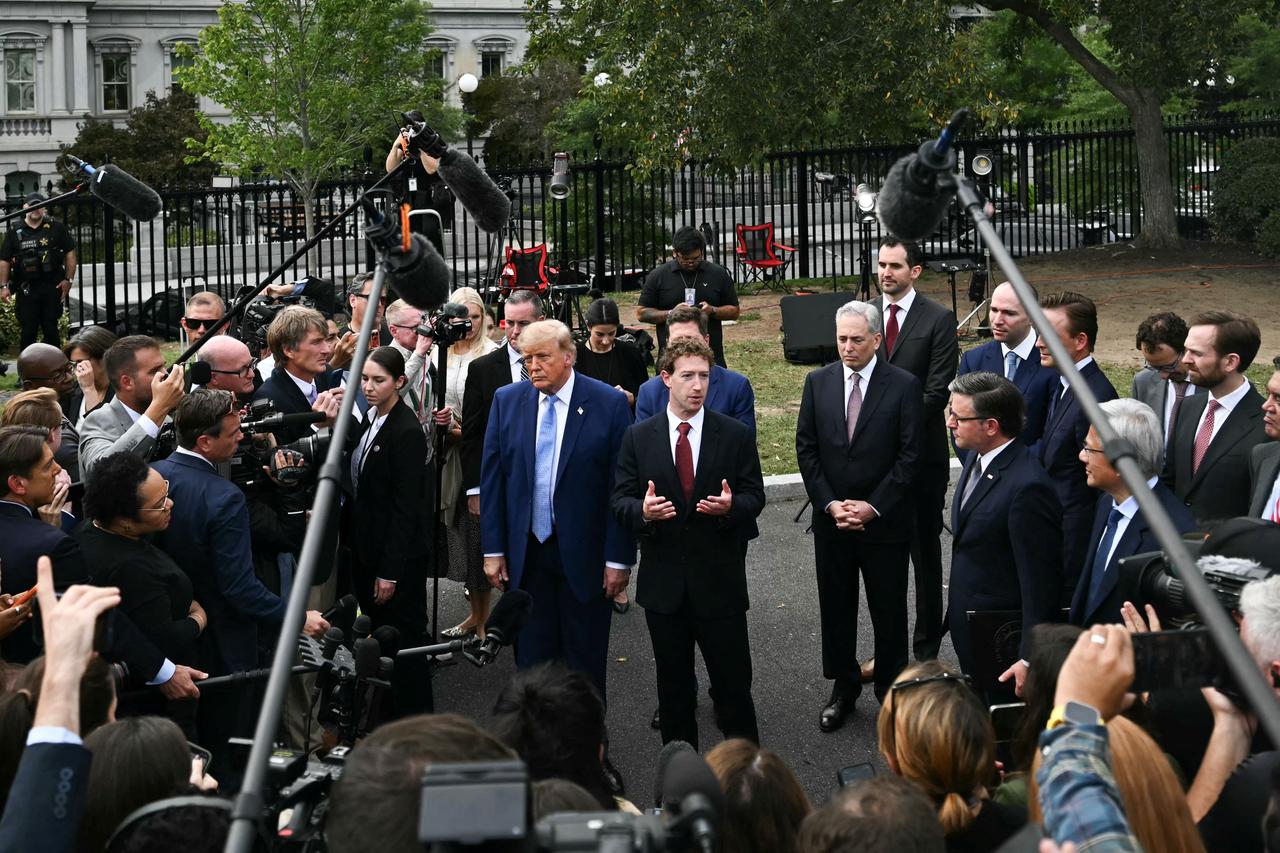
U.S. President Donald Trump and leading executives from major tech companies have united to formalize an agreement aimed at enhancing internal regulations surrounding advanced artificial intelligence (AI) systems. This significant milestone was achieved during a recent lunch meeting at the White House, drawing attention to the importance of responsible AI development.
The White House Accord: A Morally Binding Agreement
Trump took to his Truth Social platform to describe the agreement, identifying it as a “morally binding” commitment by some of the most influential figures in the tech industry. He emphasized its protective nature and claimed, “The biggest people in the world signed that, and I signed it as president.” Dubbed the White House Accord on “Super Intelligence,” the document outlines a comprehensive commitment by signatory companies to adopt rigorous internal processes ensuring their AI models operate safely and efficiently.
The agreement prompts these companies to take proactive measures to prevent potential AI challenges, advocating quick responses to issues that may arise. Ultimately, the aim is to foster confidence among consumers and the public regarding the reliability of cutting-edge AI technologies.
A Comprehensive Four-Layer Framework for AI Oversight
The accord specifies a four-layer framework to be implemented by participants, addressing the design and deployment of their AI models. The first layer involves the establishment of internal controls to monitor various risks associated with cybersecurity, biosecurity, and chemical threats. Safeguards are also required to restrict inappropriate access to technical systems.
The second layer emphasizes forming dedicated internal teams to verify that monitoring mechanisms are effective and any identified issues are properly resolved. Under the third layer, independent external auditors will be engaged to assess whether internal controls function as intended. Lastly, the fourth layer requires the formation of an independent board committee to oversee compliance and ensure timely resolution of raised concerns.
These measures aim to bolster the confidence of companies, consumers, and the public in the safe operation of advanced AI systems. Moreover, they pledge to meet regularly to create unified standards and best practices across the industry.
Zuckerberg and Johnson Highlight Collaborative Impact
Meta CEO Mark Zuckerberg underscored the significance of this accord as an initial step rather than a final solution. He noted the necessity for companies to conduct internal risk assessments, engage third-party auditors, and have results reviewed by their boards of directors. “This is a start and an accord that the whole industry could come to,” he asserted outside the White House.
House Speaker Mike Johnson, who organized the meeting, recognized the gathering as an essential milestone in fostering industry collaboration. He stated, “These leading minds came together to have a discussion,” reinforcing the belief that a collective effort is vital for responsible AI development. Trump, in turn, remarked that he could see significant self-policing among the companies, indicating alignment despite diverse perspectives on AI risks.
A Broader Gathering and a Push for Rebranding AI
The lunch meeting featured a broader array of technology leaders, notably including names such as Amazon’s Jeff Bezos and Microsoft’s Satya Nadella. This indicates a significant moment for the AI discourse as tech leaders converge to discuss future regulatory frameworks.
Throughout this week, discussions surrounding AI have garnered heightened attention in Washington. Trump reiterated his commitment to fostering American AI innovation without imposing restrictive measures. Additionally, he announced a shift in terminology, referring to AI as “superintelligence,” a move he believes better encapsulates the technology’s capabilities.
While some executives, like Anthropic’s Dario Amodei and Tesla’s Elon Musk, caution against potential risks associated with unchecked AI evolution, others like NVIDIA’s Jensen Huang and Zuckerberg focus on the positive impacts, showcasing an ongoing debate within the industry. This gathering marks a pivotal moment, laying the groundwork for future collaborations toward responsible AI development.