
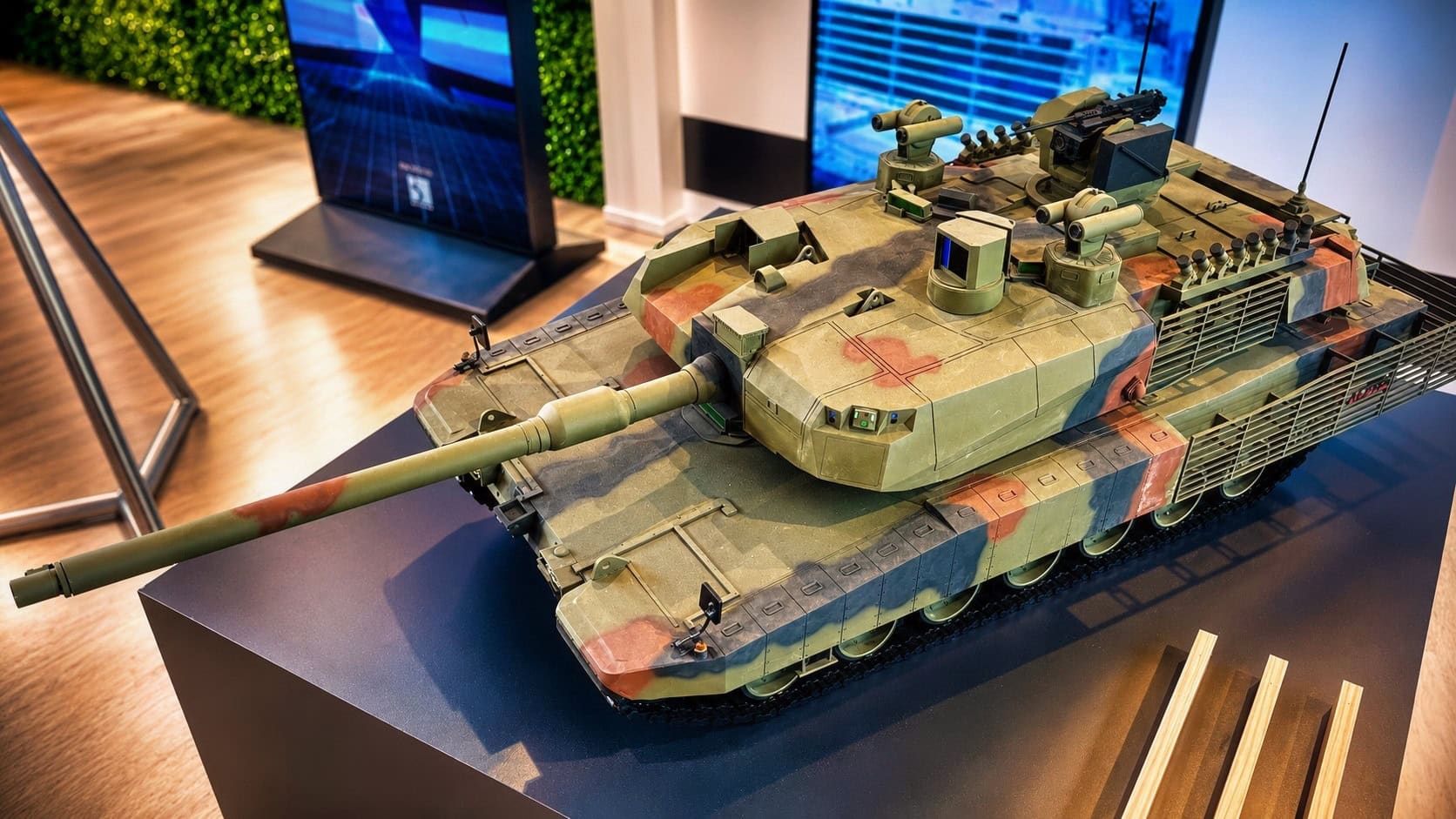
Turkey’s Altay main battle tank has faced significant challenges over nearly two decades before entering service. Its construction highlighted the country’s achievements in producing various parts of modern tanks; however, it ultimately hinged on a crucial component — the engine. After Germany halted exports of the powerplant Turkey had planned to use, the Altay was left without the means to power itself. Intended to signify Turkey’s move towards defense independence, the Altay features predominantly Turkish designs, but the reliance on foreign technology continues to linger over the project.
### The Vision Behind Altay: Independence from Foreign Weapons
The Altay tank was born out of Turkey’s ambition to achieve self-sufficiency in defense capabilities, advancing from the National Tank Production Project initiated in the mid-1990s. This initiative aimed to liberate Turkey from dependence on aging foreign armored vehicles, which included the German Leopard and American M60 tanks. Named after General Fahrettin Altay, a prominent figure in Turkey’s War of Independence, the Altay represented a pivotal step in establishing national military manufacturing.
The initial phase was promising; in 2008, Turkey awarded a contract to develop the tank. The Turkish company Otokar designed and built prototypes that incorporated technologies from South Korea’s Hyundai Rotem. However, the project took a turning point in 2018 when the contract for serial production shifted from Otokar to BMC, initiating both advancement and controversy surrounding the program.
### The Impact of the German Arms Embargo
The plan for the Altay faced a severe setback when Germany imposed an arms embargo due to Turkey’s military operations in Syria. The tank was designed around a German MTU engine and RENK transmission, which became unavailable following the embargo. Ankara’s inability to procure these critical components brought the Altay project to a standstill. The absence of a powerplant stymied any plans for mass production and showcased the vulnerability of Turkey’s military ambitions relying on foreign suppliers.
The situation forced Turkey to seek alternatives outside of Europe, ultimately leading to outreach to South Korea. By securing a deal with South Korean firms, BMC could replace the German components, providing a necessary lifeline for the Altay project.
### South Korea’s Role in Reestablishing Production
The agreement reached in late 2021 between BMC and South Korean suppliers allowed for the provision of the Doosan DV27K engine, a high-performance 1,500-horsepower diesel engine. This strategic shift not only facilitated the production of the Altay but also marked a significant step towards reducing reliance on German technology. Prototypes with the new powerplant were delivered to the Turkish Land Forces in 2023, with plans for continued integration into the production process.
However, Turkey still found itself dependent on external sources, albeit a different partner. While South Korea’s willingness to sell the engine offered a temporary solution, it underscored the ongoing challenges Turkey faces in achieving complete military independence.
### The Road Ahead: Turkey’s Pursuit of an Indigenous Engine
Turkey’s long-term objective remains to develop its own engine. The BMC Power division has been hard at work on the BATU powerpack, an indigenous solution meant to render the Altay sovereign. As of early 2026, the BATU engine has successfully completed its testing phase, marking a milestone in Turkey’s goal of eliminating external dependencies. Plans are underway for the BATU engine to replace the Korean version in future Altay models, with serial production slated to begin around 2028.
If these plans come to fruition, Turkey would attain a significant achievement within the realm of defense independence, a feat that many nations have struggled to accomplish. The Altay project serves as a crucial case study, illustrating both the trials and triumphs of developing a national defense program.
### Conclusion: A Reality Check on Defense Sovereignty
The Altay symbolizes Turkey’s commitment to establishing a robust defense posture. While progress has been made, the project serves as a reminder of one fundamental truth: a country does not truly own a weapon until it possesses the means to power it. Turkey’s experience with the Altay underscores the critical importance of domestic production of not just the vehicle’s hull but essential components like the engine.
As Turkey approaches the end of this protracted journey towards sustainable defense capabilities, the success of the Altay hinges on overcoming the final hurdles of engine development. Though it continues to roll out with foreign technology, Turkey is investing billions to ensure that its military equipment can ultimately stand on its own two feet, free from the specter of external embargos or contingencies. The road to complete military self-sufficiency is fraught with challenges, but the lessons learned from the Altay’s development pave the way for future advancement in Turkish defense initiatives.