
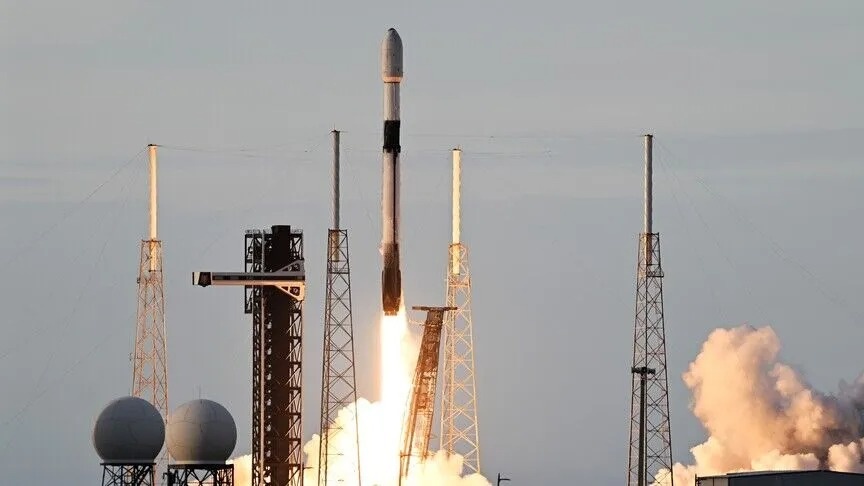
In the realm of space exploration, Türkiye is set to make a significant leap forward with its upcoming lunar mission. Scheduled for launch in early 2027 from the Kennedy Space Center, this ambitious project aims to further Türkiye’s commitment to technological independence and global scientific contributions.
Mission Overview
The spacecraft, weighing in at 3.5 tons, will embark on a journey to establish a 100-kilometer polar orbit around the Moon. Once launched, it is expected to take around two months to complete its journey. Upon arriving at its destination, the spacecraft will initiate a series of scientific observations that are planned to span at least three months. These observations will focus on crucial areas like solar winds, the formation of water, magnetic field dynamics, and surface radiation levels, contributing significantly to our understanding of lunar and space environments.
Domestic Production and Technological Independence
In a notable demonstration of self-reliance, approximately 80% of the spacecraft’s components will be produced domestically. Key systems encompassing flight management, communications, and power supply have been developed as part of Türkiye’s Imece and Türksat 6A satellite programs. This high level of domestic production not only emphasizes Türkiye’s capabilities but also showcases its ambition to become a self-sufficient player in the space sector.
Enhancing Türkiye’s Global Standing
The Minister of Industry and Technology, Kacır, highlighted the project as a landmark moment for Türkiye, noting that the nation would become the ninth in history to conduct a lunar mission. He emphasized that this initiative reflects a broader strategic goal of achieving technological sovereignty. “Only eight countries have carried out lunar missions so far, and by implementing our program, Türkiye will be able to join this elite group,” Kacır stated, illustrating the potential for Türkiye’s enhanced global standing in space exploration.
Future Plans and Partnerships
In addition to its lunar mission, Türkiye has recently joined the Artemis Accords, which lay the groundwork for international collaboration in lunar exploration and beyond. The country is also actively developing new communication satellites and Earth-observation systems. Furthermore, plans are underway for the establishment of an independent spaceport in Somalia, which will amplify Türkiye’s presence in the space race and provide new platforms for future missions.
This ambitious lunar program exemplifies Türkiye’s commitment to not only advancing its own capabilities but also contributing to global scientific knowledge. As they prepare for their lunar journey, attention will be focused on the thorough testing processes. “The further tests will verify the spacecraft’s ability to withstand the harsh conditions it will encounter during launch and in the space environment,” Kacır remarked, emphasizing the importance of rigorous evaluations to ensure mission success.
Türkiye’s foray into lunar exploration marks a pivotal moment in its technological evolution and opens up new possibilities for research and international cooperation. As the countdown to 2027 begins, the world will be watching closely, eager to see Türkiye’s advancements in space technology and scientific inquiry unfold.