
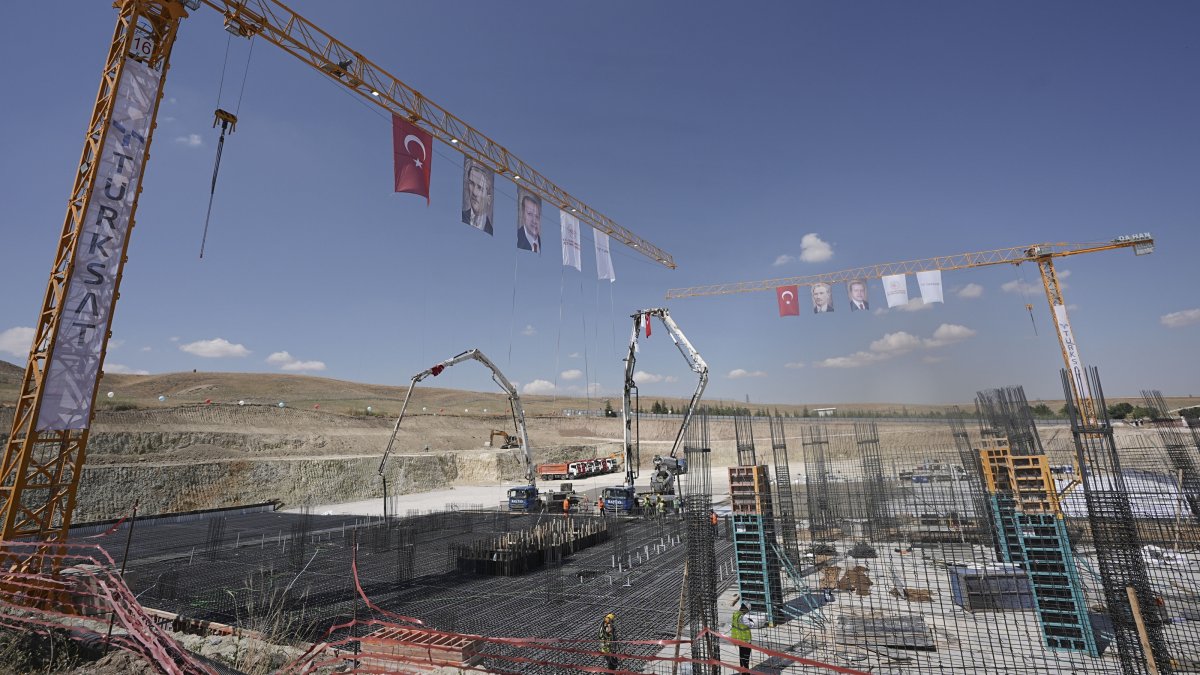
On Wednesday, Türkiye initiated the construction of a new data center aimed at enhancing the nation’s digital independence, cybersecurity capabilities, and infrastructure for artificial intelligence (AI). This initiative is part of a broader strategy to establish stronger domestic control over vital digital resources.
Foundation of a Digital Stronghold
At the groundbreaking event, Transport and Infrastructure Minister Abdulkadir Uraloğlu referred to the center, managed by the state-owned satellite communications company Türksat, as Türkiye’s “new digital fortress,” located in the capital city of Ankara. Uraloğlu emphasized that this facility is essential for maintaining the integrity and security of critical data within the country’s territory. “We are establishing sovereignty over our data on our own soil,” he noted, reinforcing the importance of self-reliance in digital assets.
This project aligns with Ankara’s vision to bolster local digital capabilities while reducing dependence on foreign technology providers. Amid increasing geopolitical contestations regarding data and AI, this facility aims to cement Türkiye’s standing as a leader in cybersecurity and digital strategy.
Comprehensive Infrastructure Development
Spanning an impressive 35,300 square meters, the new data campus will emerge as one of the largest in Türkiye. It will feature six dedicated system halls and two high-performance computing areas, each equipped with 20 cabinets. Uraloğlu indicated that the installed power capacity would reach 33 megavolt-amperes. The initial phase will triple the physical capacity of Türksat’s existing facility, with plans to more than double this in subsequent stages.
The construction is designed to adhere to LEED Gold energy-efficiency standards, showcasing an investment in sustainable and low-carbon practices. The facility will also include ample office space, supporting around 200 employees while being equipped for constant operations, even during emergencies.
Positioning Türkiye as a Regional Data Hub
The facility will integrate cutting-edge technology suitable for various AI applications, including machine learning and model training. Furthermore, it will cater to government institutions that handle sensitive information, delivering cloud and data services through domestically developed software. Uraloğlu highlighted the project’s role in bolstering Türkiye’s e-Government framework and digital public infrastructure.
Moreover, this data center could establish Türkiye as a pivotal player in the regional data landscape by offering secure hosting services to neighboring nations and Turkic states. This consolidation of resources is expected to minimize redundant public-sector investments by streamlining cloud and data services onto a unified platform.
Expansion of Satellite Capabilities
In addition to the data center, Uraloğlu discussed Türkiye’s ambitious satellite plans, mentioning that Türksat currently operates six active satellites. These satellites provide coverage to roughly two-thirds of the global population, reaching an estimated 5.5 billion people. The self-developed Türksat 6A satellite, crafted with over 80% local content, positions Türkiye among a select group of just 11 nations capable of designing and manufacturing communications satellites.
Türksat’s coverage has recently expanded into South Asia, offering broadcasting services across ten countries, including Pakistan and India. Moving forward, Türkiye intends to initiate the Türksat 7A satellite project before year-end, aiming for operational deployment by late 2029. This new satellite will enhance capabilities by replacing older systems and providing more extensive data capacity and flexible resource management.
As Türkiye advances in digital infrastructure and satellite technology, the nation’s commitment to digital sovereignty and regional leadership in data services is clearer than ever. The establishment of this state-of-the-art data center signifies a significant step toward achieving these strategic goals.