
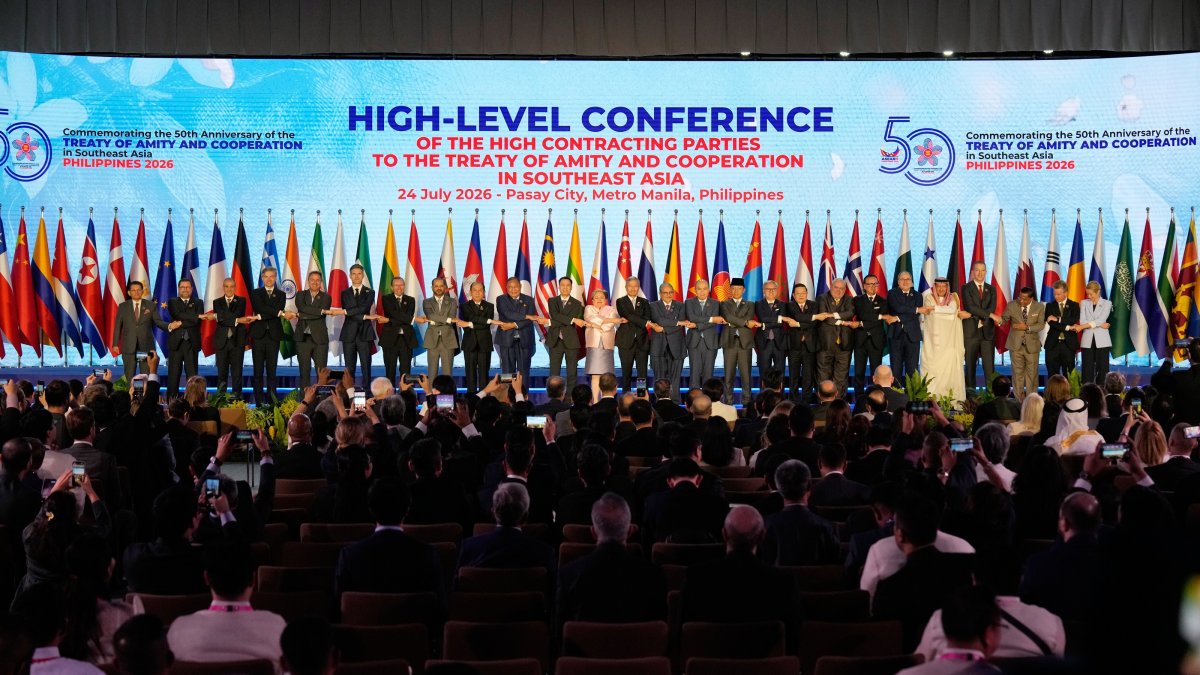
Türkiye’s recent elevation from an ASEAN Sectoral Dialogue Partner to a full ASEAN Dialogue Partner marks a significant diplomatic achievement that indicates a shift in the dynamics of Southeast Asia’s external relations. This decision, made during the 59th ASEAN Foreign Ministers’ Meeting held in Manila, reflects Türkiye’s growing influence in one of the planet’s most rapidly evolving regions. It also demonstrates the productive diplomatic engagements and economic partnerships that Türkiye has cultivated over the years.
The Role of Malaysia as Coordinator
The appointment of Malaysia as the country coordinator for ASEAN-Türkiye Dialogue Relations is a pivotal development that merits attention. The role of a country coordinator within ASEAN is crucial; these individuals serve as the main point of contact between ASEAN member nations and external dialogue partners. They also facilitate meetings, identify new collaborative opportunities, and work to ensure that political momentum translates into real-world results. Malaysia’s selection highlights confidence in its diplomatic capabilities and experience, which are essential for effectively managing such regional matters.
Malaysia’s suitability for this role is evident for several reasons. Firstly, Malaysia chaired ASEAN successfully in 2025, gaining vital experience in managing an ever-growing network of external partners while balancing regional rivalries while maintaining “ASEAN Centrality.” This experience did not fade when the Philippines took over the ASEAN Chairmanship in 2026; instead, it established Malaysia as a reliable player for continuity in ASEAN’s foreign relations. Additionally, Malaysia’s long-term vision aligns well with Türkiye’s meta-strategic perspective, reinforcing a mutual understanding of broader regional goals.
Öngoing Expansion of Türkiye-Malaysia Relations
As Türkiye continues to expand its engagement across Southeast Asia, Malaysia remains its primary gateway into the region. The commercial relationship between Türkiye and ASEAN has grown significantly, particularly in Malaysia, Indonesia, and the Philippines. Key areas of collaboration include defense, where naval programs and aerospace partnerships are flourishing. Besides, educational exchanges and diversified bilateral trade have become more prevalent, extending into advanced sectors like digital technology and green technology. This forward-thinking approach emphasizes Türkiye’s focus on future-oriented industries rather than merely traditional trade.
The elevation of Türkiye to Dialogue Partner status conveys ASEAN’s belief in Türkiye as a long-term regional player. While the initial partnership focused on specific issues back in 2017, the scope of cooperation between Türkiye and ASEAN has broadened significantly since then. More frequent political consultations, mature business networks, and enriched strategic dialogues now define their relationship, marking Türkiye’s engagement as comprehensive—an evolution of great importance for both parties.
Strategic Importance and Potential Outcomes
The implications of Türkiye’s upgraded role extend beyond just bilateral relations; they touch upon broader strategic dynamics in the Indo-Pacific region. ASEAN’s diversified partner network, enriched by Türkiye, strengthens relations with various middle powers, including Australia, Japan, South Korea, and India, without endangering the principle of ASEAN Centrality. Moreover, Türkiye’s enhanced participation opens avenues for cooperating on crucial security issues like cybersecurity and counterterrorism.
From an economic standpoint, both Türkiye and ASEAN can further solidify their partnership through existing free trade agreements. As these trade relations evolve, they may contribute to broader regional economic integration. Türkiye has consistently invested in areas like educational cooperation, humanitarian diplomacy, and technical training, demonstrating an ongoing commitment to capacity-building initiatives throughout ASEAN.
Finally, for Malaysia, this coordination role brings both opportunity and responsibility. Malaysia is positioned to serve as a diplomatic link between ASEAN and Türkiye, strengthening its role in fostering strategic dialogue between Southeast Asia and the Islamic world. However, with this opportunity comes the obligation to ensure that the benefits of this cooperation are equitably distributed among all ASEAN member states, thereby avoiding any concentration of benefits among a select few.
In conclusion, Malaysia’s appointment as country coordinator for ASEAN-Türkiye relations signifies an essential step in ASEAN’s evolving political landscape. It showcases the value placed on members capable of maintaining institutional continuity while emphasizing the potential for mutual growth and partnership in addressing regional challenges and opportunities. As ASEAN and Türkiye work toward their respective strategic visions, Malaysia finds itself at a critical intersection, poised to play a vital role in shaping future diplomatic engagements.