
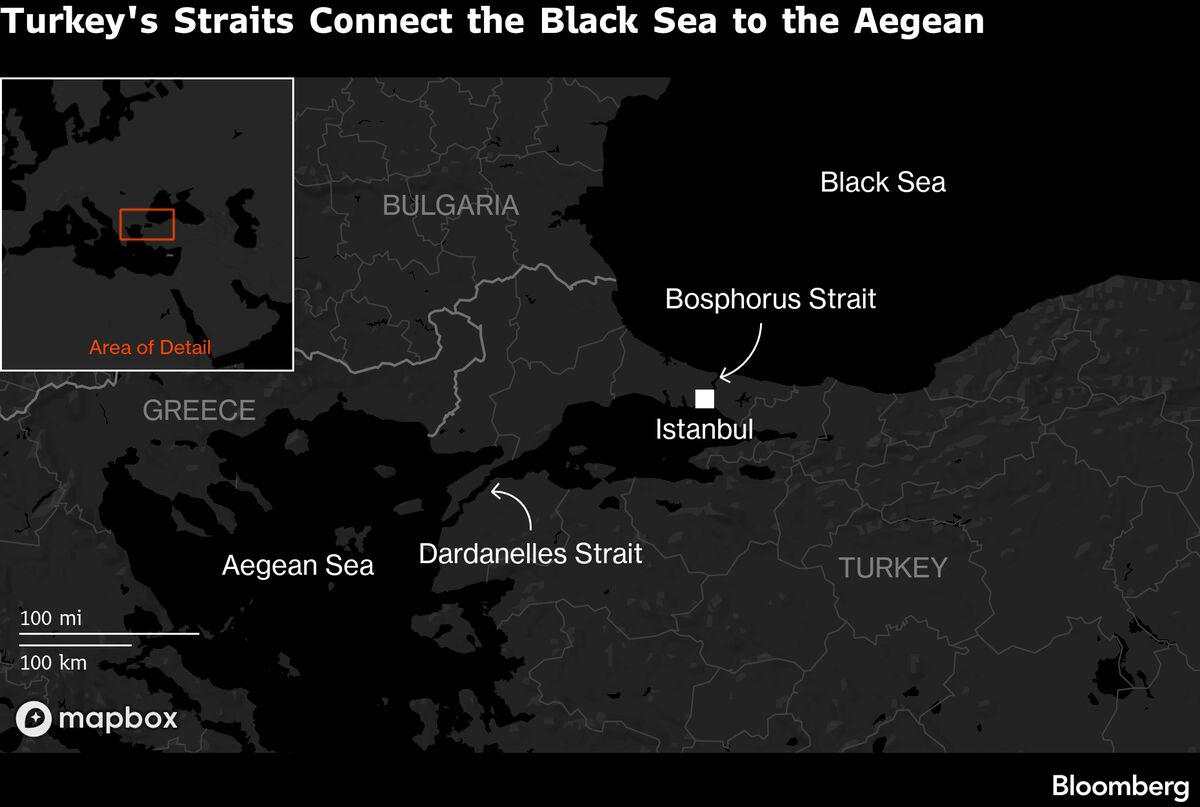
Turkey has reinstated the passage of ships through its straits towards the Black Sea, after some vessels encountered significant delays. These hold-ups occurred amidst increasing security concerns in the region, prompting questions about the underlying reasons for the interruptions.
Importance of Turkey’s Straits
Turkey’s straits, specifically the Bosporus and the Dardanelles, serve as critical maritime routes connecting the Mediterranean Sea to the Black Sea. This pathway is vital for international shipping, affecting global trade patterns and the movement of goods. The resumption of allowed transit through these waterways is crucial not only for Turkey’s economy but also for the global shipping industry that relies on efficient passage. The strategic significance of these straits cannot be overstated, as they play a pivotal role in maritime logistics and regional geopolitical dynamics.
Security Concerns and Their Impact
The delays faced by numerous vessels were attributed to unclarified security risks in the straits area. Such risks can emerge from various factors, including geopolitical tensions, military activities, and environmental threats. The recent spike in security alerts has led to heightened scrutiny of maritime traffic, resulting in slower processing times at transit checkpoints. These delays can significantly disrupt supply chains, affecting everything from oil prices to food security in regions dependent on Black Sea shipping routes.
Current Maritime Conditions
With Turkey lifting the restrictions, ship operators can expect a more predictable timeline for passage. However, the uncertainty surrounding the security situation means that maritime stakeholders must stay vigilant. Shipping companies are often tasked with navigating a multitude of regulations and conditions that can change rapidly based on regional developments. As the situation evolves, continual monitoring will be necessary to ensure that ships can navigate safely and efficiently.
The Future of Shipping in the Black Sea
As Turkey moves forward, the shipping industry will undoubtedly be affected by the fluctuating conditions in the Black Sea. Stakeholders must strategize to adapt to new security measures and potential challenges that could arise. The maritime community, which includes ship owners, cargo operators, and logistics firms, must collaborate closely with Turkish authorities to maintain smooth transit operations. Building resilient supply chains that can withstand disruptions will be critical for the economic health of countries that rely on this vital route.
In conclusion, the renewed allowance for ships to pass through Turkey’s straits is welcome news, given the area’s importance in global trade and transportation. Nevertheless, ongoing vigilance towards security concerns will be paramount in ensuring the safety and efficiency of maritime activities in the region. As operators navigate this complex environment, continued communication and adaptability will be essential in maintaining operational integrity and responding to emerging threats.