
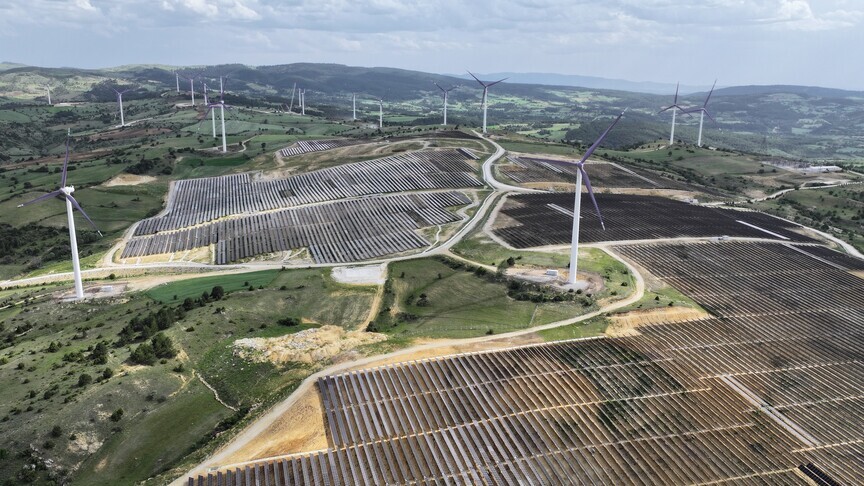
Türkiye is experiencing a significant transformation in its energy landscape. Over the past decade, the country has pivoted towards renewable energy sources, particularly wind and solar, while the once-prominent plans for new coal power have nearly vanished. This shift not only reflects a commitment to cleaner energy but also presents an opportunity for Türkiye to enhance its energy security and economic stability while addressing climate change.
Decline of Coal and Rise of Renewables
In 2014, Türkiye boasted a coal pipeline of 54.5 gigawatts (GW), trailing only behind China and India. However, data from Global Energy Monitor indicates that most of these coal projects have either been canceled or placed on hold. Today, only a few proposals remain active, such as the expansion of the Afsin-Elbistan plant, which is still under review, alongside a new unit at the Cenal plant.
Conversely, the growth of renewables has been remarkable. Wind and solar energy now represent approximately one-third of Türkiye’s total installed generating capacity. The government has laid out ambitious plans to triple this capacity to 120 GW by 2035. As the host of the UN’s annual climate summit, Türkiye has advocated for electrification to meet 35% of global energy demand by 2035. By aligning this electrification goal with an aggressive push for renewable energy, Türkiye can set a global precedent for achieving climate objectives while ensuring economic growth and energy security.
Financial Benefits of Renewable Energy
The transition toward renewable energy is already yielding significant financial benefits for Türkiye. The Ministry of Energy and Natural Resources estimates that renewable energy initiatives will have reduced fossil fuel imports worth $21.5 billion between 2015 and 2025. This economic boon stems from the rapid deployment of wind and solar technologies, which are increasingly becoming the most cost-effective options for energy generation.
As a leader in planned battery storage solutions paired with renewables, Türkiye has made it easier to integrate clean energy while maintaining grid reliability. However, the nation has the potential to expand even further, which could intensify the savings on imported fuels. Tapping into the Mediterranean’s rich wind and solar resources not only strengthens the local energy grid but also enhances Türkiye’s role in the regional renewable energy landscape, especially in the context of rising global fuel prices.
Challenges of Domestic Coal Production
Traditionally, domestic coal has been perceived as a method to boost Türkiye’s energy security by reducing reliance on imported fuels. However, 93% of the country’s coal reserves consist of lower-grade lignite and asphaltite, which require more intense burning and result in higher pollution levels. Moreover, operational challenges have plagued domestic coal, with reports indicating that only about half of Türkiye’s 10.4 GW coal capacity is reliably available for power generation. The downtime at domestic coal plants far exceeds that of imported plants, further complicating its viability.
Despite its drawbacks, domestic coal has been a source of employment in certain regions, illustrating the societal implications of transitioning away from fossil fuels. However, investment in renewable energy could generate even more jobs, particularly in areas like Afşin-Elbistan, providing a pathway for communities historically tied to coal.
Alignment with European Markets
Changes in European trade standards are adding momentum to Türkiye’s transition away from coal. The EU’s Carbon Border Adjustment Mechanism (CBAM), which began in January, imposes a carbon price on embedded emissions in various imports, significantly impacting Türkiye, one of the top sources of these goods. This shift not only incentivizes the reduction of carbon intensity in Türkiye’s industry and energy systems but also emphasizes the interconnectedness of climate commitments and economic competitiveness.
As Türkiye continues to evolve its energy strategy, it’s clear that the transition towards renewables is not merely a climate initiative; it’s a necessary shift for enhancing industrial resilience and maintaining favorable trade relations with Europe. Maximizing renewable efforts will not only reduce reliance on fossil fuels but will also offer sustainable solutions for energy security and economic prosperity.
In conclusion, Türkiye’s momentum towards phasing out coal and expanding renewable energy sources showcases an impressive commitment to sustainable practices while also offering significant economic advantages. By leveraging its potential in the renewable sector, Türkiye not only secures its energy future but also serves as a potential model for other nations striving towards sustainability.