
As Türkiye moves swiftly to initiate testing for its fifth-generation National Combat Aircraft (MMU) Kaan and plans to roll out its first units by the end of the decade, the question arises: what are the next steps for Türkiye in the realm of sixth-generation fighter aircraft, and who will be their partners?
The Potential of the Global Combat Air Program (GCAP)
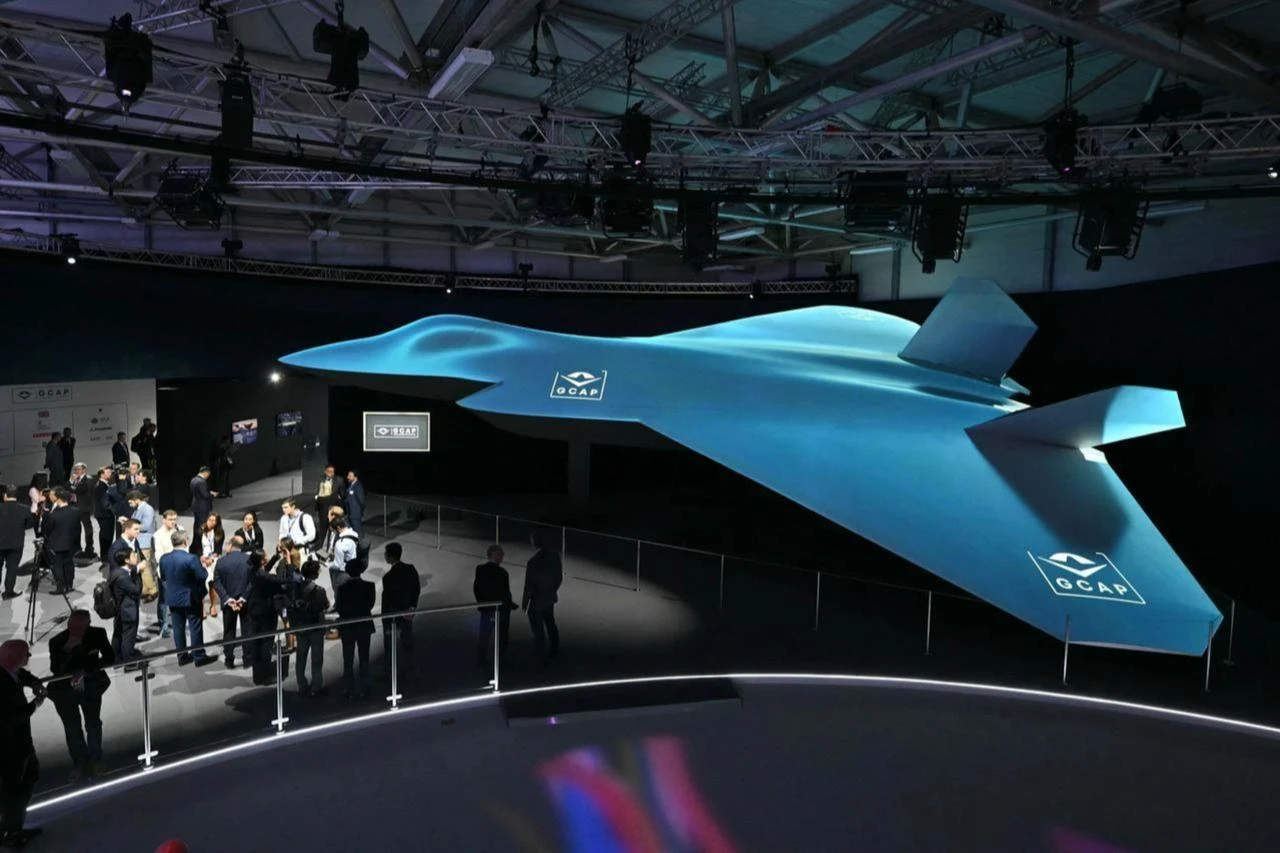
One of the most promising pathways for Türkiye lies in its involvement with the Global Combat Air Program (GCAP), a collaborative effort between Italy, Japan, and the United Kingdom. Recently, Canada has also signaled its intent to join GCAP, although it remains uncertain how this will affect existing partnerships within the program. Currently, the project is evenly split among industry giants such as Leonardo, Mitsubishi Heavy Industries, and BAE Systems.
GCAP, now branded as “Edgewing,” aims to create a piloted fighter jet that boasts cutting-edge stealth capabilities, an advanced adaptive cycle engine, and sophisticated systems for sensor fusion and artificial intelligence. Additionally, it involves the integration of manned-unmanned teams, combining crewed aircraft with “loyal wingman” drones to enhance mission effectiveness.
Türkiye’s Contributions to GCAP
Türkiye brings a wealth of expertise to the table, particularly through its primary defense contractor, Turkish Aerospace Industries (TAI). The MMU Kaan enhances TAI’s skill set in airframe construction and systems integration, while also focusing on stealth design and electronic warfare capabilities. The ability of the MMU Kaan to collaborate with unmanned aerial systems, such as TAI’s Anka-3 and Baykar’s Kizilelma, significantly strengthens its value proposition in the context of GCAP.
Both former and current CEOs of TAI have publicly stated that the company has commenced preliminary studies aimed at envisioning a future Turkish sixth-generation fighter jet. This forward-thinking approach suggests a strong commitment on Türkiye’s part to modernize its airforce and push technological boundaries.
GCAP’s collaborators stand to benefit Türkiye as well. For instance, partner nations could assist TAI’s subsidiary, TEI, in expediting the development of an indigenous turbofan engine for the MMU Kaan. Moreover, the political dynamics surrounding GCAP would allow Ankara to retain its strategic independence while reinforcing ties with NATO and fostering relations with Japan—a nation that recently expressed interest in Turkish drone technology.
The Challenges Ahead
However, Türkiye faces certain hurdles as it considers becoming a part of GCAP. A significant concern is the timeline; as stated by Lorenzo Mariani, CEO of Italy’s Leonardo, potential new partners will need to make decisions by the end of 2026, with a firm deadline set for July 2027. This timeline puts pressure on Türkiye to act quickly.
Moreover, Türkiye may need to bear substantial initial costs to kickstart its research and development efforts. Nevertheless, there are avenues to manage these expenses efficiently. The seamless operation of the MMU Kaan with drones from Baykar and TAI suggests a promising integration within the GCAP framework.
Exploring Alternatives
Currently, the only other viable option for Türkiye would be to develop a similar aviation program independently, albeit with less experienced countries like Azerbaijan or Pakistan. Each of these nations could bring unique expertise, whether from their historical contexts or partnerships with larger powers like China.
Looking back at Türkiye’s past, its exclusion from the Eurofighter Typhoon program highlights the risks of pursuing isolated strategies. Joining GCAP would not only accelerate Türkiye’s defense capabilities but also offer collaborative opportunities that could mitigate the eventual risks of sanctions and other geopolitical concerns.
In summary, Türkiye’s involvement in GCAP would present a strategic advantage, enhancing its military capabilities while fostering international partnerships that are crucial for future innovation and security.