
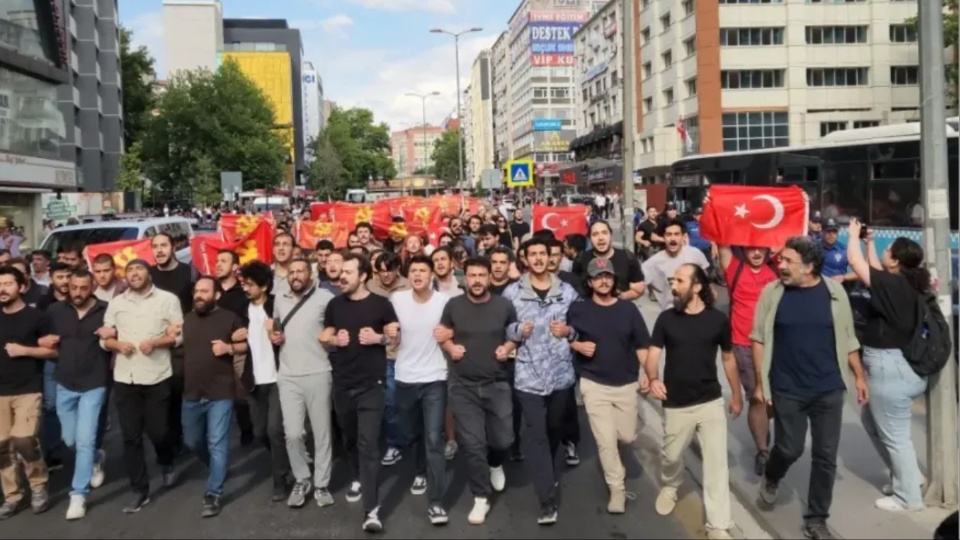
In Ankara, Turkey, the political landscape recently escalated when the government indicted 140 members of the Communist Party of Turkey (TKP) for organizing an anti-war protest during the NATO summit held earlier this July. This significant legal action underscores the government’s increasing crackdown on dissent, particularly in the context of international military alliances.
Government Crackdown on Dissent
The NATO summit, attended by high-ranking officials, including President Donald Trump, aimed to coordinate military expenditures and weaponry. In anticipation of this, the TKP planned a week-long series of protests against what it identified as “the world’s largest terrorist organization.” However, following the demonstration, the government responded with force, resulting in arrests, injuries, and legal reprisals against those involved.
In a series of police raids, 140 individuals linked to the party were apprehended, while several others were injured in the process. To further complicate matters, three protestors were placed under house arrest, indicating a strategic effort to stifle opposition. A few months later, new legal proceedings unfolded as prosecutors formally charged these TKP members, including key party figures, seeking prison sentences ranging from six months to three years for alleged offenses such as “violating the Law on Demonstrations and Marches” and “resisting police.”
State of Emergency and Protest Bans
To preempt any public embarrassment before NATO allies, the Turkish government, led by President Recep Tayyip Erdoğan and the ruling Justice and Development Party (AKP), declared a ban on demonstrations across several cities. In Ankara, these measures escalated to a state of emergency. Civil servants were granted a week off work, dormitories were evacuated, and significant areas of the city were closed off to vehicular and pedestrian access. In addition, the government deployed around 50,000 police officers to enforce the ban, employing facial recognition technology at various checkpoints to monitor dissent.
Such actions effectively suspended fundamental civil rights for citizens, painting an alarming picture of governmental overreach. As the NATO summit drew closer, the TKP condemned these restrictions while emphasizing the widespread sentiment against NATO’s presence in Turkey. The party asserted that a movement existed within the nation, uniting against what they perceive as imperialistic influences from the U.S. and its allies.
Support for International Solidarity
In a forthright statement preceding the official ban, the TKP underscored the collective spirit of those who oppose NATO’s policies, appealing to “patriots, republicans, revolutionaries, and communists” to actively confront NATO and imperialism in Ankara. The party emphasized a strong local sentiment that sympathizes with global issues, particularly those regarding Palestine and Iran.
Despite governmental restrictions, the TKP proceeded with plans to demonstrate on July 5. Hundreds gathered in Kızılay, the heart of Ankara, chanting slogans such as “NATO shall not pass.” This act of defiance ultimately became the catalyst for legal action against the protestors, illustrating the government’s unwavering stance against any form of dissent.
The Ankara protests and subsequent legal actions signal a critical moment in Turkey’s political climate, raising questions about civil liberties and the independence of political organizations under the current regime. As tensions remain high, the emphasis on suppressing dissent suggests a challenging road ahead for the TKP and other opposition groups. This unfolding situation not only reflects domestic challenges but also highlights the broader implications of international military alliances on national democracy and civil rights.