
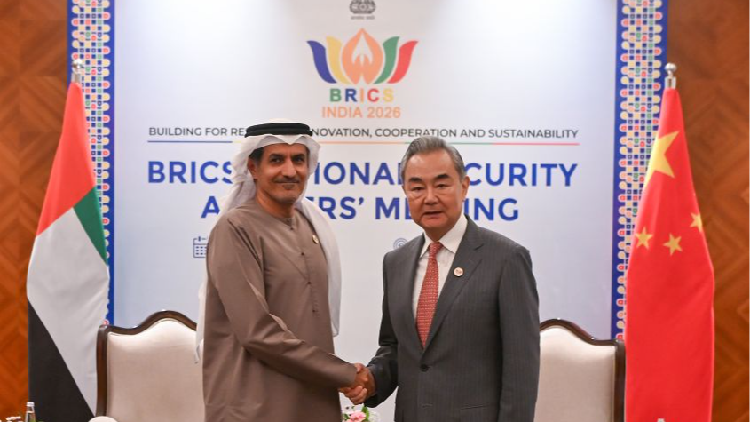
On Tuesday, in New Delhi, China’s chief diplomat Wang Yi engaged in discussions with Ali Mohammed Hammed Al Shamsi, the secretary-general of the Supreme National Security Council of the United Arab Emirates (UAE). This significant meeting underscores the growing importance of strategic partnerships in the global arena, particularly between China and the UAE.
Strengthening Diplomatic Ties
The meeting between Wang Yi and Ali Mohammed Hammed Al Shamsi highlights a pivotal moment in Sino-UAE relations. Both nations have been working to enhance their diplomatic ties, particularly in areas pertaining to security cooperation and economic collaboration. As China continues to assert its influence in the Middle East, dialogues like this are crucial for aligning interests and fostering mutual understanding.
During their talks, they delved into various challenges affecting regional stability and discussed potential avenues for collaboration. The UAE has long positioned itself as a central hub in the Middle East, making it a key partner for China in accessing the region’s markets and resources. Understanding the UAE’s national security concerns can help China craft policies that not only benefit its own interests but also address the priorities of its allies.
Impact on Regional Security
Addressing security issues remains a focal point of the discussions. With the Middle East continually facing geopolitical tensions, both China and the UAE recognize the necessity of a cooperative approach to safeguard their national interests. The strengthening of security cooperation is particularly vital for countering terrorism and managing conflicts that could disrupt trade routes and economic stability.
The UAE’s strategic location makes it an essential player in regional security dynamics. As a result, China aims to deepen its engagement with the UAE in areas such as defense technology and intelligence sharing. Such efforts not only bolster bilateral relations but also contribute to a more stable environment in the region, fostering opportunities for economic development.
Future of Economic Collaboration
Beyond security dialogues, the meeting also opened the door for enhancing economic ties. Both leaders explored investment opportunities and trade collaborations that could yield mutual benefits. The UAE is a critical partner for China’s Belt and Road Initiative, which seeks to improve infrastructure and connectivity across Asia, Europe, and beyond. The enhancement of economic ties can provide a solid foundation for a robust partnership that extends beyond mere diplomatic equations.
In recent years, trade between China and the UAE has surged, highlighting the potential for further economic integration. By addressing trade barriers and encouraging joint ventures, both countries can accelerate growth and harness their resources effectively. This partnership can serve as a model for how nations can collaboratively navigate a rapidly changing global economy.
Conclusion: A Strategic Alliance in the Making
The meeting between Wang Yi and Ali Mohammed Hammed Al Shamsi signifies a broadening of the strategic alliance between China and the UAE. By focusing on diplomatic engagement, security cooperation, and economic collaboration, both nations are paving the way for a sustainable partnership capable of navigating the complexities of today’s geopolitical landscape. As these discussions continue, it will be fascinating to see how this alliance evolves and impacts the broader region, offering lessons in diplomacy and cooperation amidst challenges.