
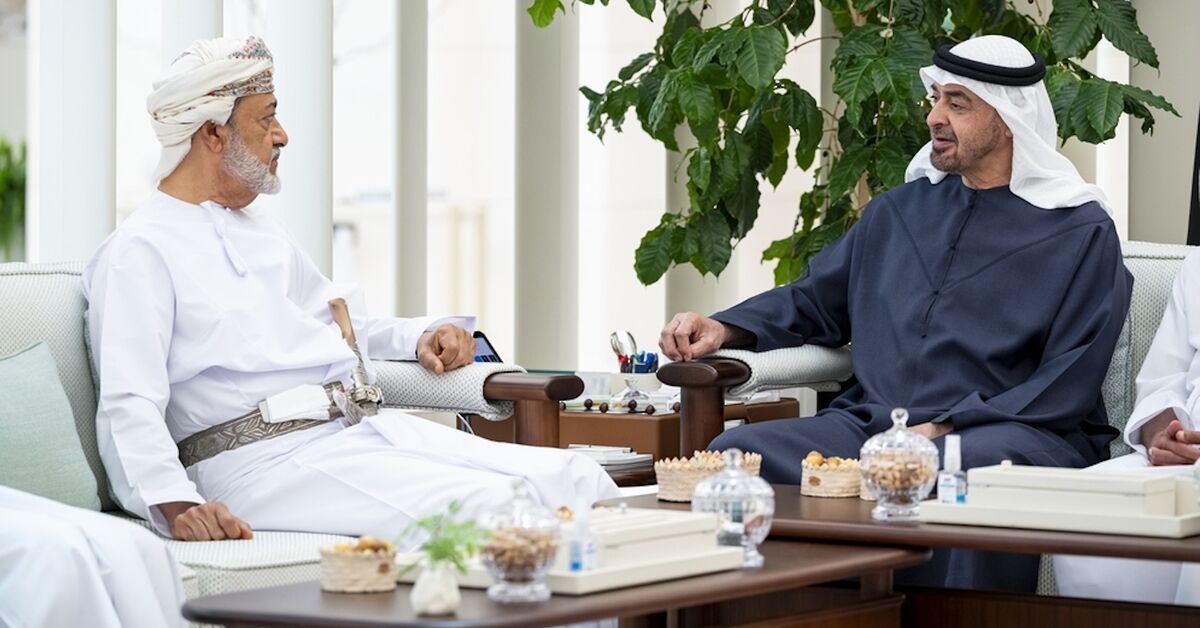
UAE President Mohamed bin Zayed Al Nahyan and Oman’s Sultan Haitham bin Tariq gathered in Abu Dhabi recently to enhance bilateral relations and address pressing regional issues. This meeting comes amid increasing pressure on Oman from Washington, particularly regarding its diplomatic ties with Iran and the revitalization of maritime routes through the Strait of Hormuz.
Key Developments in Bilateral Relations
Sultan Haitham’s visit included a delegation of high-ranking Omani officials, which featured Deputy Prime Minister for Defense Affairs Sayyid Shihab bin Tariq Al Said and Muscat Governor Sayyid Bilarab bin Haitham Al Said. During their talks, the leaders emphasized the importance of advancing cooperation, especially in economic and developmental aspects. The UAE’s state news agency WAM reported that they also delved into regional and global issues, underscoring the complex dynamics in the Middle East.
Officials from both nations attended the meeting, including UAE Foreign Minister Abdullah bin Zayed Al Nahyan and the Deputy Prime Minister and Finance Minister Sheikh Maktoum bin Mohammed bin Rashid Al Maktoum. Their presence indicates the high stakes involved in fostering a robust partnership, one that has seen significant growth in trade and investment over recent years.
Growing Economic Collaboration
The economic ties between the UAE and Oman have expanded notably, especially in the non-oil sector, which surpassed $15 billion in trade in 2024, as reported by Bank Muscat. The two nations previously inked investment agreements totaling approximately $35 billion during Sultan Haitham’s 2024 visit. This investment encompasses diverse fields including renewable energy, green metals, digital infrastructure, and rail connectivity, illustrating a commitment to a collaborative economic future. A significant rail link agreement valued at $3 billion, established in 2022, further strengthens these connections.
However, the two countries maintain different stances on Iran. While the UAE has traditionally adopted a firmer approach toward Tehran, Oman has developed a more amicable relationship and often serves as a mediator between Iran and the United States. This nuanced role is particularly critical, as Oman is currently coordinating efforts with Iran to restore commercial shipping through the Strait of Hormuz—a crucial waterway that has faced disruptions amid ongoing tensions involving the U.S. and Iran.
Strategic Implications and Geopolitical Challenges
The Iranian Foreign Ministry recently announced that Iran and Oman have reached a preliminary understanding concerning a transit route through the Strait of Hormuz. This development comes after a June memorandum of understanding between the U.S. and Iran, which outlines a potential framework for reopening this vital maritime passage. The memorandum stressed that arrangements should adhere to applicable international laws and the sovereign rights of coastal states.
Despite these diplomatic endeavors, Oman finds itself in a precarious position. Tensions with the U.S. have risen, particularly after former President Donald Trump issued threats against Oman, suggesting military action should the nation hinder U.S.-Iran negotiations. Such threats highlight the fragile balance Oman must maintain in its foreign relations as it navigates its role as a mediator while managing external pressures.
In conclusion, while the latest meeting between the UAE and Oman signifies a concerted effort to bolster cooperation and address regional issues, the ongoing complexities surrounding Iran and U.S.-Oman relations present significant challenges. These dynamics will undoubtedly shape not only bilateral ties but also the broader geopolitical landscape of the Middle East.