
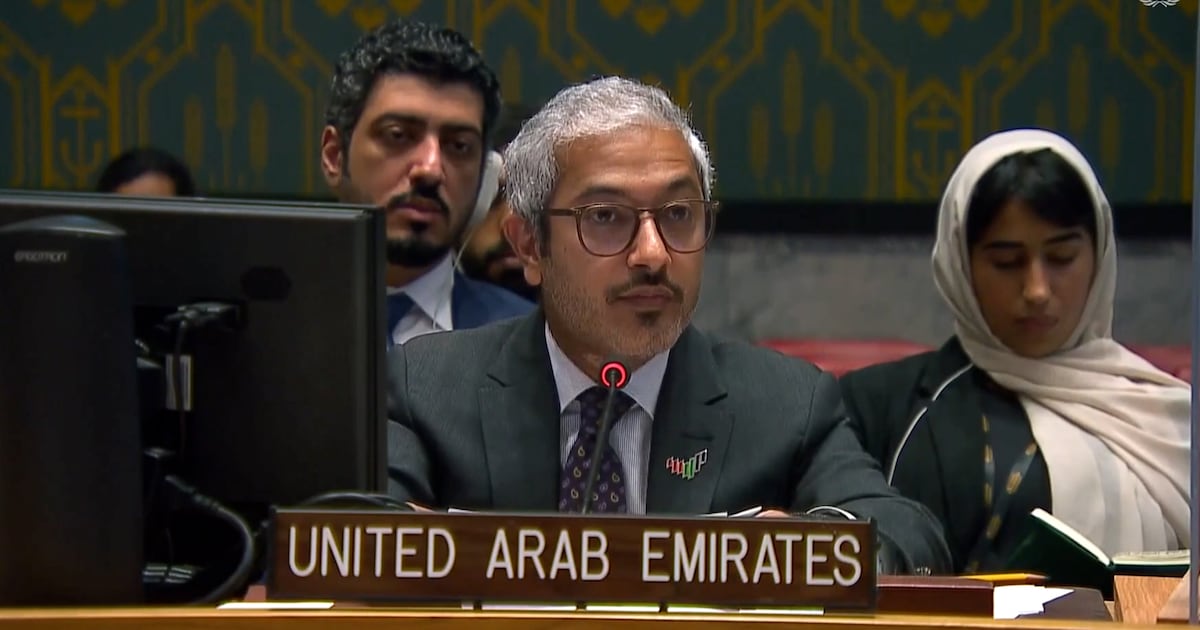
The UAE’s participation in the upcoming UN General Assembly is set to center on key issues, including dialogue-driven conflict resolution and adherence to international laws. With a focus on fostering collaboration, the UAE aims to address significant global challenges.
Advancing Cooperation and Security
UAE’s UN Ambassador, Mohamed Abushahab, has emphasized the importance of the nation’s commitment to peace and stability. Speaking ahead of the annual meeting of global leaders in New York, he expressed readiness to engage constructively in discussions about UN reform, climate action, and sustainable solutions for water security. “We are prepared to contribute to strengthening peace and promoting tolerance amidst regional crises,” he stated. Abushahab noted that the assembly’s gathering offers a unique space for high-level diplomacy, which is crucial for addressing various international tensions.
The UAE’s focus goes beyond mere rhetoric; it acknowledges the challenges posed by divisions within the UN Security Council. Abushahab highlighted how these divisions often hinder effective responses to critical issues but expressed hope that collective discussions could pave the way for de-escalation and enhanced cooperation. He firmly believes that diplomatic efforts are essential for finding common ground in resolving various global conflicts.
Addressing Humanitarian Crises
A vital aspect of the UAE’s agenda is advocating for humanitarian assistance in regions like Sudan, a country grappling with intense strife. Abushahab addressed the pressing need for dialogue as a path to peace, asserting that “there is no military solution to the conflict in Sudan.” He called for an immediate and unconditional humanitarian ceasefire to catalyze a more comprehensive political process that supports a civilian-led governance model.
Furthermore, Abushahab stressed the need for the UN Security Council to adopt proactive measures, including potential arms embargoes, to pressure conflicting parties into seeking peaceful resolutions. He argued that inaction, driven by divisions among council members, only exacerbates existing humanitarian crises, stating that “the international community must act, or we risk prolonging suffering.”
Innovation in Water Security and AI
On another front, the UAE will leverage the UN General Assembly to build momentum for the 2026 UN Water Conference, co-hosted with Senegal. Abushahab underlined the critical state of global water resources. He remarked, “There is no life without water, and we face serious challenges that require innovative solutions.” The UAE intends to encourage countries to set ambitious targets for water management, emphasizing that sustainable practices are crucial.
Additionally, AI technology will play a significant role in the UAE’s discussions. Abushahab asserted the need for equitable access to AI, particularly for developing nations, to ensure its benefits reach all sectors of society. The UAE’s commitment to responsible AI usage reflects its intention not just to innovate but to uphold ethical standards while leveraging technology for humanitarian and developmental benefits.
Fostering Effective UN Reforms
Lastly, the UAE aims to drive broader reforms within the UN to enhance its efficacy in addressing global challenges. Abushahab pointed out that the selection of the next UN Secretary-General could significantly impact multilateral efforts. While he refrained from endorsing any candidate, he highlighted that the new leader must work towards modernizing the institution and restoring confidence in its objectives. The UAE hopes to collaborate with a candidate committed to the demanding task of conflict resolution and improved relations among member states.
In summary, the UAE’s engagement at the UN General Assembly, through cooperative dialogue and innovative solutions, aims to address urgent global issues and establish a foundation for meaningful change in international relations.