
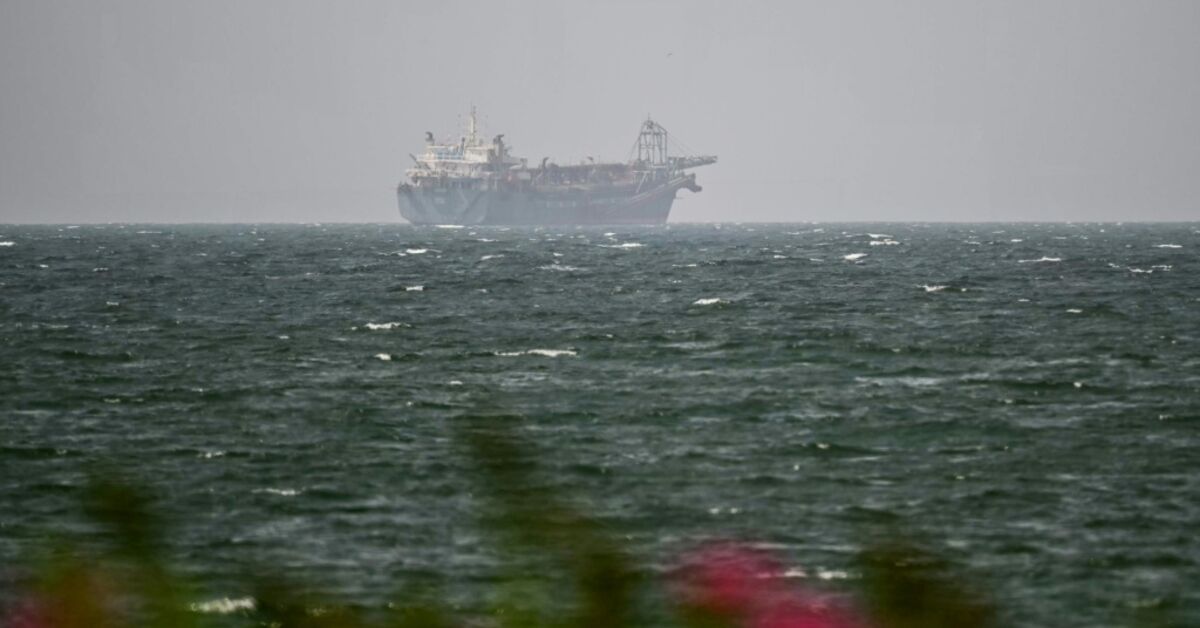
The recent announcement from the United Arab Emirates (UAE) to suspend trade with Iran marks a significant shift in their economic relationship, coinciding with heightened tensions and U.S. efforts to exert “economic warfare” on Tehran. This decision emphasizes the UAE’s position amidst escalating conflicts in the region and signals its alignment with U.S. strategies.
UAE-Iran Trade Dynamics
The UAE has long been a crucial economic partner for Iran, being its primary source of imports. In the months leading up to significant geopolitical changes, trade between the two nations reached approximately $21 billion, as reported by Iranian officials. In 2024, Iran depended on the UAE for more than 30 percent of its imports, amounting to about $21 billion, as recorded by the World Trade Organization. Interestingly, the UAE is also a vital export destination for Iran, receiving around 12 percent of its total exports, valued at over $7 billion. Much of this trade consists of re-exports, including goods such as electronics and food products. However, the actual figures may be higher, as they do not account for smuggling or other unofficial methods of exchange.
The Impact on Illicit Finance
Experts warn that while the UAE’s trade suspension could severely affect Iran’s economy, it might not significantly disrupt the networks used for sanctions evasion. Karen Young, a senior fellow at the Middle East Institute, notes that even if the UAE enforces this decision strictly, there are extensive financial networks that may not originate there but still funnel money through the UAE. This complicated web makes complete economic isolation of Iran a challenge, dependent largely on the willingness of other countries and U.S. Treasury actions to enforce secondary sanctions. While cutting off legal channels may seem beneficial, the system of clandestine transactions remains robust. Max Meizlish, a researcher at the Foundation for Defense of Democracies, highlighted how billions in sanctioned oil revenue flow through UAE channels often via opaque companies in sectors like China and Hong Kong.
Timing of the Trade Suspension
The UAE’s hardening stance towards Iran can be traced back to early war developments, when it recalled its ambassador and shuttered Iranian-linked institutions. Initially, there seemed to be a thaw in relations following a U.S.-Iran memorandum in June, with a notable lack of Iranian military actions targeting the UAE. However, the announcement to suspend trade coincided with ongoing U.S. efforts to economically penalize Iran amid a protracted conflict with no imminent resolution. One day following the UAE’s announcement, U.S. President Donald Trump launched a new campaign aimed at economically targeting Iran. Analysts suggest the UAE’s actions reflect both its independent interests and the pressures exerted by the U.S. to visibly align its policies with American strategic objectives.
Conclusion: Signaling a Shift in Relations
For some analysts, including Mohammed Baharoon from the Dubai Public Policy Research Center, this trade suspension is an effort by the UAE to re-establish its relationship with Iran under altered circumstances. While it may not be a simple endorsement of U.S. sanctions, it clearly demonstrates the UAE’s intent to signal that normalizations cannot occur while Iran engages in aggressive actions against Emirati assets, such as repeated attacks on tankers. This situation underscores the complex interplay of regional politics, economic strategies, and the ongoing efforts to manage interactions with Iran in a rapidly evolving geopolitical landscape.