
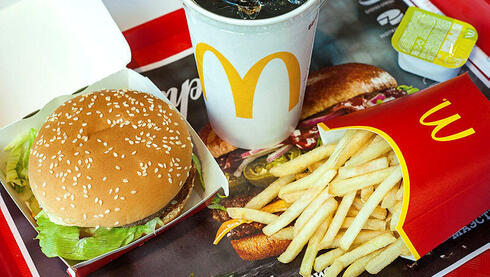
Israel has emerged as a notable contender in The Economist’s renowned Big Mac Index, which commemorates its 40th anniversary this year. This innovative index serves as a global reference for assessing purchasing power across nations by gauging the price of a McDonald’s Big Mac. Established in 1986, it utilizes the cost of a Big Mac in the United States as a benchmark to evaluate whether currencies are undervalued or overvalued when compared to the U.S. dollar.
Israel’s Position in the Big Mac Index
As per the most recent data, a Big Mac in the United States is priced at approximately $6.22. In contrast, the same sandwich in Israel costs around $7.67, thereby positioning Israel as the second most expensive market for Big Macs globally, trailing only Switzerland, where the cost is $9.04. This price disparity raises questions about the relative purchasing capabilities in these countries.
Despite these elevated prices, The Economist suggests that both the Swiss franc and the Israeli shekel remain overvalued against the U.S. dollar based on the principles of purchasing power parity. When the U.S. Big Mac price of $6.22 is converted into Swiss francs, it amounts to around 5.02 francs. This amount would only purchase about 70% of a Big Mac, leading to an estimation that the Swiss franc is overvalued by approximately 45% against the dollar. Similarly, the Israeli shekel is believed to be overvalued by nearly 40%.
The Global Landscape of Big Mac Prices
Following Israel and Switzerland, the United Kingdom stands out as the next most expensive market, where a Big Mac costs $7.40. Other notable mentions in the top five include the euro area, priced at $7.08, and Turkey, where a Big Mac costs $6.91.
Conversely, countries with the most affordable Big Macs are led by Indonesia, where the sandwich is priced at just $2.38. Taiwan and India follow closely, with prices of $2.42 and $2.45, respectively. This situation highlights a stark contrast, as one could purchase nearly two and a half Big Macs in Indonesia, Taiwan, or India for the price of one in the United States.
Factors Influencing Big Mac Prices
The significant variations in Big Mac prices across countries can be attributed to numerous factors. Elements such as tariffs, transportation fees, competitive dynamics, labor costs, rent, and electricity expenses all contribute to the final prices consumers face. This complexity underlines the interconnected nature of global economies and the variables that affect local pricing.
Recent findings from Deutsche Bank align with these observations, revealing that McDonald’s prices in Tel Aviv are among the highest globally. This reaffirms the conclusions drawn from The Economist’s Big Mac Index and signals ongoing discussions about value and currency.
Overall, Israel’s high Big Mac price relative to the U.S. prompts a deeper exploration into currency valuation and purchasing power. The Big Mac Index serves as a useful tool for understanding economic dynamics, making it a popular and engaging reference in finance and international business.