
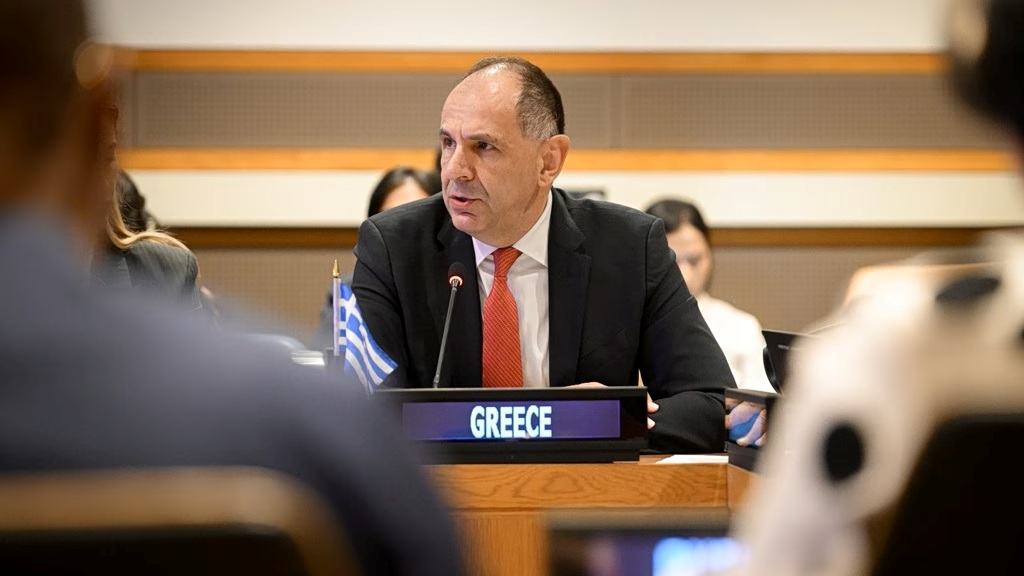
On Wednesday, Greek Foreign Minister George Gerapetritis strongly dismissed the notion that the recent parliamentary approval of the maritime agreement between Turkey and Libya represented a setback for Greece. His comments came following a vote by Libya’s House of Representatives that supported a deal established in 2019 between Turkey and Libya’s former government.
Rejection of Diplomatic Defeat Claims
Gerapetritis emphasized that the parliamentary vote in Libya does not alter the legal implications of the 2019 memorandum, which Greece and the European Union view as infringing on the maritime rights of other nations. He stated, “There are no consequences whatsoever. The memorandum will not be implemented because it has no legal effects.” This perspective was reiterated on a radio interview, where he clarified that the ratification by Libya’s parliament effectively adds no value to the already contentious agreement.
The Minister pointed out the instability and lack of authority of the Libyan administration that previously signed the memorandum. He noted that Turkey has made efforts over the years to ensure that the agreement was recognized by Libya’s parliament. When asked if the Greek government could have influenced the parliamentary vote, Gerapetritis responded that it was outside of Greece’s control and cautioned against describing the situation as a national defeat, urging careful consideration of the terminology used.
EU’s Support for Greece
Highlighting Greece’s ongoing engagement with the European Union, Gerapetritis indicated that there would be expressions of support from EU leaders in response to the Libyan parliament’s actions. He cited a recent statement from European Commission President Ursula von der Leyen and European Council President António Costa, who condemned the agreement for infringing upon the sovereign rights of third countries, reaffirming solidarity with Greece and Cyprus.
Following the vote, Gerapetritis engaged with European counterparts, aiming to leverage diplomatic mechanisms to advance Greece’s position. He referenced Greece’s influential role in European funding decisions and the implications of Turkey’s bid for EU membership, reinforcing the idea that the 2019 memorandum lacks legal standing.
Future Expansion of Territorial Waters
When questioned about Greece’s potential plans to extend its territorial waters, Gerapetritis assured that Greece would do so on its own timeline and under its own terms. He emphasized that Greece’s foreign policy is guided by a comprehensive strategy, not knee-jerk reactions to unfolding events.
Additionally, he addressed Greece’s cooperative relationship with Egypt, which has also opposed the Turkish-Libyan agreement. Gerapetritis noted a recent dialogue confirming strong alignment between Athens and Cairo on the issue. This cooperation is vital to ensure that both nations continue to share a common stance.
Energy Cooperation and Criticism of Opposition
On the topic of energy, Gerapetritis confirmed that there is no arrangement regarding the planned electricity interconnection between Greece and Cyprus involving Turkey. Reports suggesting otherwise were dismissed, with the Minister asserting that Greece alone holds the authority necessary for any exploratory surveys associated with the project.
Responding to criticism from former Prime Minister Antonis Samaras—who characterized the vote in Libya as a national defeat—Gerapetritis defended the government’s actions and policies. He encouraged reflection on the broader context of Turkish regional ambitions rather than focusing solely on Greece’s diplomatic maneuvers.
In summary, Gerapetritis’s firm stance serves to affirm Greece’s maritime rights and collaborative ties with key allies, particularly the EU and Egypt. As the situation evolves, Greece aims to maintain its strategic interests while engaging through a considered and planned approach to foreign policy matters.