
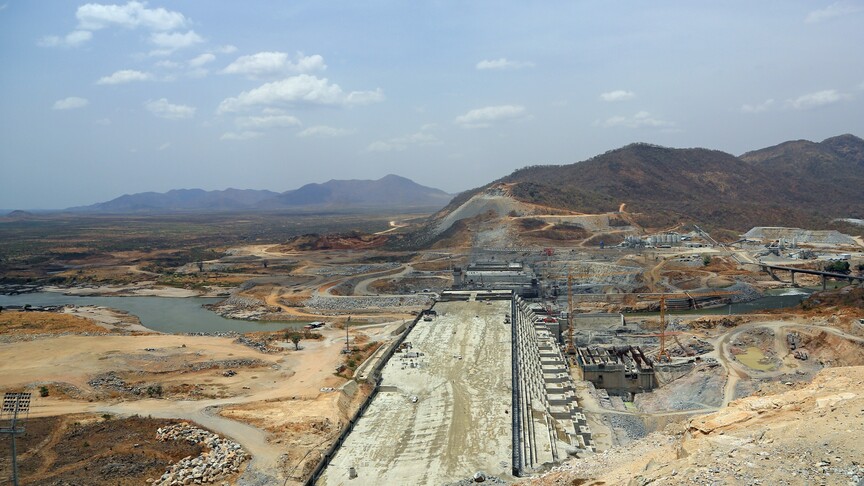
Egypt has firmly positioned itself against the Grand Ethiopian Renaissance Dam (GERD), deeming it “illegitimate.” Minister of Irrigation and Water Resources, Hani Sewilam, emphasized on September 21, 2026, that Egypt is prepared to take necessary measures to protect its water security. These statements were made during a briefing held in Cairo with foreign media representatives organized by the State Information Service.
Long-standing Disputes Over the GERD
Tensions between Egypt and Ethiopia have persisted since the GERD’s construction began on the Blue Nile in 2011. Cairo has consistently sought a legally binding agreement that oversees the dam’s operations to preserve its water security. Sewilam noted that completion of the dam does not equate to Cairo accepting the current situation or abandoning its rights. He referred to the 2015 Declaration of Principles, which was designed to facilitate cooperation among Egypt, Ethiopia, and Sudan regarding the dam’s initial filling, annual operations, coordination, and data sharing.
Sewilam asserted that the declaration does not permit Ethiopia to make unilateral decisions regarding the dam, pointing out that continued filling and operation without a formal agreement breaches mutual commitments. He stated, “The dam is illegitimate and will remain so. Egypt has the right to take appropriate action to remove the harm caused to it,” emphasizing Egypt’s frustrations with Ethiopia’s unwillingness to negotiate.
The Risks of Unilateral Dam Operation
The Minister warned that a lack of coordination in the dam’s operation could lead to erratic water flow changes, severely impacting both Egyptian and Sudanese dams. He highlighted Egypt’s primary concern being the timing and regulation of water releases rather than merely Ethiopia’s electricity generation objectives. According to Sewilam, Ethiopian officials have suggested that electricity production is not the dam’s primary purpose.
In his statements, he rejected Ethiopia’s claims that Egypt benefits disproportionately from the Nile River’s resources. He explained that Egypt’s annual entitlement of 55.5 billion cubic meters constitutes only about 2.7% of the Nile Basin’s total rainfall, which is approximately 2 trillion cubic meters. In contrast, 2023 rainfall statistics indicated that Ethiopia received over 1 trillion cubic meters, underscoring its considerable potential for agricultural and water resource management.
The Need for Collaborative Water Management
Sewilam noted that Ethiopia boasts more than 18 million hectares of agricultural land compared to Egypt’s 4.03 million hectares. Ethiopia utilizes around 148 billion cubic meters of “green water” derived from rainfall and approximately 9.68 billion cubic meters of “blue water” sourced from rivers. Sewilam suggested that if Ethiopia optimizes its water management strategies, it could ease regional tensions. He advocated for enhanced cooperation regarding rainwater harvesting and groundwater utilization, as well as improving agricultural water-use efficiency.
Egypt, along with Sudan, is advocating for a trilateral legally binding agreement to regulate the filling and operation of the GERD, ensuring the protection of their water rights and interests. However, Ethiopia insists that a binding agreement is unnecessary and claims it does not intend to threaten the interests of neighboring countries. This unresolved conflict has prompted negotiations to stall multiple times, with a significant pause occurring from 2020 to 2023, only to face further delays as of 2024. The future of regional water security remains at stake as international dialogue continues to grapple with complex geopolitical implications.