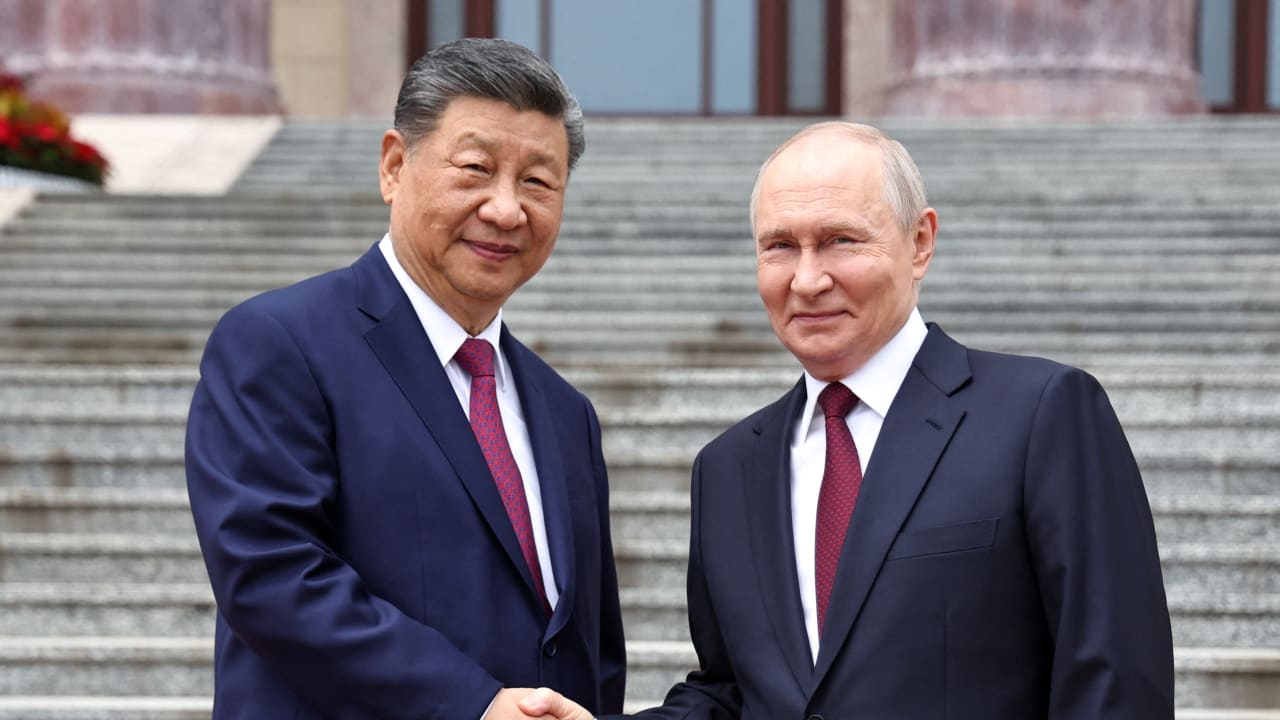
Former President Donald Trump voiced skepticism over the idea that China and Russia are currently supporting Iran, arguing that both nations stand to lose too much if they engage with Tehran. This assertion came following commentary he observed on social media from critics suggesting otherwise.
### Trump’s Stance on China and Russia
In a post on Truth Social, Trump reiterated his belief that the involvement of China and Russia in aiding Iran is minimal, if it exists at all. He asserted that the consequences for both countries would be severe should they choose to assist Iran in any significant way. Moreover, he stated, “We would know about it very fast,” underscoring his confidence in U.S. intelligence capabilities regarding international relations.
In July, Trump indicated a level of trust in both nations not to engage in supportive actions toward Iran during the ongoing conflict. He cautioned that if they did proceed with such actions, it would prove detrimental to their own interests. This commentary reflects Trump’s broader perspective on international geopolitics, emphasizing balances of power and the potential repercussions of foreign alliances.
### The Ongoing Conflict and Responses
The backdrop of Trump’s remarks is an escalating military conflict involving the United States, Israel, and Iran, which began on February 28 with coordinated strikes. The situation has led to retaliatory actions by Iran targeting both Israel and Gulf states with U.S. military bases. Reports suggest that U.S. and Israeli strikes have resulted in numerous casualties and significant displacement among civilian populations in affected areas.
Despite the complex web of alliances, Trump has previously described Chinese President Xi Jinping and Russian President Vladimir Putin as being “neutral” concerning the situation in Iran. Analysts point out that both nations maintain close ties with Tehran, raising questions about the true extent of their involvement in the conflict.
### Concerns Over Regional Stability
Russia has expressed concerns that the Iran conflict could trigger a nuclear arms race in the Middle East, highlighting the regional implications of U.S. military actions. Meanwhile, China’s reaction to U.S. strikes on Iran has been one of condemnation, citing violations of Iranian sovereignty. These positions suggest that while Beijing and Moscow may not openly support Iran, their strategic interests are deeply entwined with Tehran’s stability.
Most recently, Trump cautioned Xi against extending any military support to Iran, noting that he received assurances from the Chinese leader during a visit to Washington. However, reports later surfaced indicating that China had supplied Iran with missile launchers and assisted with circumventing sanctions on oil sales.
### Summary
Trump’s statements have ignited discussion about the potential ramifications of foreign involvement in Iran amidst an ongoing conflict. His skepticism towards China and Russia’s intentions may shape future U.S. policy decisions, particularly as tensions continue to escalate in the Middle East. Understanding these dynamics is vital for grasping the complex geopolitical landscape and the consequences of each nation’s positioning within it.